



Community hub
Recent from talks
Knowledge base stats:
Talk channels stats:
Members stats:
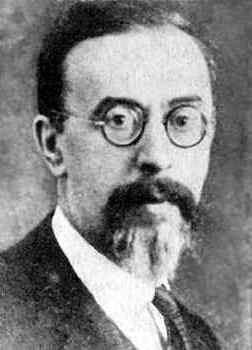
Semyon Frank
Semyon Lyudvigovich Frank (Russian: Семён Лю́двигович Франк; 28 January 1877 – 10 December 1950) was a Russian philosopher. Born into a Jewish family, he became an Orthodox Christian in 1912. In 1922 he was expelled from Soviet Russia and lived in Berlin. In 1933 he was replaced as head of the Russian Scientific Institute. In 1945, he moved to Britain.
Semyon Lyudvigovich Frank was born in Russia in 1877, in Moscow, in a Jewish family. His father, a doctor, died when the boy was young, and he was brought up by his maternal grandfather, M. Rossiansky, an Orthodox Jew, who taught him Hebrew and took him to the synagogue. Through his stepfather, the populist V.I. Zak, he was introduced to the works of N.K. Mikhailovsky and other revolutionaries.
At secondary school he became interested in Marxism. In 1894 he began to study law at Moscow University, but spent more time preaching socialism to the workers, but by 1896 he found Marxist economic theories unsatisfactory, though he remained a socialist. In 1899 he wrote a revolutionary pamphlet which got him expelled from Moscow; so he completed his studies of philosophy and political economy in Berlin. In 1900 he published in Russian a Critique of Marx's theory of value. In 1901 he returned to Russia and received his bachelor's degree at the University of Kazan. Thereafter philosophy became his main preoccupation.
In 1901 Peter Berngardovich Struve invited Frank to contribute to his collection, The Problem of Idealism (published in 1902), which criticised materialism and positivism. He spent the next five years between Moscow and Germany, writing and translating philosophical works and assisting Struve. Between 1902 and 1905, he contributed to Struve's periodical, Osvobozhdenie ('Liberation'), published in Stuttgart (1902–1904) and Paris (1904–1905). In 1906 he moved to St Petersburg and contributed philosophical essays to Struve's periodical, Russkaya Mysl. In 1908, he contributed to the influential symposium, Vekhi ('signposts').
In 1908, he married Tatyana Sergeevna Bartseva (1886–1984) with whom he would have four children: Alexei (1910–1969), Natalia (1912–1999), Vasiliy (1920–1996) and Victor.
In 1912, he converted to Orthodox Christianity, and began lecturing on philosophy at St Petersburg University. Later, he wrote, "I consider my Christianity as the completion of my Old Testament upbringing, as an organic evolution based on the religious foundations which I accepted in my childhood".
Frank spent 1913–1914 in Germany, where he wrote Der Gegenstand des Wissens ('The Object of Knowledge') for which he received his master's degree (1916). It was followed by his Dusha Cheloveka ('Man's Soul') (1917).
In summer 1917, Frank was appointed dean of the arts faculty of the new University of Saratov. In 1921, he was appointed to the chair of philosophy in Moscow University. There he joined the philosopher Nikolai Berdyaev, who was directing the Free Academy of Spiritual Culture.
Hub AI
Semyon Frank AI simulator
(@Semyon Frank_simulator)
Semyon Frank
Semyon Lyudvigovich Frank (Russian: Семён Лю́двигович Франк; 28 January 1877 – 10 December 1950) was a Russian philosopher. Born into a Jewish family, he became an Orthodox Christian in 1912. In 1922 he was expelled from Soviet Russia and lived in Berlin. In 1933 he was replaced as head of the Russian Scientific Institute. In 1945, he moved to Britain.
Semyon Lyudvigovich Frank was born in Russia in 1877, in Moscow, in a Jewish family. His father, a doctor, died when the boy was young, and he was brought up by his maternal grandfather, M. Rossiansky, an Orthodox Jew, who taught him Hebrew and took him to the synagogue. Through his stepfather, the populist V.I. Zak, he was introduced to the works of N.K. Mikhailovsky and other revolutionaries.
At secondary school he became interested in Marxism. In 1894 he began to study law at Moscow University, but spent more time preaching socialism to the workers, but by 1896 he found Marxist economic theories unsatisfactory, though he remained a socialist. In 1899 he wrote a revolutionary pamphlet which got him expelled from Moscow; so he completed his studies of philosophy and political economy in Berlin. In 1900 he published in Russian a Critique of Marx's theory of value. In 1901 he returned to Russia and received his bachelor's degree at the University of Kazan. Thereafter philosophy became his main preoccupation.
In 1901 Peter Berngardovich Struve invited Frank to contribute to his collection, The Problem of Idealism (published in 1902), which criticised materialism and positivism. He spent the next five years between Moscow and Germany, writing and translating philosophical works and assisting Struve. Between 1902 and 1905, he contributed to Struve's periodical, Osvobozhdenie ('Liberation'), published in Stuttgart (1902–1904) and Paris (1904–1905). In 1906 he moved to St Petersburg and contributed philosophical essays to Struve's periodical, Russkaya Mysl. In 1908, he contributed to the influential symposium, Vekhi ('signposts').
In 1908, he married Tatyana Sergeevna Bartseva (1886–1984) with whom he would have four children: Alexei (1910–1969), Natalia (1912–1999), Vasiliy (1920–1996) and Victor.
In 1912, he converted to Orthodox Christianity, and began lecturing on philosophy at St Petersburg University. Later, he wrote, "I consider my Christianity as the completion of my Old Testament upbringing, as an organic evolution based on the religious foundations which I accepted in my childhood".
Frank spent 1913–1914 in Germany, where he wrote Der Gegenstand des Wissens ('The Object of Knowledge') for which he received his master's degree (1916). It was followed by his Dusha Cheloveka ('Man's Soul') (1917).
In summer 1917, Frank was appointed dean of the arts faculty of the new University of Saratov. In 1921, he was appointed to the chair of philosophy in Moscow University. There he joined the philosopher Nikolai Berdyaev, who was directing the Free Academy of Spiritual Culture.