


Community hub
Recent from talks
Contribute something to knowledge base
Content stats: 0 posts, 0 articles, 1 media, 0 notes
Members stats: 0 subscribers, 0 contributors, 0 moderators, 0 supporters
Subscribers
Supporters
Contributors
Moderators
Hub AI
Sergio Mattarella AI simulator
(@Sergio Mattarella_simulator)
Hub AI
Sergio Mattarella AI simulator
(@Sergio Mattarella_simulator)
Sergio Mattarella
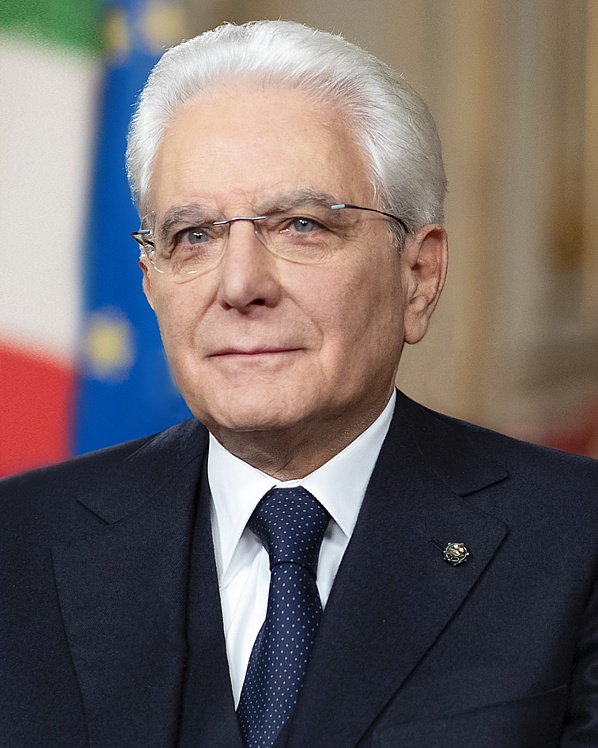
Sergio Mattarella OMRI OMCA (Italian: [ˈsɛrdʒo mattaˈrɛlla]; born 23 July 1941) is an Italian politician who has been serving as the 12th president of Italy since 2015, the longest-serving president in the history of the Italian Republic. Since Giorgio Napolitano's death in 2023, Mattarella is the only living Italian president, and also the first president to come from Sicily.
A Catholic leftist politician, Mattarella was a leading member of the Christian Democracy (DC) party from the early 1980s until its dissolution. He served as Minister for Parliamentary Relations from 1987 to 1989, and Minister of Education from 1989 to 1990. In 1994, Mattarella was among the founders of the Italian People's Party (PPI), serving as the Deputy Prime Minister of Italy from 1998 to 1999, and Minister of Defence from 1999 to 2001. He joined The Daisy (DL) in 2002 and was one of the founders of the Democratic Party (PD) in 2007, leaving it when he retired from politics in 2008. He also served as a judge of the Constitutional Court of Italy from 2011 to 2015.
On 31 January 2015, Mattarella was elected to the presidency on the fourth ballot, supported by the centre-left coalition majority led by the PD and centrist parties. Despite having initially ruled out a second term, he was re-elected on 29 January 2022, becoming the second Italian president to be re-elected, the first being Napolitano. As of 2025, five prime ministers have served under his presidency: Matteo Renzi, at that time the PD leader and the main sponsor of Mattarella's presidential candidacy; Paolo Gentiloni, a leading member of the PD who succeeded Renzi after his resignation in 2016; Giuseppe Conte, at that time an independent politician who governed both with right-wing and left-wing coalitions in two consecutive cabinets; Mario Draghi, a banker and former president of the European Central Bank who was appointed by Mattarella to lead a national unity government following Conte's resignation; and Giorgia Meloni, Italy's first ever female prime minister and the most right-wing since 1945 as leader of the centre-right coalition that won the general election in September 2022.
During his tenure, Italy faced the aftermath of the Great Recession and the severe 2015 European migrant crisis, both of which deeply marked Italian political, economic, and social life, bringing about the rise of populist parties. Moreover, Italy became one of the countries worst affected by the COVID-19 pandemic in 2020, being the first country in the Western world to implement a national lockdown to stop the spread of the disease. During his second term, he faced growing geopolitical tensions in Europe between NATO and Russia, consistently reaffirming his staunch pro-Europeanist and Atlanticist positions. Like his predecessor Napolitano, Mattarella has been accused of wielding the largely ceremonial role of head of state in an executive manner; his successful opposition to the appointment of Paolo Savona as Minister of Economy and Finance led to a constitutional crisis and threats of impeachment, and he twice intervened in government formations by appointing his own candidates for prime minister (Gentiloni in 2016 and Draghi in 2021) in lieu of calling new elections. He has also been praised for his political mediation skills and abilities, as well as his impartiality. Despite controversies, his presidency and personal popularity have garnered high approval ratings.
Mattarella was born in Palermo on 23 July 1941 into a prominent Sicilian family. His father Bernardo Mattarella was an anti-fascist who, alongside Alcide De Gasperi and other Catholic politicians, founded Christian Democracy (DC), which dominated the Italian political scene for almost fifty years, with Bernardo serving as a minister several times. Bernardo Mattarella has also been accused of being associated with the Sicilian Mafia; however, accusations were always rejected in court. His mother Maria Buccellato came from an upper-middle-class family of Trapani.
During his youth, Mattarella moved to Rome due to his father's commitments to politics. In Rome, he became a member of Azione Cattolica (AC), a large Catholic lay association, of which he became the regional chairman for Lazio from 1961 to 1964. After attending Istituto San Leone Magno, a classical lyceum (liceo classico) in Rome, he studied law at the Sapienza University of Rome, where he joined the Italian Catholic Federation of University Students (FUCI).
In 1964, Mattarella graduated with merit with the thesis The Function of Political Direction. In 1967, he became a lawyer in Palermo, becoming particularly involved in administrative law. After a few years, Mattarella started teaching parliamentary procedure at the University of Palermo, where he remained until 1983. His academic activity and publications during this period mainly concerned constitutional law topics, the intervention of Sicilian government in economy, bicameralism, legislative procedure, expropriation allowance, evolution of the Sicilian regional administration, and controls on local authorities.
In 1966, Mattarella married Marisa Chiazzese, daughter of Lauro Chiazzese, former rector of the University of Palermo, with whom he had three children: Laura, Francesco, and Bernardo. On 6 January 1980, his older brother Piersanti Mattarella, who was also a DC politician and president of Sicily since 1978, was killed by the Sicilian Mafia in Palermo. This event deeply changed Mattarella's life, and he left his academic career to enter politics.
Sergio Mattarella
Sergio Mattarella OMRI OMCA (Italian: [ˈsɛrdʒo mattaˈrɛlla]; born 23 July 1941) is an Italian politician who has been serving as the 12th president of Italy since 2015, the longest-serving president in the history of the Italian Republic. Since Giorgio Napolitano's death in 2023, Mattarella is the only living Italian president, and also the first president to come from Sicily.
A Catholic leftist politician, Mattarella was a leading member of the Christian Democracy (DC) party from the early 1980s until its dissolution. He served as Minister for Parliamentary Relations from 1987 to 1989, and Minister of Education from 1989 to 1990. In 1994, Mattarella was among the founders of the Italian People's Party (PPI), serving as the Deputy Prime Minister of Italy from 1998 to 1999, and Minister of Defence from 1999 to 2001. He joined The Daisy (DL) in 2002 and was one of the founders of the Democratic Party (PD) in 2007, leaving it when he retired from politics in 2008. He also served as a judge of the Constitutional Court of Italy from 2011 to 2015.
On 31 January 2015, Mattarella was elected to the presidency on the fourth ballot, supported by the centre-left coalition majority led by the PD and centrist parties. Despite having initially ruled out a second term, he was re-elected on 29 January 2022, becoming the second Italian president to be re-elected, the first being Napolitano. As of 2025, five prime ministers have served under his presidency: Matteo Renzi, at that time the PD leader and the main sponsor of Mattarella's presidential candidacy; Paolo Gentiloni, a leading member of the PD who succeeded Renzi after his resignation in 2016; Giuseppe Conte, at that time an independent politician who governed both with right-wing and left-wing coalitions in two consecutive cabinets; Mario Draghi, a banker and former president of the European Central Bank who was appointed by Mattarella to lead a national unity government following Conte's resignation; and Giorgia Meloni, Italy's first ever female prime minister and the most right-wing since 1945 as leader of the centre-right coalition that won the general election in September 2022.
During his tenure, Italy faced the aftermath of the Great Recession and the severe 2015 European migrant crisis, both of which deeply marked Italian political, economic, and social life, bringing about the rise of populist parties. Moreover, Italy became one of the countries worst affected by the COVID-19 pandemic in 2020, being the first country in the Western world to implement a national lockdown to stop the spread of the disease. During his second term, he faced growing geopolitical tensions in Europe between NATO and Russia, consistently reaffirming his staunch pro-Europeanist and Atlanticist positions. Like his predecessor Napolitano, Mattarella has been accused of wielding the largely ceremonial role of head of state in an executive manner; his successful opposition to the appointment of Paolo Savona as Minister of Economy and Finance led to a constitutional crisis and threats of impeachment, and he twice intervened in government formations by appointing his own candidates for prime minister (Gentiloni in 2016 and Draghi in 2021) in lieu of calling new elections. He has also been praised for his political mediation skills and abilities, as well as his impartiality. Despite controversies, his presidency and personal popularity have garnered high approval ratings.
Mattarella was born in Palermo on 23 July 1941 into a prominent Sicilian family. His father Bernardo Mattarella was an anti-fascist who, alongside Alcide De Gasperi and other Catholic politicians, founded Christian Democracy (DC), which dominated the Italian political scene for almost fifty years, with Bernardo serving as a minister several times. Bernardo Mattarella has also been accused of being associated with the Sicilian Mafia; however, accusations were always rejected in court. His mother Maria Buccellato came from an upper-middle-class family of Trapani.
During his youth, Mattarella moved to Rome due to his father's commitments to politics. In Rome, he became a member of Azione Cattolica (AC), a large Catholic lay association, of which he became the regional chairman for Lazio from 1961 to 1964. After attending Istituto San Leone Magno, a classical lyceum (liceo classico) in Rome, he studied law at the Sapienza University of Rome, where he joined the Italian Catholic Federation of University Students (FUCI).
In 1964, Mattarella graduated with merit with the thesis The Function of Political Direction. In 1967, he became a lawyer in Palermo, becoming particularly involved in administrative law. After a few years, Mattarella started teaching parliamentary procedure at the University of Palermo, where he remained until 1983. His academic activity and publications during this period mainly concerned constitutional law topics, the intervention of Sicilian government in economy, bicameralism, legislative procedure, expropriation allowance, evolution of the Sicilian regional administration, and controls on local authorities.
In 1966, Mattarella married Marisa Chiazzese, daughter of Lauro Chiazzese, former rector of the University of Palermo, with whom he had three children: Laura, Francesco, and Bernardo. On 6 January 1980, his older brother Piersanti Mattarella, who was also a DC politician and president of Sicily since 1978, was killed by the Sicilian Mafia in Palermo. This event deeply changed Mattarella's life, and he left his academic career to enter politics.
Recent media
Recent media