Hubbry Logo
Sergio RicossaSergio RicossaMain
Open search
Sergio Ricossa
Community hub
Sergio Ricossa
logo
8 pages, 0 posts
0 subscribers
Be the first to start a discussion here.
Sergio Ricossa
Sergio Ricossa
from Wikipedia

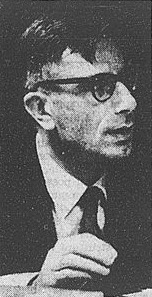
Sergio Ricossa (6 June 1927 – 2 March 2016) was an Italian economist.

Key Information

Born in Turin, in 1949 Ricossa graduated in Economics at the Turin University. In 1961 he was nominated associate professor of economic policy and financial discipline in the same university, becoming ordinary professor in 1963.[1][2]

A proponent of an economic liberalism without compromises,[1][2] Ricossa's studies mainly focused on the theory of value.[3] He collaborated with several magazines and with the newspapers Il Giornale and La Stampa, where his provocative articles often raised criticism and polemics.[1][2]

Ricossa was a Vice President of the Mont Pelerin Society, a member of the Accademia dei Lincei, and the honorary president of the Bruno Leoni Institute.[1][2]

References

[edit]

Further reading

[edit]
[edit]
Revisions and contributorsEdit on WikipediaRead on Wikipedia
from Grokipedia
Sergio Ricossa (June 6, 1927 – early March 2016) was an Italian economist and academic known for advocating free-market principles, individual liberty, and classical liberal ideas in Italy. Born in Turin to a working-class family, he became a professor of economic policy at the University of Turin, where he spent his career, and a notable public intellectual. Ricossa graduated in economics from the University of Turin in 1949 and initially worked in econometrics before adopting Austrian school perspectives, influenced by Friedrich Hayek and Bruno Leoni. Leoni introduced him to the Mont Pelerin Society, where he served on the board from 1976 and later became a lifetime member. For about forty years, he was a prominent advocate for free markets and limited government in Italian intellectual and public discourse, authoring works on economic theory, history, and ideas while popularizing liberal concepts. His notable books include Storia della fatica (1974), which viewed the Industrial Revolution positively as enabling prosperity; Straborghese (1980), defending bourgeois values; and La fine dell’economia (1986), critiquing perfectionist economic models from various ideologies in favor of market processes, drawing on Adam Smith and Hayek. He also wrote accessible texts like Impariamo l’economia and a dictionary of economics, and contributed columns to Il Giornale. In later years, he showed interest in anarcho-capitalist ideas and promoted libertarian literature in Italy. Ricossa died in Turin after a long illness in early March 2016. A Festschrift, Il coraggio della libertà, was dedicated to him in 2002 with contributions from liberal thinkers.

Early life and education

Birth and family background

Sergio Ricossa was born on 6 June 1927 in Turin, Piedmont, Italy. He was a native of Turin, where he resided throughout his life. Ricossa came from a solid working-class background of humble origins and experienced poverty during his education. In high school, where he studied accounting, he could not afford books and took notes instead. Little is known about specific details of his parents, siblings, or extended family.

University studies and early influences

Sergio Ricossa graduated in Economics from the University of Turin in 1949, under the guidance of economist Arrigo Bordin. To support himself, he had to work and did not attend university classes, yet his brilliance earned him an academic career. His university studies took place in post-war Italy, a period marked by economic reconstruction and intense intellectual discussion on recovery and policy, which provided his early exposure to key economic ideas. No records indicate that he pursued additional degrees or international studies following his graduation.

Academic career

Early professional collaborations

In the early 1950s, Sergio Ricossa engaged in applied economic research focused on introducing linear programming to Italian industry, collaborating with Antonio Longo through the Unione Industriale di Torino. This work resulted in the 1954 publication La programmazione lineare nell'industria, a collection of writings presented by the Unione Industriale di Torino, curated by Basilio Giardina, Antonio Longo, and Ricossa himself, with an introduction by Augusto Bargoni. The publication represented one of the earliest systematic efforts to apply linear programming techniques in Italian industrial contexts. He subsequently applied linear programming methods in industrial settings, gaining experience in mathematical economics that supported his transition to academia in 1961.

Professorship and teaching at the University of Turin

In 1961, Sergio Ricossa was appointed professore incaricato of Politica economica e finanziaria at the University of Turin, obtaining the chair in Economic Policy. He was promoted to full professor (professore ordinario) in the same discipline in 1963, a position he held as part of his long-term academic role at the institution. Ricossa's teaching focused on economic policy and related financial aspects, forming a core part of his contributions to the University of Turin's economics curriculum during this period.

Academic affiliations and honors

Sergio Ricossa held several prestigious academic affiliations and received notable recognitions within Italian and international scholarly circles. He was a member of the Mont Pelerin Society, an international association dedicated to classical liberal principles, and served as its Vice President. Ricossa was elected as a corresponding member (socio corrispondente) of the Accademia Nazionale dei Lincei in the Class of Moral Sciences on August 2, 1978, and was later promoted to full national member (nazionale) on December 21, 1988. He was also a member (socio) of the Accademia di Agricoltura di Torino. From 2003 to 2011, he served as Honorary President (Presidente Onorario) of the Istituto Bruno Leoni. These affiliations underscored his prominent role in advancing liberal economic thought in Italy and beyond.

Economic thought and contributions

Work on economic theory and value

Sergio Ricossa's contributions to economic theory focused primarily on value theory and the analysis of neoclassical models. In 1981, he published Teoria unificata del valore economico with Giappichelli in Torino, a work that represented his sustained effort to refute Piero Sraffa's theoretical framework as presented in Produzione di merci a mezzo di merci. This book culminated years of critical engagement with Sraffa's ideas, seeking to demonstrate their limitations within the broader context of value determination. A decade later, in 1991, Ricossa released Aspetti attuali della teoria economica neoclassica through UTET in Torino, his final strictly academic publication directed at professional economists. The work examined contemporary developments and aspects of neoclassical economic theory, reflecting his deep expertise in the field and his engagement with its mathematical and conceptual foundations. These publications marked the core of Ricossa's rigorous theoretical output on economic value and neoclassical approaches before his transition to broader popularization.

Critiques of mainstream economics

In the early 1990s, Sergio Ricossa displayed an intensifying skepticism toward mainstream economics, progressively losing confidence in its formal models and scientific pretensions. He argued that sophisticated formalization had come to dominate the discipline at the expense of genuine understanding, rendering much of contemporary economic theory detached from reality and overly reliant on abstract constructs. This disillusionment reflected a broader critique of the positivist rigor that characterized mainstream approaches, which he saw as fragile and ideologically laden rather than empirically robust. Ricossa's critiques emphasized the limitations of neoclassical and Keynesian frameworks, particularly their "perfettismo" or perfectionist assumptions about human behavior and social engineering possibilities. He increasingly questioned the capacity of formal economic models to capture the complexity of human action and social processes, viewing them as prone to distortion when used for political or ideological purposes. As a result, he shifted his focus toward social philosophy, prioritizing humanistic, value-driven reflections on liberty and society over technical economic analysis. This intellectual evolution marked Ricossa's departure from his earlier engagement with econometric and structural approaches, culminating in a more pronounced libertarian orientation that built on his methodological doubts.

Shift toward libertarian positions

In the 1990s, Sergio Ricossa progressively radicalized his positions, evolving from an uncompromising classical liberal stance toward explicit libertarianism. This shift was marked by his increasing emphasis on the limits of state intervention and his critique of constructivist approaches to social order. The culmination of this ideological transition came in 1999 with the publication of Da liberale a libertario: cronache di una conversione, a short work in which Ricossa explicitly distanced himself from the classical liberalism of Luigi Einaudi, judging it insufficient for achieving genuine liberty. He declared his readiness for a "libertà compiuta" (complete freedom) that would make do without the State and its coercive violence. This book documented his personal and intellectual conversion to libertarian principles, reflecting a broader rejection of any residual statism in liberal thought.

Publications

Academic and theoretical books

Sergio Ricossa produced several key academic and theoretical works centered on economic theory, with a strong focus on the theory of value and neoclassical economics. These publications addressed scholarly audiences and contributed to debates within the discipline. His 1981 book Teoria unificata del valore economico, published by Giappichelli in Torino, presents a unified framework for understanding economic value. The work is particularly recognized for its efforts to dismantle aspects of Piero Sraffa's theories through a rigorous re-examination of value concepts. In 1991 Ricossa published Aspetti attuali della teoria economica neoclassica with UTET in Torino, as part of the Biblioteca dell'economista series. This 210-page volume examines contemporary developments in neoclassical economic theory, including discussions of value theory and related doctrines. Ricossa also edited the Dizionario di economia for UTET, first issued in 1982 and revised in 1998, providing a comprehensive reference tool covering economic terminology and concepts. These scholarly books reflect Ricossa's deep engagement with foundational economic questions and contrast with his subsequent popular and polemical writings. Sergio Ricossa gained a reputation for his popular and polemical books, which made economic reasoning accessible to non-specialists while delivering provocative critiques of state intervention, ideological distortions in economics, and prevailing social policies. These works, marked by ironic, caustic, and iconoclastic language, often extended themes from his journalism into book-length form, challenging commonplaces with sharp logic and directness. In Impariamo l'economia (1988), Ricossa presents a non-technical introduction to core economic ideas, avoiding graphs, equations, or algebraic expressions. He frames the economic problem around scarcity, explores value theory, highlights the role of innovation and entrepreneurship, critiques egalitarian redistribution and monetary deceptions, warns against excessive state intrusion, and identifies conditions for genuine development. The book aims to orient general readers, dispelling misconceptions with clarity and lively prose. I pericoli della solidarietà (1993) examines the notion of solidarity, distinguishing voluntary forms—rooted in mutual agreement and genuine exchange within families, friendships, or communities—from compulsory versions imposed by law. Ricossa argues that state-mandated solidarity, popularized by Bismarck and exploited by demagogic politicians, lacks moral worth since it eliminates free choice, imposes high economic costs, primarily benefits public bureaucrats, and frequently results in the poor subsidizing the rich under a rhetoric of aid. Maledetti economisti (1996) offers a scathing attack on economics as practiced when subordinated to ideology rather than scientific inquiry. Ricossa denounces such distortions as "idiozie" that render the discipline effectively non-existent in its true form, targeting colleagues and theories that misuse data or concepts for rhetorical or political ends. Other polemical titles include Da liberale a libertario (1999), which traces Ricossa's ideological evolution toward explicit libertarianism, Elogio della cattiveria, and Manuale di sopravvivenza ad uso degli italiani onesti (2011), a guide for honest citizens confronting unjust taxation, fiscal amnesties, and the double sin of over-taxing the compliant while pardoning evaders. These works often built on his newspaper polemics, extending their provocative spirit to broader audiences.

Public engagement and media presence

Journalism and newspaper collaborations

Ricossa fu un collaboratore abituale di importanti quotidiani italiani, in particolare de La Stampa e de Il Giornale, dove pubblicò numerosi articoli provocatori che criticavano l'intervento statale nell'economia, l'alta pressione fiscale e il ruolo dello Stato nella società. I suoi interventi erano caratterizzati da uno stile polemico e diretto, spesso volto a denunciare quella che considerava una "servitù fiscale" imposta ai cittadini. Nel 1986 partecipò attivamente alla "marcia contro il fisco", una manifestazione pubblica di protesta contro la tassazione eccessiva organizzata a Roma insieme agli economisti Antonio Martino e Gianni Marongiu, durante la quale vennero portati striscioni con slogan come "No alla schiavitù fiscale". Questa iniziativa rappresentò uno dei momenti più visibili del suo impegno pubblico contro le politiche fiscali dello Stato italiano.

Television appearances and public debates

Sergio Ricossa made limited but notable appearances on television as himself in public debates and commentary programs. He featured in two episodes of the 1997 TV series Mani pulite, a production focused on the Tangentopoli scandal that investigated widespread political corruption in Italy during the early 1990s. These appearances aligned with his broader public role as a prominent liberal economist and commentator.

Death and legacy

Final years

Sergio Ricossa spent his final years in his native Turin, where he continued to engage in writing and public commentary on economic and liberal themes despite his advancing age. He died on 3 March 2016 in Turin after a long illness, at the age of 88. His passing was widely noted in Italian media as the end of a distinctive voice in liberal economic thought.

Influence and posthumous recognition

Sergio Ricossa is recognized as one of the foremost Italian liberal and libertarian intellectuals of the postwar era, often characterized as the "lonely voice for freedom in Italian academia" who steadfastly defended individual liberty and free markets amid a cultural and political landscape dominated by Marxist and interventionist ideologies. For nearly four decades, he remained an uncompromising advocate of classical liberalism, refusing to dilute his principles despite widespread hostility, and his work helped lay foundational groundwork for libertarian thought in Italy, inspiring many readers to embrace these ideas through his columns and books. His influence extended internationally through the Mont Pelerin Society, where he was introduced by Bruno Leoni and became a long-time member, joining the Board of Directors in 1976, earning lifetime membership, and serving as Vice-President, contributing to global networks promoting free-market principles. In Italy, Ricossa's legacy is closely tied to the Istituto Bruno Leoni, where he served as honorary president, helping establish a key institutional platform for liberal economic thought. Following his death on 3 March 2016, Ricossa received widespread posthumous recognition in liberal circles, with tributes emphasizing his intellectual rigor, polemical sharpness, and unwavering commitment to economic freedom as an essential component of broader human liberty. Obituaries and memorials described him as the doyen of Italian libertarians and a pioneering figure whose scathing critiques of interventionism and "ideological economics" left a lasting mark on public debate. Subsequent remembrances, including those marking anniversaries of his birth and death, have continued to celebrate his role as a brilliant economist and uncompromising liberal whose contributions remain influential in promoting free-market ideas in Italy.

References

Add your contribution
Related Hubs
User Avatar
No comments yet.