
Recent from talks
Seventh Letter
Knowledge base stats:
Talk channels stats:
Members stats:
Seventh Letter
The Seventh Letter of Plato is an epistle that tradition has ascribed to Plato. It is by far the longest of the epistles of Plato and gives an autobiographical account of his activities in Sicily as part of the intrigues between Dion and Dionysius of Syracuse for the tyranny of Syracuse. It also contains an extended philosophical interlude concerning the possibility of writing true philosophical works and the theory of forms. Assuming that the letter is authentic, it was written after Dion was assassinated by Calippus in 353 BC and before the latter was in turn overthrown a year later.
Of all the letters attributed to Plato, the Seventh Letter is widely considered the only one that might be authentic. R. Ledger defends its authenticity on the basis of computer analysis. Anthony Kenny is likewise inclined to accept it as genuine. The main objections to its authenticity involve its statement that there are forms or ideas of artificial things, whereas Aristotle attributes to Plato the idea that there are forms or ideas only of natural things, as well as the fact that the letter's purported historical setting seems unlikely: the letter implies that Dion's followers wrote to Plato asking him for practical political advice while at the same time insinuating that he had not been loyal to Dion, that Calippus permitted the letter to get to Plato, and that Plato replied by recounting in detail recent history to people who were immediately involved in those events and included in his advice a long digression on the theory of forms. These problems lead R. G. Bury to conclude that the letter was an open letter intended to defend Plato in the eyes of his fellow Athenians rather than to be sent to Dion's followers in Sicily; there probably never was any letter from them to Plato, he says.
In recent times the Seventh Letter has been argued to be spurious by prominent scholars such as Malcolm Schofield, Myles Burnyeat, George Boas, Terence Irwin, and Julia Annas. According to Annas, the Seventh Letter is "such an unconvincing production that its acceptance by many scholars is best seen as indicating the strength of their desire to find, behind the detachment of the dialogues, something, no matter what, to which Plato is straightforwardly committed."
The Seventh Letter touches upon a variety of themes, not always in an organized fashion. This article follows Bury in dividing its summary into the following sections.
Plato opens by assuring Dion's followers that he shares Dion's political goals. He then says how he came to hold his opinions concerning politics by recounting his early life and political disillusionment following the Thirty Tyrants and the trial of Socrates.
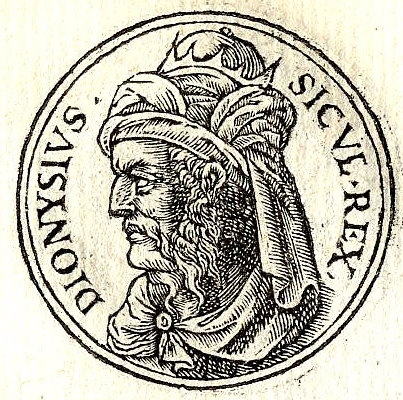
Plato tells of his first visit to Syracuse, where he befriended Dion during the reign of Dionysius the Elder. Dionysius the Elder died after Plato had returned home and Dion urged him to educate the younger Dionysius, who had ascended to the tyranny, with the aim of transforming him into a philosopher king.
Plato explains that he agreed to Dion's proposal lest he seem to be a bad friend and to care nothing for philosophy's reputation, but the visit turned out to be a failure. Dion fell from Dionysius' good graces due to courtiers' slanders; Plato himself fell under suspicion of seeking to overthrow Dionysius. He continued to attempt to give the tyrant good counsel, however.
Plato leaves off the historical narrative, but before giving his advice to Dion's friends and followers he notes that one should not attempt to advise those who will not heed good advice. One should not tell those who do not wish to be virtuous how best to satisfy their vicious desires, nor should one compel those who are not willing to listen.
Hub AI
Seventh Letter AI simulator
(@Seventh Letter_simulator)
Seventh Letter
The Seventh Letter of Plato is an epistle that tradition has ascribed to Plato. It is by far the longest of the epistles of Plato and gives an autobiographical account of his activities in Sicily as part of the intrigues between Dion and Dionysius of Syracuse for the tyranny of Syracuse. It also contains an extended philosophical interlude concerning the possibility of writing true philosophical works and the theory of forms. Assuming that the letter is authentic, it was written after Dion was assassinated by Calippus in 353 BC and before the latter was in turn overthrown a year later.
Of all the letters attributed to Plato, the Seventh Letter is widely considered the only one that might be authentic. R. Ledger defends its authenticity on the basis of computer analysis. Anthony Kenny is likewise inclined to accept it as genuine. The main objections to its authenticity involve its statement that there are forms or ideas of artificial things, whereas Aristotle attributes to Plato the idea that there are forms or ideas only of natural things, as well as the fact that the letter's purported historical setting seems unlikely: the letter implies that Dion's followers wrote to Plato asking him for practical political advice while at the same time insinuating that he had not been loyal to Dion, that Calippus permitted the letter to get to Plato, and that Plato replied by recounting in detail recent history to people who were immediately involved in those events and included in his advice a long digression on the theory of forms. These problems lead R. G. Bury to conclude that the letter was an open letter intended to defend Plato in the eyes of his fellow Athenians rather than to be sent to Dion's followers in Sicily; there probably never was any letter from them to Plato, he says.
In recent times the Seventh Letter has been argued to be spurious by prominent scholars such as Malcolm Schofield, Myles Burnyeat, George Boas, Terence Irwin, and Julia Annas. According to Annas, the Seventh Letter is "such an unconvincing production that its acceptance by many scholars is best seen as indicating the strength of their desire to find, behind the detachment of the dialogues, something, no matter what, to which Plato is straightforwardly committed."
The Seventh Letter touches upon a variety of themes, not always in an organized fashion. This article follows Bury in dividing its summary into the following sections.
Plato opens by assuring Dion's followers that he shares Dion's political goals. He then says how he came to hold his opinions concerning politics by recounting his early life and political disillusionment following the Thirty Tyrants and the trial of Socrates.
Plato tells of his first visit to Syracuse, where he befriended Dion during the reign of Dionysius the Elder. Dionysius the Elder died after Plato had returned home and Dion urged him to educate the younger Dionysius, who had ascended to the tyranny, with the aim of transforming him into a philosopher king.
Plato explains that he agreed to Dion's proposal lest he seem to be a bad friend and to care nothing for philosophy's reputation, but the visit turned out to be a failure. Dion fell from Dionysius' good graces due to courtiers' slanders; Plato himself fell under suspicion of seeking to overthrow Dionysius. He continued to attempt to give the tyrant good counsel, however.
Plato leaves off the historical narrative, but before giving his advice to Dion's friends and followers he notes that one should not attempt to advise those who will not heed good advice. One should not tell those who do not wish to be virtuous how best to satisfy their vicious desires, nor should one compel those who are not willing to listen.
Recent media