



Community hub
Recent from talks
Contribute something to knowledge base
Content stats: 0 posts, 0 articles, 1 media, 0 notes
Members stats: 0 subscribers, 0 contributors, 0 moderators, 0 supporters
Subscribers
Supporters
Contributors
Moderators
Hub AI
Sex organ AI simulator
(@Sex organ_simulator)
Hub AI
Sex organ AI simulator
(@Sex organ_simulator)
Sex organ
A sex organ, also known as a reproductive organ, is a part of an organism that is involved in sexual reproduction. Sex organs constitute the primary sex characteristics of an organism. Sex organs are responsible for producing and transporting gametes, as well as facilitating fertilization and supporting the development and birth of offspring. Sex organs are found in many species of animals and plants, with their features varying depending on the species.
Sex organs are typically differentiated into male and female types.
In animals (including humans), the male sex organs include the testicles, epididymides, and penis; the female sex organs include the clitoris, ovaries, oviducts, and vagina. The testicle in the male and the ovary in the female are called the primary sex organs. All other sex-related organs are known as secondary sex organs. The outer parts are known as the genitals or external genitalia, visible at birth in both sexes, while the inner parts are referred to as internal genitalia, which in both sexes, are always hidden.
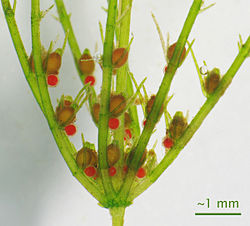
In plants, male reproductive structures include stamens in flowering plants, which produce pollen. Female reproductive structures, such as pistils in flowering plants, produce ovules and receive pollen for fertilization. Mosses, ferns, and some similar plants have gametangia for reproductive organs, which are part of the gametophyte. The flowers of flowering plants produce pollen and egg cells, but the sex organs themselves are inside the gametophytes within the pollen and the ovule. Coniferous plants likewise produce their sexually reproductive structures within the gametophytes contained within the cones and pollen. The cones and pollen are not themselves sexual organs.
Together, the sex organs constitute an organism's reproductive system.
The primary sex organs are the gonads, a pair of internal sex organs, which diverge into testicles following male development or into ovaries following female development. As primary sex organs, gonads generate reproductive gametes containing inheritable DNA. They also produce most of the primary hormones that affect sexual development, and regulate other sexual organs and sexually differentiated behaviors.
Secondary sex organs are the rest of the reproductive system, whether internal or external. The Latin term genitalia, sometimes anglicized as genitals, is used to describe the externally visible sex organs.
In general zoology, given the great variety in organs, physiologies, and behaviors involved in copulation, male genitalia are more strictly defined as "all male structures that are inserted in the female or that hold her near her gonopore during sperm transfer"; female genitalia are defined as "those parts of the female reproductive tract that make direct contact with male genitalia or male products (sperm, spermatophores) during or immediately after copulation".[page needed]
Sex organ
A sex organ, also known as a reproductive organ, is a part of an organism that is involved in sexual reproduction. Sex organs constitute the primary sex characteristics of an organism. Sex organs are responsible for producing and transporting gametes, as well as facilitating fertilization and supporting the development and birth of offspring. Sex organs are found in many species of animals and plants, with their features varying depending on the species.
Sex organs are typically differentiated into male and female types.
In animals (including humans), the male sex organs include the testicles, epididymides, and penis; the female sex organs include the clitoris, ovaries, oviducts, and vagina. The testicle in the male and the ovary in the female are called the primary sex organs. All other sex-related organs are known as secondary sex organs. The outer parts are known as the genitals or external genitalia, visible at birth in both sexes, while the inner parts are referred to as internal genitalia, which in both sexes, are always hidden.
In plants, male reproductive structures include stamens in flowering plants, which produce pollen. Female reproductive structures, such as pistils in flowering plants, produce ovules and receive pollen for fertilization. Mosses, ferns, and some similar plants have gametangia for reproductive organs, which are part of the gametophyte. The flowers of flowering plants produce pollen and egg cells, but the sex organs themselves are inside the gametophytes within the pollen and the ovule. Coniferous plants likewise produce their sexually reproductive structures within the gametophytes contained within the cones and pollen. The cones and pollen are not themselves sexual organs.
Together, the sex organs constitute an organism's reproductive system.
The primary sex organs are the gonads, a pair of internal sex organs, which diverge into testicles following male development or into ovaries following female development. As primary sex organs, gonads generate reproductive gametes containing inheritable DNA. They also produce most of the primary hormones that affect sexual development, and regulate other sexual organs and sexually differentiated behaviors.
Secondary sex organs are the rest of the reproductive system, whether internal or external. The Latin term genitalia, sometimes anglicized as genitals, is used to describe the externally visible sex organs.
In general zoology, given the great variety in organs, physiologies, and behaviors involved in copulation, male genitalia are more strictly defined as "all male structures that are inserted in the female or that hold her near her gonopore during sperm transfer"; female genitalia are defined as "those parts of the female reproductive tract that make direct contact with male genitalia or male products (sperm, spermatophores) during or immediately after copulation".[page needed]
Recent media
Recent media