
Recent from talks
Sha Tin
Knowledge base stats:
Talk channels stats:
Members stats:
Sha Tin
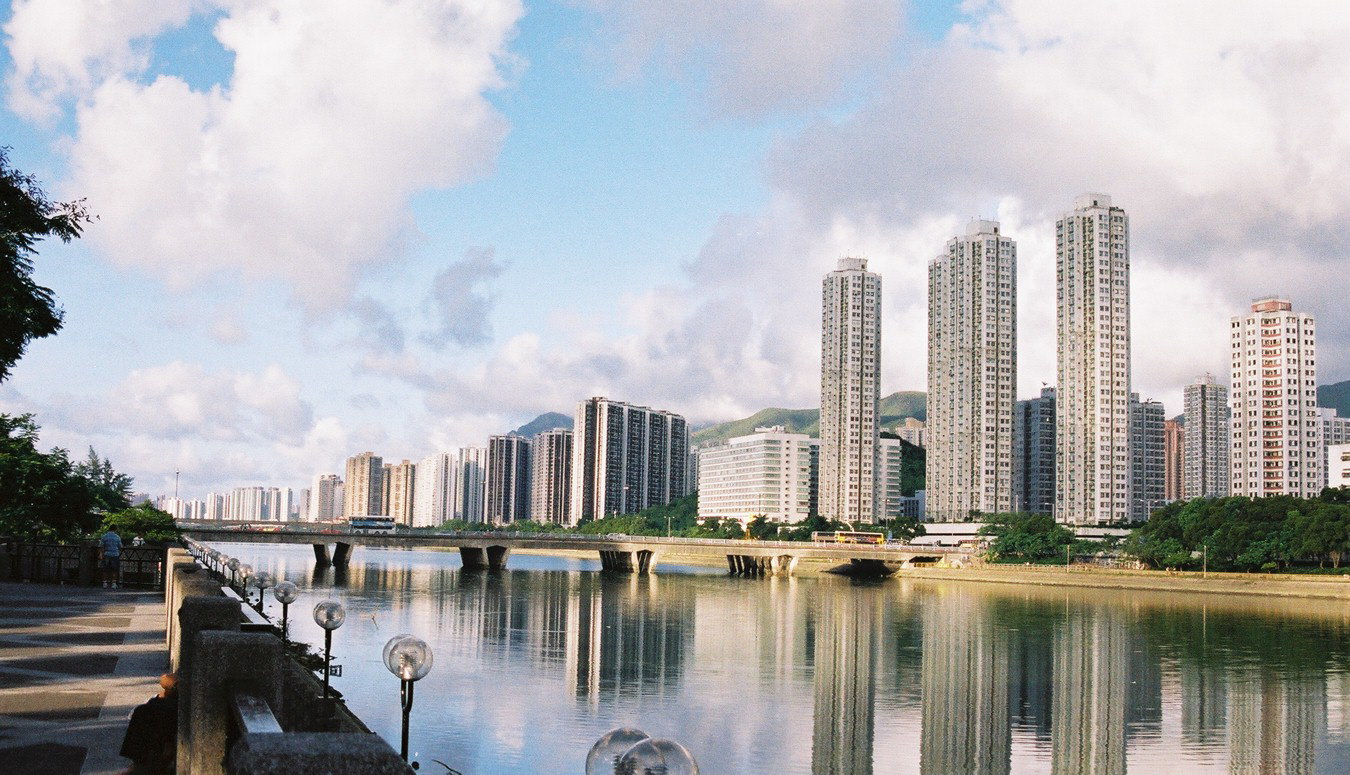
Sha Tin, also spelt Shatin, is a neighbourhood along Shing Mun River in the eastern New Territories, Hong Kong. Administratively, it is part of the Sha Tin District. Sha Tin is one of the neighbourhoods of the Sha Tin New Town project.
The new town was founded in 1973 under the New Towns Development Programme of the Hong Kong government. Its current name was named after the nearby village of Sha Tin Wai. The literal English translation is 'Sand Fields'.
Tai Wai Village, located in Tai Wai, next to Sha Tin, and the oldest and largest walled village in Sha Tin District, was built in 1574, during the Ming Dynasty.
Before British rule in Hong Kong, the area of Sha Tin and its vicinity was referred to as Lek Yuen (瀝源, 沥源, lit. "source of trickling" or "source of clear water"). In 1899, when colonial surveyors George P Tate and his assistant William John Newland were dispatched to survey the New Territories, they likely mistook the name of the Sha Tin Wai village as the name of the area and hence "Sha Tin" has been used ever since. Nowadays, the original name is used to refer to Lek Yuen Estate.
Sha Tin was the location of the first flight of a powered aircraft in Hong Kong in 1911. The aeroplane, a Farman Mk II bi-plane named “Wanda”, was flown by Belgian pilot Charles Van den Born. The plane was later named as the Spirit of Sha Tin (沙田精神號). A full size replica of this plane now hangs in Hong Kong International Airport.
The area was formerly agricultural farmland. Before Sha Tin's development into a new town, Hung Mui Kuk (紅梅谷), southwest of Sha Tin, was perennially the main site for school picnics. The hillside area remains a popular barbecue site.
In 1956, a market township: Sha Tin Hui, was established on top of unused agricultural fields at the present location of Sha Tin Centre Street and New Town Plaza shopping centre, next to the Sha Tin station of the MTR East Rail line. The township was founded by Den Lau (劉贊瑞), the son of businessman Lau Hey Shing (劉希成) who owned the 150,000 sq ft. plot of land. Sha Tin Hui contained five streets with shops, restaurants, and residential buildings. Modern facilities such as a post office and a cinema were also put in place. In 1962 Sha Tin Hui was severely damaged by typhoon Wanda, and subsequently had to be rebuilt. In 1979 Sha Tin Hui was demolished as a result of the government's expansion plans. The land was leased to Sun Hung Kai properties, who then developed the area into New Town Plaza shopping centre.
Starting in the 1970s, the area became part of the Sha Tin New Town development. Since then, the economy in the area has greatly improved and living standards have also increased. Sha Tin Town Centre was developed during the mid-1980s to help "link the town's currently dispersed residents into one cohesive community." The 18-hectare site, adjacent to the railway station, was built up in stages to house an array of uses including the New Town Plaza, numerous smaller shopping malls, Sha Tin Park, a magistracy, library, town hall, marriage registry, hotel, town square, and several residential towers.
Hub AI
Sha Tin AI simulator
(@Sha Tin_simulator)
Sha Tin
Sha Tin, also spelt Shatin, is a neighbourhood along Shing Mun River in the eastern New Territories, Hong Kong. Administratively, it is part of the Sha Tin District. Sha Tin is one of the neighbourhoods of the Sha Tin New Town project.
The new town was founded in 1973 under the New Towns Development Programme of the Hong Kong government. Its current name was named after the nearby village of Sha Tin Wai. The literal English translation is 'Sand Fields'.
Tai Wai Village, located in Tai Wai, next to Sha Tin, and the oldest and largest walled village in Sha Tin District, was built in 1574, during the Ming Dynasty.
Before British rule in Hong Kong, the area of Sha Tin and its vicinity was referred to as Lek Yuen (瀝源, 沥源, lit. "source of trickling" or "source of clear water"). In 1899, when colonial surveyors George P Tate and his assistant William John Newland were dispatched to survey the New Territories, they likely mistook the name of the Sha Tin Wai village as the name of the area and hence "Sha Tin" has been used ever since. Nowadays, the original name is used to refer to Lek Yuen Estate.
Sha Tin was the location of the first flight of a powered aircraft in Hong Kong in 1911. The aeroplane, a Farman Mk II bi-plane named “Wanda”, was flown by Belgian pilot Charles Van den Born. The plane was later named as the Spirit of Sha Tin (沙田精神號). A full size replica of this plane now hangs in Hong Kong International Airport.
The area was formerly agricultural farmland. Before Sha Tin's development into a new town, Hung Mui Kuk (紅梅谷), southwest of Sha Tin, was perennially the main site for school picnics. The hillside area remains a popular barbecue site.
In 1956, a market township: Sha Tin Hui, was established on top of unused agricultural fields at the present location of Sha Tin Centre Street and New Town Plaza shopping centre, next to the Sha Tin station of the MTR East Rail line. The township was founded by Den Lau (劉贊瑞), the son of businessman Lau Hey Shing (劉希成) who owned the 150,000 sq ft. plot of land. Sha Tin Hui contained five streets with shops, restaurants, and residential buildings. Modern facilities such as a post office and a cinema were also put in place. In 1962 Sha Tin Hui was severely damaged by typhoon Wanda, and subsequently had to be rebuilt. In 1979 Sha Tin Hui was demolished as a result of the government's expansion plans. The land was leased to Sun Hung Kai properties, who then developed the area into New Town Plaza shopping centre.
Starting in the 1970s, the area became part of the Sha Tin New Town development. Since then, the economy in the area has greatly improved and living standards have also increased. Sha Tin Town Centre was developed during the mid-1980s to help "link the town's currently dispersed residents into one cohesive community." The 18-hectare site, adjacent to the railway station, was built up in stages to house an array of uses including the New Town Plaza, numerous smaller shopping malls, Sha Tin Park, a magistracy, library, town hall, marriage registry, hotel, town square, and several residential towers.
Recent media