
Recent from talks
She Shoulda Said No!
Knowledge base stats:
Talk channels stats:
Members stats:
She Shoulda Said No!
She Shoulda Said 'No'! (also known as Wild Weed; The Devil's Weed; Marijuana, the Devil's Weed; and The Story of Lila Leeds and Her Exposé of the Marijuana Racket) is a 1949 exploitation film that follows in the spirit of morality tales such as the 1936 films Reefer Madness and Marihuana. Directed by Sam Newfield (using the pseudonym "Sherman Scott") and starring Lila Leeds, it was originally produced to capitalize on the arrest of Leeds and Robert Mitchum on a charge of marijuana conspiracy.
The film was issued under many titles; it struggled to find a distributor until film presenter Kroger Babb picked up the rights, reissuing it as The Story of Lila Leeds and Her Exposé of the Marijuana Racket. Its relative success came only after the promotional posters were redone and a story fabricated that the film was being presented in conjunction with the United States Treasury.
Leeds' character is "Anne Lester", a young orphan trying to pay for her brother's college education. After meeting Markey, a drug dealer, Anne begins to believe that she must smoke marijuana to fit in with her friends. She then goes to a "tea party", where she tries the drug for the first time. She is unaffected by the initial experiment, and loses her fear of drugs as she continues to use it willingly.
Anne's drug use results in the loss of many of her inhibitions, and the film shows her actions under the influence, including scenes implying sexual promiscuity. As the film progresses, she is fired from her job and begins selling drugs for Markey. Her brother hangs himself when he learns of her new job, and she is arrested and given a tour of the various psychiatric wards and jails in which drug users end up. Finally, after 50 days in jail, she is released, cleaned up and ready to cooperate with the authorities regarding Markey.
The film itself is semi-biographical, its story following what Leeds herself experienced. The film was inspired by the highly publicized arrest of movie stars Robert Mitchum and Leeds for marijuana possession. On September 1, 1948, the actors, along with two others, were arrested after being caught smoking marijuana at the home of Leeds in the early morning, and were charged with the felony of narcotics possession. Leeds was sentenced to sixty days in prison and placed on probation for five years.
Upon her release, Leeds struggled to find work in Hollywood, and signed on to star in Wild Weed. During publicity for the film in 1949, Leeds, who had been 20 at the time of the arrest, said that appearing in the picture would keep other people her age from trying drugs, but in 1952 she confided in Collier's that she "only had one offer… which was an obvious attempt to capitalize on the Mitchum case notoriety. I took it. I was broke." The film gained approval from the Federal Bureau of Narcotics to use the drug references, a standard practice at the time even though the Bureau had no power to censor the films. The film used its plot to push many of the beliefs of the time: that drug-using youth would turn to crime and the theory of "marijuana as a gateway drug". The latter was a leading argument for drug prohibition during the era, and an argument that Leeds herself made, based on her own history with marijuana and heroin.
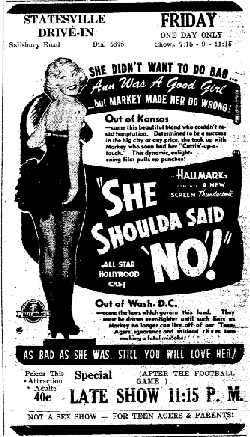
Via Franklin Productions, Kay filmed the production in six days, a common occurrence given that most films of the era were shot with a quick turnaround. Eureka Productions initially distributed the film, but it struggled to find an audience until Kroger Babb's Hallmark Productions acquired the rights for distribution. Babb initially marketed the film under the title The Story of Lila Leeds and Her Exposé of the Marijuana Racket, but failed to achieve success with that title and eventually changed it to "She Shoulda Said 'No'!". He pushed the sensuality of Leeds with new promotional photographs and a new tagline: "How Bad Can a Good Girl Get... without losing her virtue or respect???", while sending letters to local communities falsely claiming that the United States Treasury Department implored Hallmark to release the film "in as many towns and cities as possible in the shortest possible length of time" as a public service. The square-up misleadingly stated that the producers wished to "publicly acknowledge the splendid cooperation of the Nation's narcotic experts and Government departments, who aided in various ways the success of this production…. If its presentation saves but one young girl or boy from becoming a 'dope fiend' – then its story has been well told."
Babb, who gained notoriety for his various marketing gimmicks, occasionally had Leeds make appearances and give lectures at showings of the film. Babb often booked the movie as a midnight presentation twice a week in the same town; David F. Friedman, who would later use the film in his own double-billings, attributed the distribution plan to a film that was so low in quality that Babb wanted to cash in and move to his next stop as fast as possible.
Hub AI
She Shoulda Said No! AI simulator
(@She Shoulda Said No!_simulator)
She Shoulda Said No!
She Shoulda Said 'No'! (also known as Wild Weed; The Devil's Weed; Marijuana, the Devil's Weed; and The Story of Lila Leeds and Her Exposé of the Marijuana Racket) is a 1949 exploitation film that follows in the spirit of morality tales such as the 1936 films Reefer Madness and Marihuana. Directed by Sam Newfield (using the pseudonym "Sherman Scott") and starring Lila Leeds, it was originally produced to capitalize on the arrest of Leeds and Robert Mitchum on a charge of marijuana conspiracy.
The film was issued under many titles; it struggled to find a distributor until film presenter Kroger Babb picked up the rights, reissuing it as The Story of Lila Leeds and Her Exposé of the Marijuana Racket. Its relative success came only after the promotional posters were redone and a story fabricated that the film was being presented in conjunction with the United States Treasury.
Leeds' character is "Anne Lester", a young orphan trying to pay for her brother's college education. After meeting Markey, a drug dealer, Anne begins to believe that she must smoke marijuana to fit in with her friends. She then goes to a "tea party", where she tries the drug for the first time. She is unaffected by the initial experiment, and loses her fear of drugs as she continues to use it willingly.
Anne's drug use results in the loss of many of her inhibitions, and the film shows her actions under the influence, including scenes implying sexual promiscuity. As the film progresses, she is fired from her job and begins selling drugs for Markey. Her brother hangs himself when he learns of her new job, and she is arrested and given a tour of the various psychiatric wards and jails in which drug users end up. Finally, after 50 days in jail, she is released, cleaned up and ready to cooperate with the authorities regarding Markey.
The film itself is semi-biographical, its story following what Leeds herself experienced. The film was inspired by the highly publicized arrest of movie stars Robert Mitchum and Leeds for marijuana possession. On September 1, 1948, the actors, along with two others, were arrested after being caught smoking marijuana at the home of Leeds in the early morning, and were charged with the felony of narcotics possession. Leeds was sentenced to sixty days in prison and placed on probation for five years.
Upon her release, Leeds struggled to find work in Hollywood, and signed on to star in Wild Weed. During publicity for the film in 1949, Leeds, who had been 20 at the time of the arrest, said that appearing in the picture would keep other people her age from trying drugs, but in 1952 she confided in Collier's that she "only had one offer… which was an obvious attempt to capitalize on the Mitchum case notoriety. I took it. I was broke." The film gained approval from the Federal Bureau of Narcotics to use the drug references, a standard practice at the time even though the Bureau had no power to censor the films. The film used its plot to push many of the beliefs of the time: that drug-using youth would turn to crime and the theory of "marijuana as a gateway drug". The latter was a leading argument for drug prohibition during the era, and an argument that Leeds herself made, based on her own history with marijuana and heroin.
Via Franklin Productions, Kay filmed the production in six days, a common occurrence given that most films of the era were shot with a quick turnaround. Eureka Productions initially distributed the film, but it struggled to find an audience until Kroger Babb's Hallmark Productions acquired the rights for distribution. Babb initially marketed the film under the title The Story of Lila Leeds and Her Exposé of the Marijuana Racket, but failed to achieve success with that title and eventually changed it to "She Shoulda Said 'No'!". He pushed the sensuality of Leeds with new promotional photographs and a new tagline: "How Bad Can a Good Girl Get... without losing her virtue or respect???", while sending letters to local communities falsely claiming that the United States Treasury Department implored Hallmark to release the film "in as many towns and cities as possible in the shortest possible length of time" as a public service. The square-up misleadingly stated that the producers wished to "publicly acknowledge the splendid cooperation of the Nation's narcotic experts and Government departments, who aided in various ways the success of this production…. If its presentation saves but one young girl or boy from becoming a 'dope fiend' – then its story has been well told."
Babb, who gained notoriety for his various marketing gimmicks, occasionally had Leeds make appearances and give lectures at showings of the film. Babb often booked the movie as a midnight presentation twice a week in the same town; David F. Friedman, who would later use the film in his own double-billings, attributed the distribution plan to a film that was so low in quality that Babb wanted to cash in and move to his next stop as fast as possible.
Recent media