


Community hub
Recent from talks
Contribute something to knowledge base
Content stats: 0 posts, 0 articles, 1 media, 0 notes
Members stats: 0 subscribers, 0 contributors, 0 moderators, 0 supporters
Subscribers
Supporters
Contributors
Moderators
Hub AI
Sherm Lollar AI simulator
(@Sherm Lollar_simulator)
Hub AI
Sherm Lollar AI simulator
(@Sherm Lollar_simulator)
Sherm Lollar
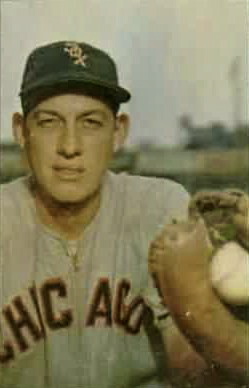
John Sherman Lollar Jr. (August 23, 1924 – September 24, 1977) was an American professional baseball player and coach. He played in Major League Baseball as a catcher from 1946 to 1963, most prominently as a member of the Chicago White Sox where he was a perennial All-Star player and was an integral member of the 1959 American League pennant-winning team.
Although he was often overshadowed by his contemporary, New York Yankee catcher Yogi Berra, Lollar was considered to be one of the best catchers in the major leagues during the 1950s. Lollar began his career playing for the Cleveland Indians, New York Yankees, and the St. Louis Browns where he earned his first All-Star berth however, he blossomed as a player while with the White Sox. He was an American League All-Star for seven seasons. In 1957, Lollar received the first Rawlings Gold Glove Award for the catcher position in Major League Baseball.
Lollar became a coach in the major leagues and managed at the minor league level after his MLB playing career ended. He was chosen for the Chicago White Sox All-Century Team on September 30, 2000.
Lollar was born in Durham, Arkansas in the rural Ozark mountains. He was a batboy for the Fayetteville, Arkansas Class D minor league team in the Arkansas–Missouri League in the 1930s. In 1943 Lollar was signed as an 18-year-old by the Baltimore Orioles, which then was a minor league franchise in the International League. In 1945 he hit 34 home runs and led the International League with a .364 batting average, winning the league's Most Valuable Player award. Baltimore had a working agreement with the Cleveland Indians, and sold Lollar to the Indians after the 1945 season.
Lollar made his major league debut on April 20, 1946. He was a backup catcher for the Cleveland Indians behind catchers Frankie Hayes and then Jim Hegan. His playing time as a third string catcher was minimal so, he requested to be sent back to the minor leagues.
Lollar was traded to the New York Yankees along with Ray Mack after the 1946 season, and competed with Yogi Berra in 1947 for the Yankee catching job. Both Lollar and Berra were considered excellent hitting prospects but defensive liabilities, although both eventually would become outstanding receivers. Lollar started two games in the 1947 World Series for the Yankees against the Brooklyn Dodgers and went 3 for 4 with two doubles. Yankee coach and Hall of Fame catching great, Bill Dickey, advised the Yankees that Berra's left-hand bat was more suited to the dimensions of Yankee Stadium (301'-457'-461'-407'-296' LF-LCF-CF-RCF-RF) than Lollar's right-hand bat. During the 1948 season, Lollar suffered a hand injury due to a foul tip, resulting in limited action for the rest of the year.
Lollar was traded to the St. Louis Browns and replaced Les Moss as their starting catcher for the 1949 season. In 1950, Lollar was hitting .314 in mid-July and earned his first of seven All-Star selections (nine total games). He ended the season hitting .280 with a career-high .391 on-base percentage. In 1951, Lollar hit .252 for the season and was traded to the White Sox that November.
In 1952, Lollar took over the season's regular catching job for the White Sox from catcher Phil Masi. His defensive skills improved under the tutelage of manager and former major league catcher Paul Richards. Lollar, whom Richards called "a manager on the field", was a quiet workhorse who led by example and was an excellent handler of pitchers. In 1954, after allowing a stolen base to Al Smith on May 25, he threw out all 18 would-be base stealers during the remainder of the year. He became a mainstay behind the plate for the Go-Go White Sox teams of the 1950s and early 1960s, which included future Hall of Fame members Luis Aparicio, Nellie Fox, George Kell, Hoyt Wilhelm, and Early Wynn.
Sherm Lollar
John Sherman Lollar Jr. (August 23, 1924 – September 24, 1977) was an American professional baseball player and coach. He played in Major League Baseball as a catcher from 1946 to 1963, most prominently as a member of the Chicago White Sox where he was a perennial All-Star player and was an integral member of the 1959 American League pennant-winning team.
Although he was often overshadowed by his contemporary, New York Yankee catcher Yogi Berra, Lollar was considered to be one of the best catchers in the major leagues during the 1950s. Lollar began his career playing for the Cleveland Indians, New York Yankees, and the St. Louis Browns where he earned his first All-Star berth however, he blossomed as a player while with the White Sox. He was an American League All-Star for seven seasons. In 1957, Lollar received the first Rawlings Gold Glove Award for the catcher position in Major League Baseball.
Lollar became a coach in the major leagues and managed at the minor league level after his MLB playing career ended. He was chosen for the Chicago White Sox All-Century Team on September 30, 2000.
Lollar was born in Durham, Arkansas in the rural Ozark mountains. He was a batboy for the Fayetteville, Arkansas Class D minor league team in the Arkansas–Missouri League in the 1930s. In 1943 Lollar was signed as an 18-year-old by the Baltimore Orioles, which then was a minor league franchise in the International League. In 1945 he hit 34 home runs and led the International League with a .364 batting average, winning the league's Most Valuable Player award. Baltimore had a working agreement with the Cleveland Indians, and sold Lollar to the Indians after the 1945 season.
Lollar made his major league debut on April 20, 1946. He was a backup catcher for the Cleveland Indians behind catchers Frankie Hayes and then Jim Hegan. His playing time as a third string catcher was minimal so, he requested to be sent back to the minor leagues.
Lollar was traded to the New York Yankees along with Ray Mack after the 1946 season, and competed with Yogi Berra in 1947 for the Yankee catching job. Both Lollar and Berra were considered excellent hitting prospects but defensive liabilities, although both eventually would become outstanding receivers. Lollar started two games in the 1947 World Series for the Yankees against the Brooklyn Dodgers and went 3 for 4 with two doubles. Yankee coach and Hall of Fame catching great, Bill Dickey, advised the Yankees that Berra's left-hand bat was more suited to the dimensions of Yankee Stadium (301'-457'-461'-407'-296' LF-LCF-CF-RCF-RF) than Lollar's right-hand bat. During the 1948 season, Lollar suffered a hand injury due to a foul tip, resulting in limited action for the rest of the year.
Lollar was traded to the St. Louis Browns and replaced Les Moss as their starting catcher for the 1949 season. In 1950, Lollar was hitting .314 in mid-July and earned his first of seven All-Star selections (nine total games). He ended the season hitting .280 with a career-high .391 on-base percentage. In 1951, Lollar hit .252 for the season and was traded to the White Sox that November.
In 1952, Lollar took over the season's regular catching job for the White Sox from catcher Phil Masi. His defensive skills improved under the tutelage of manager and former major league catcher Paul Richards. Lollar, whom Richards called "a manager on the field", was a quiet workhorse who led by example and was an excellent handler of pitchers. In 1954, after allowing a stolen base to Al Smith on May 25, he threw out all 18 would-be base stealers during the remainder of the year. He became a mainstay behind the plate for the Go-Go White Sox teams of the 1950s and early 1960s, which included future Hall of Fame members Luis Aparicio, Nellie Fox, George Kell, Hoyt Wilhelm, and Early Wynn.
Recent media
Recent media