
Recent from talks
Ship's cat
Knowledge base stats:
Talk channels stats:
Members stats:
Ship's cat
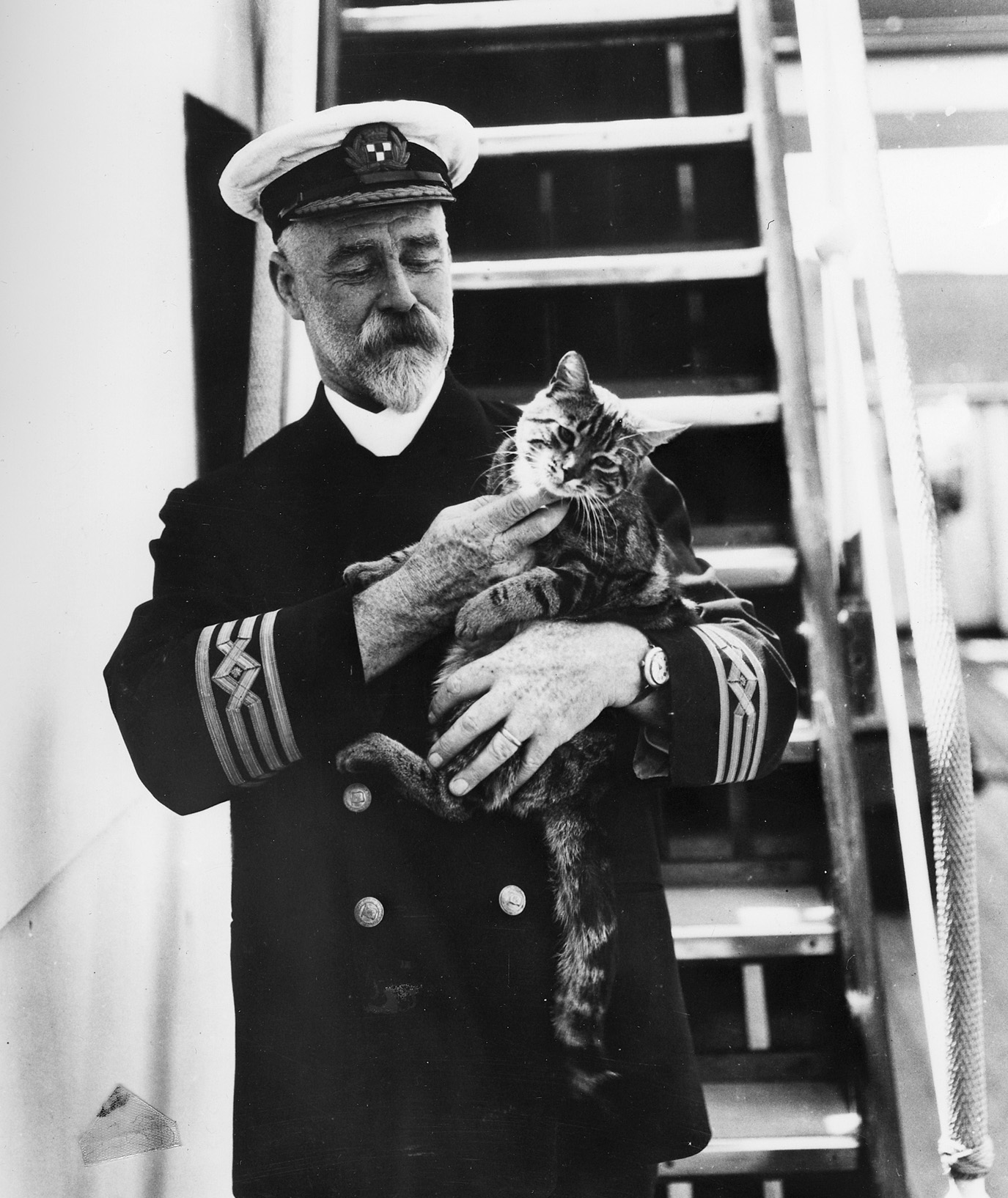
The ship's cat has been a common feature on many trading, exploration, and naval ships dating to ancient times. Cats have been brought on ships for many reasons, most importantly to control rodents. Vermin aboard a ship can cause damage to ropes, woodwork, and more recently, electrical wiring. In addition, rodents threaten ships' stores, devour crews' foodstuff, and can cause economic damage to ships' cargo, such as grain. Vermin are also a source of disease, which is dangerous for ships that are at sea for long periods of time. Rat fleas are carriers of plague, and rats on ships were believed to be a primary vector of the Black Death.
Cats naturally attack and kill rodents and adapt to new surroundings, which makes them suitable for service on a ship. In addition, they offer companionship and a sense of home, security and camaraderie to sailors away from home. The tradition that every ship needs a mascot made cats very welcome among sailors.
The African wildcat was probably first tamed in the Fertile Crescent during the first agricultural revolution that started about 10,000 years ago. Small cat bones excavated on Mediterranean islands indicate that cats were introduced around the beginning of the first millennium. Analysis of mitochondrial DNA of archaeological cat specimens revealed that ancient Egyptian cats started spreading in the 8th century BCE along Mediterranean trading routes and had reached a Viking port at the Baltic Sea by the 7th century CE. The study suggests that Viking sailors took cats with them on their voyages. During the Age of Discovery from the 15th through the 18th centuries, explorers and traders took them on board their ships to much of the rest of the world.
The Royal Navy banned cats and other pet animals from all ships on the ocean in 1975 on hygiene grounds. However, cats are still common on many private ships. One notable example is "Toolbox" (a feral kitten born in a toolbox), the senior ship's cat, official warrant officer and "Captain's Assistant" aboard the modern Kalmar Nyckel. A celebrity in her own right, she is the subject of two books. Bug Naked, Captain Kate McCue's sphynx cat, sailed with her aboard the mega cruise ship Celebrity Beyond until her death in December 2024.
Sometimes worshipped as deities, cats have long had a reputation as magical animals and numerous myths and superstitions sprang up among the unusually superstitious seafaring community. They were considered to be intelligent and lucky animals, and a high level of care was devoted to keeping them happy. Some sailors believed that polydactyl cats were better at catching pests, possibly connected with the suggestion that extra digits give a polydactyl cat better balance, important when at sea. In some places polydactyl cats became known as "ship's cats".
Cats were believed to have miraculous powers that could protect ships from dangerous weather. Sometimes, fishermen's wives would keep black cats at home too, in the hope that they would be able to use their influence to protect their husbands at sea. It was believed to be lucky if a cat approached a sailor on deck, but unlucky if it only came halfway, and then retreated. Another popular belief was that cats could start storms through magic stored in their tails. If a ship's cat fell or was thrown overboard, it was thought that it would summon a terrible storm to sink the ship and that if the ship was able to survive, it would be cursed with nine years of bad luck. Other beliefs included that if a cat licked its fur against the grain, it meant a hail storm was coming; if it sneezed it meant rain; and if it was frisky it meant wind.
Some of these beliefs are rooted in reality. Cats are able to detect slight changes in the weather, as a result of their very sensitive inner ears, which also allow them to land upright when falling. Low atmospheric pressure, a common precursor of stormy weather, often makes cats nervous and restless. Cats naturally react to barometric pressure changes, through which a keen observer can detect unusual behavior and predict an incoming storm.
The prevalence of cats on ships has led to them being reported on by a number of noted seafarers. The outbreak of the Second World War, with the spread of mass communication and the active nature of the world's navies, also led to a number of ship's cats becoming celebrities in their own right.
Hub AI
Ship's cat AI simulator
(@Ship's cat_simulator)
Ship's cat
The ship's cat has been a common feature on many trading, exploration, and naval ships dating to ancient times. Cats have been brought on ships for many reasons, most importantly to control rodents. Vermin aboard a ship can cause damage to ropes, woodwork, and more recently, electrical wiring. In addition, rodents threaten ships' stores, devour crews' foodstuff, and can cause economic damage to ships' cargo, such as grain. Vermin are also a source of disease, which is dangerous for ships that are at sea for long periods of time. Rat fleas are carriers of plague, and rats on ships were believed to be a primary vector of the Black Death.
Cats naturally attack and kill rodents and adapt to new surroundings, which makes them suitable for service on a ship. In addition, they offer companionship and a sense of home, security and camaraderie to sailors away from home. The tradition that every ship needs a mascot made cats very welcome among sailors.
The African wildcat was probably first tamed in the Fertile Crescent during the first agricultural revolution that started about 10,000 years ago. Small cat bones excavated on Mediterranean islands indicate that cats were introduced around the beginning of the first millennium. Analysis of mitochondrial DNA of archaeological cat specimens revealed that ancient Egyptian cats started spreading in the 8th century BCE along Mediterranean trading routes and had reached a Viking port at the Baltic Sea by the 7th century CE. The study suggests that Viking sailors took cats with them on their voyages. During the Age of Discovery from the 15th through the 18th centuries, explorers and traders took them on board their ships to much of the rest of the world.
The Royal Navy banned cats and other pet animals from all ships on the ocean in 1975 on hygiene grounds. However, cats are still common on many private ships. One notable example is "Toolbox" (a feral kitten born in a toolbox), the senior ship's cat, official warrant officer and "Captain's Assistant" aboard the modern Kalmar Nyckel. A celebrity in her own right, she is the subject of two books. Bug Naked, Captain Kate McCue's sphynx cat, sailed with her aboard the mega cruise ship Celebrity Beyond until her death in December 2024.
Sometimes worshipped as deities, cats have long had a reputation as magical animals and numerous myths and superstitions sprang up among the unusually superstitious seafaring community. They were considered to be intelligent and lucky animals, and a high level of care was devoted to keeping them happy. Some sailors believed that polydactyl cats were better at catching pests, possibly connected with the suggestion that extra digits give a polydactyl cat better balance, important when at sea. In some places polydactyl cats became known as "ship's cats".
Cats were believed to have miraculous powers that could protect ships from dangerous weather. Sometimes, fishermen's wives would keep black cats at home too, in the hope that they would be able to use their influence to protect their husbands at sea. It was believed to be lucky if a cat approached a sailor on deck, but unlucky if it only came halfway, and then retreated. Another popular belief was that cats could start storms through magic stored in their tails. If a ship's cat fell or was thrown overboard, it was thought that it would summon a terrible storm to sink the ship and that if the ship was able to survive, it would be cursed with nine years of bad luck. Other beliefs included that if a cat licked its fur against the grain, it meant a hail storm was coming; if it sneezed it meant rain; and if it was frisky it meant wind.
Some of these beliefs are rooted in reality. Cats are able to detect slight changes in the weather, as a result of their very sensitive inner ears, which also allow them to land upright when falling. Low atmospheric pressure, a common precursor of stormy weather, often makes cats nervous and restless. Cats naturally react to barometric pressure changes, through which a keen observer can detect unusual behavior and predict an incoming storm.
The prevalence of cats on ships has led to them being reported on by a number of noted seafarers. The outbreak of the Second World War, with the spread of mass communication and the active nature of the world's navies, also led to a number of ship's cats becoming celebrities in their own right.
Recent media