
Recent from talks
Sho't
Knowledge base stats:
Talk channels stats:
Members stats:
Sho't
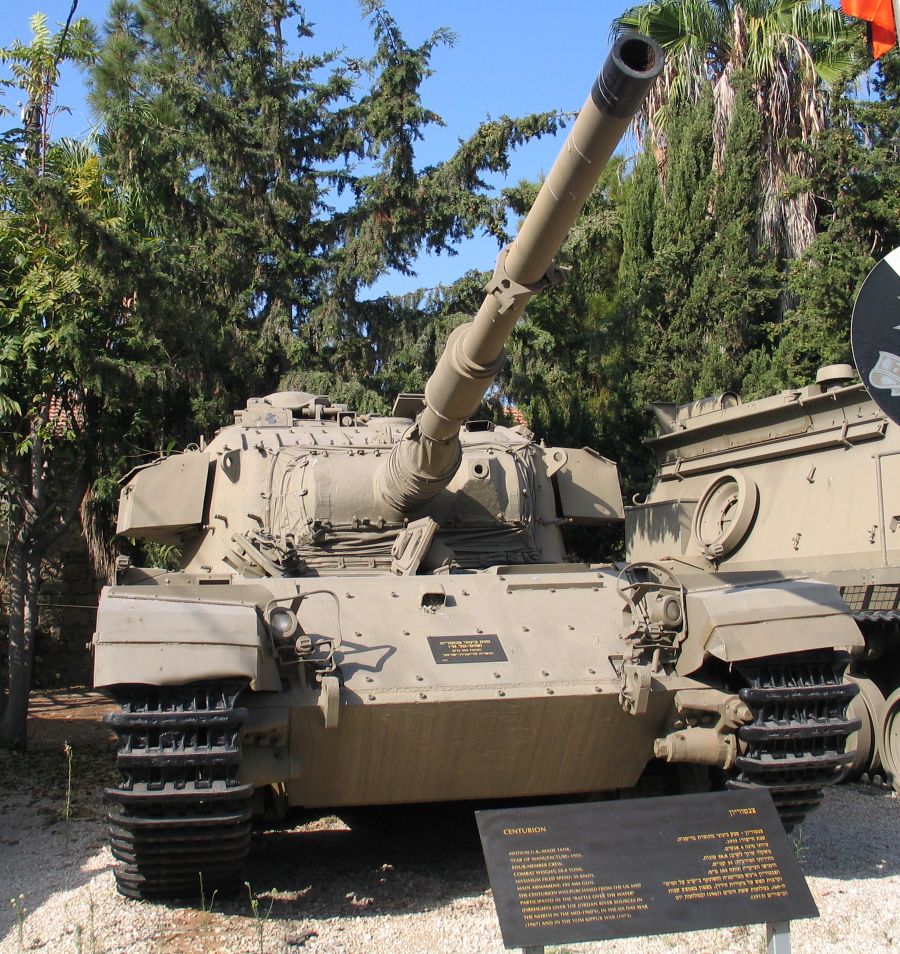
Sho't (Hebrew: שוט, lit. 'whip') is the Israeli designation of the British Centurion tank in IDF service from 1959 to 2002.
Sho't Meteors are made up of Mark 3, Mark 5, and Mark 8 Centurion tanks with the original Rolls-Royce Meteor engine upgunned to the 105mm Royal Ordnance L7 cannon. These tanks received minor additional upgrades and modifications by the Israel Defense Forces in earlier improvement programs for the tank. Bearing many original similarities to the British Centurions, they were not as heavily modified as the later Sho't Kal would be. Two main significant modifications were installed during Israeli Centurions' service that would make the Sho't Meteor: the replacement of the 84mm 20-pounder cannon with the 105mm L7 cannon, and the addition of an exterior rear fuel tank which greatly improved the range of the Sho't. The Sho't Meteor would be distinct for these two main modifications. Sho't Meteors only started to be referred to as Meteors when the Sho't Kal was introduced in order to differentiate the tanks. Before that, the normal name, "Sho't" would simply apply to the tanks. "Sho't" is still used as a standard common nickname when referring to any type of Sho't variant. The Sho't Meteor was not limited to, but was used extensively in the Six-Day War, and as well saw partial combat in the Yom Kippur War.
The Sho't Kal variants consist of modernized Centurion Mark, 3, 5, and 8 tanks with all the variants including significant mechanical upgrades, such as the new engines (Continental AVDS1790-2AC and 2AG diesel engines), and a new Allison CD-850-6 transmission. The addition "Kal" refers to the abbreviation of the engine manufacturer Continental, originally notated in Hebrew as "שוטקל" and transliterated as "sho'tqal". Kal in Hebrew as well means, "easy", since the modifications of the Sho't Kals made day-to-day life easier for the crew members serving in them. The names for the four main Sho't Kal variants are derivative from the Hebrew alphabet, with the four variants being the first four letters of the alphabet: Alef, Bet, Gimel, and Dalet. All the Sho't Kal variants are an upgrade and advancement of the previous version before them; keeping all previous components, with the only exception of them being replaced, or removed for a specific reason.
The Sho't Kal entered service in 1970 with Alef, and by 1974 all Israeli Centurions and Sho't Meteors were upgraded to Sho't Kal standard. Subvariants indicate upgrades received by Sho't Kal tanks during their operational life, including a new turret rotating mechanism, a new gun stabilization system, a new fire-control system, preparations for the installation of the Blazer (Baltan) reactive armor, and more.
Being the first version of the Sho't Kal series introduced in 1969, the tank only started to be referred as the Alef when the Sho't Kal Bet was introduced in 1975, with the Sho't Kal series annexing more variants. The Alef was a major upgrade from the Sho't Meteor, which was factored mostly by the new Continental AVDS1790-2AC engine and Allison CD-850-6A transmission.
The Sho't Kal Alef was used reputably in the 1973 Yom Kippur War along with Israeli Magachs and Sho't Meteors. Alefs were commonly equipped above the main gun mantlet with a captured Soviet Luna L-2 infrared searchlight taken from enemy tanks or a fixed-mounted .50 caliber M2HB machine gun; Alefs could also be equipped with a regular western searchlight. The .50 caliber machine gun on the previous Meteor variants were removed from the mount attached to the commander's cupola in favor of a .30 caliber machine gun, this was decided to more effectively deal with anti-tank and infantry teams. An additional 44mm thick frontal glacis armor plate was common to older Centurion Mark 3's upgraded to Sho't Kal standard, however, not all Alefs (especially Mk.5's) were equipped with this plate, as some can be seen in photos without the additional glacis plate. The additional plate mainly originates from Britain's Centurion Mark 5/1, which was an upgrade kit for Mark 5's that included the addition of the 44mm plate—these upgraded Mark 5's were mainly seen used by Australia during the Vietnam War but did see service with other countries. The armor was originally innovated to ensure protection against Soviet 100mm cannons.
The smoke grenade launchers from the base Centurion tanks were removed with the transition to the Alef, which would later prove to be an unfortunate mistake. Smoke launcher mounts were still attached to the turrets of some tanks, for not all of the mounts on the tanks had been entirely removed. It was decided smoke was no longer needed to mask tanks in battle; this was greatly regretted in the Yom Kippur War as there were many opportunities in combat where smoke could have been used to mask against ATGMs. Sho't Kals were later equipped with modern smoke grenade dischargers in future variants.
Introduced in 1975, the Sho't Kal Bet was the second variant of the Sho't Kal series and saw extensive usage in Operation Litani which occurred in 1978. The Sho't Kal Bet was a temporary solution to mechanical issues caused by the old British electric turret control system. Because the original mechanism gave unfavorable limited performance and tired the tank's batteries, it was replaced with a new hydro-electric turret traverse mechanism based on the Cadillac Gage mechanism in the M48 Patton tank. The new traverse system had been proven reliable and eased logistics however worries such as the flammability of the hydraulic fluids creating a risk in combat and the new lack of a gun stabilization system prevented the Bet from being fully implemented in the IDF.
Hub AI
Sho't AI simulator
(@Sho't_simulator)
Sho't
Sho't (Hebrew: שוט, lit. 'whip') is the Israeli designation of the British Centurion tank in IDF service from 1959 to 2002.
Sho't Meteors are made up of Mark 3, Mark 5, and Mark 8 Centurion tanks with the original Rolls-Royce Meteor engine upgunned to the 105mm Royal Ordnance L7 cannon. These tanks received minor additional upgrades and modifications by the Israel Defense Forces in earlier improvement programs for the tank. Bearing many original similarities to the British Centurions, they were not as heavily modified as the later Sho't Kal would be. Two main significant modifications were installed during Israeli Centurions' service that would make the Sho't Meteor: the replacement of the 84mm 20-pounder cannon with the 105mm L7 cannon, and the addition of an exterior rear fuel tank which greatly improved the range of the Sho't. The Sho't Meteor would be distinct for these two main modifications. Sho't Meteors only started to be referred to as Meteors when the Sho't Kal was introduced in order to differentiate the tanks. Before that, the normal name, "Sho't" would simply apply to the tanks. "Sho't" is still used as a standard common nickname when referring to any type of Sho't variant. The Sho't Meteor was not limited to, but was used extensively in the Six-Day War, and as well saw partial combat in the Yom Kippur War.
The Sho't Kal variants consist of modernized Centurion Mark, 3, 5, and 8 tanks with all the variants including significant mechanical upgrades, such as the new engines (Continental AVDS1790-2AC and 2AG diesel engines), and a new Allison CD-850-6 transmission. The addition "Kal" refers to the abbreviation of the engine manufacturer Continental, originally notated in Hebrew as "שוטקל" and transliterated as "sho'tqal". Kal in Hebrew as well means, "easy", since the modifications of the Sho't Kals made day-to-day life easier for the crew members serving in them. The names for the four main Sho't Kal variants are derivative from the Hebrew alphabet, with the four variants being the first four letters of the alphabet: Alef, Bet, Gimel, and Dalet. All the Sho't Kal variants are an upgrade and advancement of the previous version before them; keeping all previous components, with the only exception of them being replaced, or removed for a specific reason.
The Sho't Kal entered service in 1970 with Alef, and by 1974 all Israeli Centurions and Sho't Meteors were upgraded to Sho't Kal standard. Subvariants indicate upgrades received by Sho't Kal tanks during their operational life, including a new turret rotating mechanism, a new gun stabilization system, a new fire-control system, preparations for the installation of the Blazer (Baltan) reactive armor, and more.
Being the first version of the Sho't Kal series introduced in 1969, the tank only started to be referred as the Alef when the Sho't Kal Bet was introduced in 1975, with the Sho't Kal series annexing more variants. The Alef was a major upgrade from the Sho't Meteor, which was factored mostly by the new Continental AVDS1790-2AC engine and Allison CD-850-6A transmission.
The Sho't Kal Alef was used reputably in the 1973 Yom Kippur War along with Israeli Magachs and Sho't Meteors. Alefs were commonly equipped above the main gun mantlet with a captured Soviet Luna L-2 infrared searchlight taken from enemy tanks or a fixed-mounted .50 caliber M2HB machine gun; Alefs could also be equipped with a regular western searchlight. The .50 caliber machine gun on the previous Meteor variants were removed from the mount attached to the commander's cupola in favor of a .30 caliber machine gun, this was decided to more effectively deal with anti-tank and infantry teams. An additional 44mm thick frontal glacis armor plate was common to older Centurion Mark 3's upgraded to Sho't Kal standard, however, not all Alefs (especially Mk.5's) were equipped with this plate, as some can be seen in photos without the additional glacis plate. The additional plate mainly originates from Britain's Centurion Mark 5/1, which was an upgrade kit for Mark 5's that included the addition of the 44mm plate—these upgraded Mark 5's were mainly seen used by Australia during the Vietnam War but did see service with other countries. The armor was originally innovated to ensure protection against Soviet 100mm cannons.
The smoke grenade launchers from the base Centurion tanks were removed with the transition to the Alef, which would later prove to be an unfortunate mistake. Smoke launcher mounts were still attached to the turrets of some tanks, for not all of the mounts on the tanks had been entirely removed. It was decided smoke was no longer needed to mask tanks in battle; this was greatly regretted in the Yom Kippur War as there were many opportunities in combat where smoke could have been used to mask against ATGMs. Sho't Kals were later equipped with modern smoke grenade dischargers in future variants.
Introduced in 1975, the Sho't Kal Bet was the second variant of the Sho't Kal series and saw extensive usage in Operation Litani which occurred in 1978. The Sho't Kal Bet was a temporary solution to mechanical issues caused by the old British electric turret control system. Because the original mechanism gave unfavorable limited performance and tired the tank's batteries, it was replaced with a new hydro-electric turret traverse mechanism based on the Cadillac Gage mechanism in the M48 Patton tank. The new traverse system had been proven reliable and eased logistics however worries such as the flammability of the hydraulic fluids creating a risk in combat and the new lack of a gun stabilization system prevented the Bet from being fully implemented in the IDF.
Recent media