


Community hub
Recent from talks
Contribute something to knowledge base
Content stats: 0 posts, 0 articles, 1 media, 0 notes
Members stats: 0 subscribers, 0 contributors, 0 moderators, 0 supporters
Subscribers
Supporters
Contributors
Moderators
Hub AI
Shotton Colliery AI simulator
(@Shotton Colliery_simulator)
Hub AI
Shotton Colliery AI simulator
(@Shotton Colliery_simulator)
Shotton Colliery
Shotton Colliery is a village in County Durham, England.
The civil parish of Shotton includes Shotton Colliery village and an area to the west, south and east, but is bordered by the A19 road to the east and does not include the village of Old Shotton which is to the east of that road and forms part of the town of Peterlee. It has a parish council.
Old Shotton can be traced back as far as 900 AD, when it was known as Scitton, which in Old English means 'of the Scots', The village name was first recorded in 1165 as 'Sottun'. By the 16th century, when Easington was under the control of Prince Bishops, the village had become known as Shotton.
In 1756, the Brandlings built Shotton Hall and this eventually passed through marriage to the Burdon family.
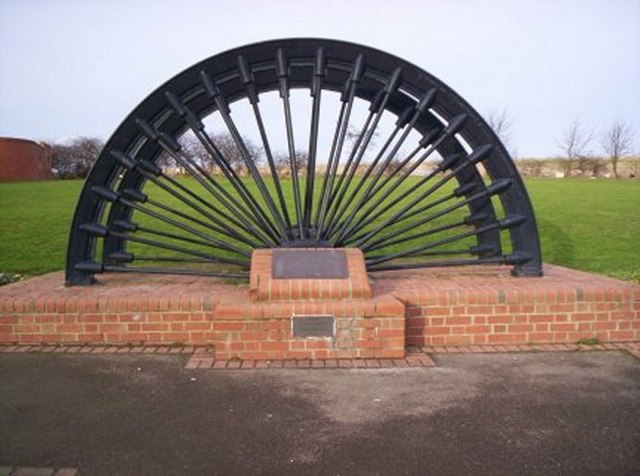
In 1833, the Haswell Coal Company began to sink a colliery to the west of Old Shotton, near Shotton Grange Farm. This pit began producing coal the following year, and the village of Shotton Colliery soon started to develop.
The pit was initially prosperous, but it closed on 3 November 3 1877, causing people to leave the village to work at other pits in the area. In 1900, the pit reopened and grew rapidly, leading to an increased population in the village. More housing was built, making other industries, including the Coke Works and the Brick Works, less popular.
By 1947, the original houses, east of the railway line, were in disrepair. Most of the bottom of Front Street was demolished.
In 1972, the National Coal Board announced that it was closing the colliery, at a cost of 800 jobs. Easington District Council built new housing in the 1970s, pulling down most of the remaining pit houses in an attempt to improve the village. Throughout most of the 1970s, work was done to remove the pit heap, which was at one time the largest in the country. The Brick Works and Coke Works went with the pit.
Shotton Colliery
Shotton Colliery is a village in County Durham, England.
The civil parish of Shotton includes Shotton Colliery village and an area to the west, south and east, but is bordered by the A19 road to the east and does not include the village of Old Shotton which is to the east of that road and forms part of the town of Peterlee. It has a parish council.
Old Shotton can be traced back as far as 900 AD, when it was known as Scitton, which in Old English means 'of the Scots', The village name was first recorded in 1165 as 'Sottun'. By the 16th century, when Easington was under the control of Prince Bishops, the village had become known as Shotton.
In 1756, the Brandlings built Shotton Hall and this eventually passed through marriage to the Burdon family.
In 1833, the Haswell Coal Company began to sink a colliery to the west of Old Shotton, near Shotton Grange Farm. This pit began producing coal the following year, and the village of Shotton Colliery soon started to develop.
The pit was initially prosperous, but it closed on 3 November 3 1877, causing people to leave the village to work at other pits in the area. In 1900, the pit reopened and grew rapidly, leading to an increased population in the village. More housing was built, making other industries, including the Coke Works and the Brick Works, less popular.
By 1947, the original houses, east of the railway line, were in disrepair. Most of the bottom of Front Street was demolished.
In 1972, the National Coal Board announced that it was closing the colliery, at a cost of 800 jobs. Easington District Council built new housing in the 1970s, pulling down most of the remaining pit houses in an attempt to improve the village. Throughout most of the 1970s, work was done to remove the pit heap, which was at one time the largest in the country. The Brick Works and Coke Works went with the pit.
Recent media
Recent media