Hubbry Logo
search
logo
1931411

Siam Square

logo
Community Hub0 Subscribers
Read side by side
from Wikipedia

13°44′39.95″N 100°31′59.3″E / 13.7444306°N 100.533139°E / 13.7444306; 100.533139

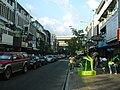
Siam Square Soi 7, a main road of Siam Square area
The entrance of Siam Square One

Siam Square (Thai: สยามสแควร์, pronounced [sā.jǎːm sā.kʰwɛ̄ː]) is a shopping and entertainment area in the Siam area of Bangkok, Thailand. The square is located at the corner of Phayathai Road and Rama I Road and is owned by Chulalongkorn University, managed by its Property Management Office, known as "Chula Property". It is connected to nearby shopping centers and shopping districts, such as MBK Center, Siam Paragon, and Ratchaprasong shopping district, by a skywalk.

History

[edit]

The area of Siam Square, which belongs to Chulalongkorn University,[1] was originally full of wooden houses and slum areas, until a fire incident evacuated the villagers from the area.[2][better source needed] After the fire, General Prapas Charusatien (Thai: ประภาส จารุเสถียร) director of Chulalongkorn University at that time, decided to develop the area of Siam Square into a commercial place in order to prevent the slum community that originally resided there from returning.[2] The Southeast Asia Company was the first to develop this area as an open-air shopping mall.[2] The first building was constructed in 1962 and finished in 1963, with Associated Professor Lert Urasayanan as the architect and Professor Rachot Kanchanawanit as the engineer.[2]

The original name of the square was Pathum Wan Square (Thai: ปทุมวันสแควร์), because it is in Pathum Wan District.[3] However, Kobchai Sosothikul, founder of Seacon Development Co. and owner of the project at that time, felt that the name was too small and renamed it to Siam Square after the whole country, Siam being the old name of Thailand.[3]

Later in 1991, various tutoring schools began opening in the Siam Square area, targeting students from the many schools nearby.[4]

Siam Square entered a period of downturn In 1996, when the Thai economy was in a state of recession from IMF debt. The nearby construction of the BTS Skytrain at that time also caused traffic jams that drove customers to other shopping districts.[4] To combat this issue, Chulalongkorn University initiated a project to turn Siam Square into a center of technology and development, with many improvements to the area in 1999 and 2000. One such development was relocating the parking lot behind the Lido cinema to the Witthayakit Building, opening up the space for outside companies to invest in developing the area, which became known as "Center Point" and served as a center of recreation for teenagers.[4]

Present day

[edit]

Siam Square is maintained by the University Property Management Office of Chulalongkorn University.[1] It has been compared to a "one-tenth miniature" of Bangkok in terms of catering for diverse needs, with over 4,200 shops in many styles and also many other types of services including many successful Thai businesses, tutor schools, restaurants, cafes, fashion, art, design, and many new emerging businesses.[5][6]

The customers or visitors vary from young-aged school and college students to office workers and foreign tourists, although most are students coming to attend the tutoring institutions concentrated in the area: at least 30 schools are located here,[2] making Siam Square the number one tutoring center in the country.[4]

Siam Square is a popular destination and traffic hub, with at least 400,000 people traveling to and through Siam Square each day..[6]

Location

[edit]

The area is located at the corner of Phayathai Road and Rama I Road,[2] prominently in front of Siam BTS station, which can be considered as the center of Bangkok.[citation needed]

Transportation

[edit]

Due to its location in the heart of Bangkok, many means of transportation are available.

BTS stations

[edit]

Aside from Siam station, Siam Square is close to National Stadium BTS station and Chit Lom BTS station.

Bus

[edit]

There are several bus lines that pass through Siam Square, with five soi having bus stops.[7]

Siam Paragon
Siam Center

Skywalk

[edit]

A skywalk Begins at National Stadium BTS station, passing by Siam BTS station and connecting to Chit Lom BTS station.[8] It connects to various shopping malls; all of the following can be reached by skywalk:[9]

[edit]

Siam Square is a composite of many different entertainment options. From Cinemas, and bowling alleys to aquarium and museum.[10] This area has it all, due to the advantage of being connected to many other popular places that can easily be reached with a skywalk. Siam Square is like the center of shopping and entertainment in Thailand. These are some of the most popular attractions.[11]

Sea Life Bangkok Ocean World (Siam Paragon)

[edit]

One of the largest aquariums in Southeast Asia. With the size of 3 Olympic pools and over 30,000 marine animals from across the world.[12]

Wat Pathum Wanaram

[edit]

The temple was built by King Rama IV in 1857 as a place of worship. This place is a rare example of ancient craftsmanship featuring ornate stencils and lacquered sculptures.[11]

Madame Tussauds (Siam Discovery Center)

[edit]

A wax museum with 10 exhibit rooms of lifelike wax figures. All in real-life themes, this made the museum feels more like a journey in time.[13]

Bangkok Art and Culture Centre (BACC)

[edit]

An art center with the widest range of contemporary art, design, music, theatre, and film in Bangkok. It regularly hosts changing exhibitions from both Thai and International artists.[14]


Working Hours: Sunday Monday Tuesday Wednesday Thursday Friday Saturday 10:00am–10:00pm

Cinemas

[edit]
The Siam Theatre.
  • The Siam – Opened in 1966, it stayed in operation for 44 years until it burned down during the 2010 Thai military crackdown, It was demolished a year later. The site has since been replaced with Siam Square One Shopping Center.[15]
  • Lido Theater – Opened in 1968 as a standalone, it was converted into a 3-screen cinema in 1994 before closing down for renovations in June 2018 which saw 2 of the 3 theatres repurposed for other uses. It often runs independent films not screened elsewhere in Bangkok. Concerts and other events are occasionally held here. It now operates a small-scale shopping center under the name Lido Connect. [16]
  • Scala Cinema – The 900-seat single-screen cinema opened in 1969, and was considered one of the finest movie houses in Asia. It was the final standalone movie theater in operation before closing in mid-2020 and was demolished by 2021 by its landowner, Chulalongkorn University to make way for re-development. The site, along with the adjacent buildings which were also demolished is still empty as of 2023. [17]

See also

[edit]

References

[edit]
[edit]
Revisions and contributorsEdit on WikipediaRead on Wikipedia
from Grokipedia
Siam Square is a commercial district in the Pathum Wan area of central Bangkok, Thailand, consisting of a grid of interconnected alleys known as sois branching off Rama I Road opposite major shopping centers.[1]
Owned by Chulalongkorn University and managed by its Property Management Office, the area was developed on university land starting in the late 1960s to generate rental income, with the first buildings constructed amid a landscape of wooden houses and canals.[2][3]
By the 1970s, it had evolved into prime real estate featuring hundreds of leased structures for retail and services, establishing it as a focal point for commerce in Bangkok.[4]
Positioned at the junction of Rama I and Phayathai Roads adjacent to the Siam BTS Skytrain station, Siam Square serves as a bustling hub for shopping, dining, and entertainment, particularly appealing to young locals and visitors seeking trendy boutiques, street fashion, cafes, and cinemas.[1][3]
The district's dense network of narrow lanes hosts independent shops, market stalls, and eateries, fostering a vibrant atmosphere of alternative style and youth-oriented commerce that contrasts with the upscale malls like Siam Paragon and Siam Center nearby.[1]
Recognized for commanding some of the highest land rental rates in Bangkok, it exemplifies the city's transformation into a modern retail economy while remaining under university oversight for ongoing redevelopment toward innovation and sustainability initiatives.[1][5]

History

Origins and Establishment

Siam Square occupies land originally granted to Chulalongkorn University by King Vajiravudh (Rama VI), with formal ownership transferred to the institution via legislation in 1939 after prior rental arrangements.[6] Prior to its commercial development, the area consisted of a slum settlement featuring wooden houses and informal structures, reflecting the rapid urbanization pressures on Bangkok in the post-World War II era.[3][4] A pivotal event occurred on an unspecified date in 1965 when a major fire ravaged the slum, destroying nearly all existing buildings and clearing the site for redevelopment.[4] In response, Chulalongkorn University, seeking to generate stable rental income to support its operations, commissioned the construction of modern low-rise buildings to form an integrated shopping and entertainment complex.[2] This initiative marked the area's transition from informal habitation to a planned commercial zone, aligned with broader economic modernization efforts in Thailand during the 1960s.[7] The first structures in Siam Square were erected during the second half of the 1960s, strategically located between Phaya Thai Road and Rama I Road to capitalize on proximity to the university and emerging urban traffic flows.[2][3] These early developments emphasized pedestrian-oriented shophouses and small retail spaces, establishing the district's foundational character as a youth-centric hub for fashion, cinemas, and casual dining, distinct from traditional markets elsewhere in Bangkok.[8] By the late 1960s, the area had begun attracting tenants focused on Western-influenced consumer trends, laying the groundwork for its role in Thailand's growing retail economy.[9]

Expansion in the Mid-20th Century

The development of Siam Square as a commercial district commenced in the early 1960s on land owned by Chulalongkorn University, transforming an area previously occupied by wooden houses into a low-rise retail neighborhood. The inaugural building was constructed in 1962 under the design of Associate Professor Lert Urasayanan, with structural engineering by Professor Rachot Kanchanawanit, and completed in 1963, coinciding with the formal opening of Siam Square.[10][11] This initiative was primarily driven by the university's need to generate stable rental income from underutilized property adjacent to its campus.[2][3] Initial structures housed ordinary shops catering to local demand, establishing Siam Square as Bangkok's emerging shopping hub amid the city's post-World War II economic growth and urbanization. By the mid-1960s, additional low-rise buildings expanded the footprint, focusing on pedestrian-friendly alleys (sois) that connected Phayathai Road and Rama I Road, fostering accessibility for students, residents, and early visitors.[2][12] The project's modest scale reflected broader trends in Thai urban planning, prioritizing revenue generation over large-scale infrastructure, with Chulalongkorn University retaining ownership and leasing spaces to tenants.[3] This phase laid the groundwork for Siam Square's role as a cultural and commercial node, drawing initial investments in retail and services that capitalized on proximity to educational institutions and transportation routes, though expansion remained incremental without major public funding or foreign capital until later decades.[2][11]

Late 20th to Early 21st Century Developments

In the 1990s, Siam Square, owned and managed by Chulalongkorn University's Property Management Office, transitioned further toward youth-oriented retail and leisure, building on its earlier foundations to become Bangkok's central hub for fashion, cafes, and entertainment venues. The decade saw the opening of Siam Discovery Center in 1997 by Siam Piwat Company, marking Thailand's first lifestyle specialty store with a focus on innovative retail concepts and international brands, even as the Asian financial crisis unfolded.[13] This 7-story mall, adjacent to the existing Siam Center, expanded the precinct's appeal to urban consumers seeking experiential shopping beyond traditional markets.[14] The early 2000s brought accelerated infrastructure and commercial growth, amplified by the 1999 launch of the BTS Skytrain system, which provided direct access via Siam Station and increased foot traffic by facilitating easier connectivity from across Bangkok. Siam Square's low-rise sois filled with boutique outlets, street fashion stalls, and performance spaces, while adjacent mega-developments redefined the area's scale; notably, Siam Paragon opened on December 9, 2005, with an investment of approximately 15 billion Thai baht (about US$450 million), encompassing 500,000 square meters of space for luxury retail, a 16-screen cinema, and SEA LIFE Bangkok Ocean World, Asia's largest aquarium at the time.[15] These additions, developed through partnerships like Siam Piwat and the Mall Group, positioned Siam Square as a integrated commercial ecosystem, drawing over 100,000 daily visitors by mid-decade and contributing to Pathumwan District's economic vitality.[16] By the late 2000s, renovations to legacy structures like Siam Center—following a 1997 fire—enhanced modern amenities, while Siam Square proper maintained its pedestrian-friendly, eclectic vibe with over 600 leased units supporting independent designers and eateries. This period's developments reflected Chulalongkorn University's strategy of revenue generation through sustained commercialization, yielding annual leases in the millions of baht and fostering a resilient district amid Thailand's post-crisis recovery.[4][17]

Recent Renovations and Projects (2010s–2025)

In the early 2010s, following damage from political protests in 2010, Chulalongkorn University's Property Management Office (PMCU) initiated gentrification projects in Siam Square, including the development of Siam Square One, an open-air retail complex completed in 2012 that replaced the historic Siam Theater.[18][8] Designed by the Office of Bangkok Architects, the 37,000-square-meter project featured air-conditioned lower levels for shops, upper open-air terraces, and a sloped walkway linking to the BTS Skytrain platform, aiming to preserve the area's street-level shopping ambiance while targeting younger demographics with dynamic circulation spaces.[18] A broader redevelopment plan for the Siam District, encompassing Siam Square, was announced in October 2015 with a total investment of nearly 12 billion baht, coordinated by PMCU alongside partners including MBK Plc, Siam Piwat Co., and the Siam Square Business Group.[19] Key components included a 2-billion-baht skywalk by MBK linking Pathumwan Intersection to Chulalongkorn Soi 12 and the Sasin Graduate Institute of Business Administration, alongside 1 billion baht for MBK Center upgrades, 4 billion baht to transform Siam Discovery into a hybrid retail complex, and 3-4 billion baht for new hotel and office buildings within Siam Square.[19] The initiative sought to position the district as a major commercial hub attracting 550,000 daily visitors, with enhanced security and competition against areas like the Em District.[19] In response to declining footfall during the COVID-19 pandemic, PMCU launched The New Siam Square 2020 project around 2020-2021 to revitalize the precinct through expanded public spaces, wider footpaths, additional tree planting, and modernized facades with floor-to-ceiling displays for new outlets like Mil Toast House.[20] By August 2022, these efforts culminated in Siam Square's conversion to a cable-free pedestrian boulevard, fostering a vibrant, walkable environment modeled after streets in Ginza and Myeongdong.[21] Ongoing street upgrades continued into 2022 in areas like Soi 7 and extended into 2025, including enhancements to sidewalks and mixed-use structures such as Siamscape, a sustainable commercial building integrating retail and offices.[22][23]

Geography and Urban Layout

Physical Boundaries and Structure

Siam Square is geographically positioned in the Pathum Wan district of central Bangkok, Thailand, immediately south of Rama I Road and west of Phayathai Road, forming a compact urban enclave approximately 500 meters in north-south length and 300 meters in east-west width.[1] Its eastern boundary aligns with Phayathai Road, while the western edge extends to roughly the alignment of Soi 12 and adjacent pathways, near the proximity of Henri Dunant Street.[1] To the south, the district tapers toward properties affiliated with Chulalongkorn University, beyond which residential and academic zones predominate, with no fixed hard boundary but rather a transition via diminishing commercial density.[1] This delineation, established since the area's initial development in the 1970s on university-owned land, prioritizes pedestrian-scale commerce over expansive sprawl.[24] The internal structure comprises a rectilinear grid of 12 numbered sois—narrow alleys branching southward perpendicular from Rama I Road—interlinked by cross-streets and elevated walkways that facilitate foot traffic.[25] These sois, typically 5–10 meters wide, feature multi-story shophouses with ground-level retail facades, upper-floor offices, and rooftop extensions, creating a dense, vertical built environment averaging 4–6 stories in height.[26] Pedestrian-only zones dominate, especially in central sois like 3 and 7, with recent infrastructure upgrades since 2020 including widened pavements, subsurface utilities to eliminate overhead wires, and green axes for shading and airflow.[21] Cross-connections, such as those via the Siam Square One complex, integrate the grid with adjacent malls like Siam Paragon to the north, enhancing contiguous flow without vehicular dominance.[18] This layout, oriented around human-scale navigation, contrasts with Bangkok's broader arterial road network by emphasizing alley-based connectivity, where sois serve as primary arteries for commerce and social activity rather than through-traffic routes.[27] The grid's uniformity supports high footfall density, with building setbacks minimized to maximize rentable frontage, though seismic and flood-resilient reinforcements have been incorporated in post-2010 retrofits.[28] Overall, the structure fosters an enclosed, explorable precinct amid the city's high-density core.[29]

Integration with Adjacent Districts

Siam Square, situated within Bangkok's Pathum Wan District, maintains strong urban integration with the neighboring Ratchathewi District to the north via an interconnected system of elevated skywalks and pedestrian bridges that span key roadways such as Phayathai Road and Rama I Road. These structures enable uninterrupted foot traffic between Siam Square's core sois and adjacent commercial zones, including the Ratchaprasong area encompassing CentralWorld, fostering a unified shopping and entertainment corridor that transcends administrative boundaries.[30][31] Central to this connectivity is the OneSiam Skywalk at the Pathumwan Intersection, a 300-meter-long elevated pathway linking Siam Square directly to Siam Paragon, Siam Center, Siam Discovery, and MBK Center, with extensions facilitating access to Ratchathewi's retail extensions. Constructed with universal design principles for accessibility, including ramps and elevators, the skywalk underwent significant renovations costing approximately 300 million baht, reopening in phases between 2017 and 2022 to enhance pedestrian safety amid heavy traffic volumes exceeding 100,000 vehicles daily at the intersection.[32][33] This infrastructure supports daily commuter flows of tens of thousands, reducing ground-level congestion and enabling economic synergies, such as shared customer bases between Siam Square's independent boutiques and larger malls in adjacent districts.[32] Public transportation further bolsters integration, with the Siam BTS Skytrain station—directly adjacent to Siam Square—serving as an interchange for the Sukhumvit Line (extending eastward to Sukhumvit District) and Silom Line (reaching westward to Silom and southern areas), while northern extensions via linked walkways connect to Ratchathewi-bound services toward Phaya Thai and beyond. Bus routes operated by the Bangkok Mass Transit Authority, such as lines 25, 40, and 204, provide supplementary ground-level links from Siam Square to Ratchathewi's Pratunam market and other nodes, with frequencies up to every 10 minutes during peak hours.[31][34] These multimodal connections handled over 200,000 daily passengers at Siam station as of 2023, underscoring Siam Square's function as a pivotal transit and commercial gateway.[31]

Transportation and Accessibility

Rail Systems

Siam Square is primarily accessed via the BTS Skytrain, an elevated light rail system operated by Bangkok Mass Transit System Public Company Limited. The Siam station serves as the central interchange for the Sukhumvit Line (Light Green) and Silom Line (Dark Green), facilitating connections from northern suburbs like Mo Chit to eastern areas such as Kheha, and from western districts like Bang Wa to the city center. Opened on December 5, 1999, alongside the initial BTS network, Siam station is positioned on Rama I Road adjacent to Siam Square's western boundary, with direct pedestrian skybridges linking it to commercial hubs including Siam Paragon and Siam Center.[35][36] The Silom Line's National Stadium station, immediately adjacent to Siam station (one stop eastward), provides additional rail access to Siam Square's southern extents, including connections to MBK Center and skybridges extending to Siam Discovery Center and parts of the square itself. This proximity enables seamless transit, with trains operating daily from 6:00 a.m. to midnight and frequencies as short as 2-3 minutes during peak hours. The BTS network totals approximately 68.5 kilometers with 60 stations, carrying over 1 million passengers daily as of recent reports, underscoring its role in alleviating Bangkok's traffic congestion for areas like Siam Square.[35][37] While the MRT subway system operates in Bangkok, no stations directly serve Siam Square; the closest, such as Lumphini on the Blue Line, require transfers from BTS, making the Skytrain the dominant rail option for the district. Integration via skywalk networks enhances accessibility, linking rail platforms to Siam Square's pedestrian-oriented layout without ground-level crossings.[38][39]

Road and Bus Networks

Siam Square is bordered by Rama I Road to the south and Phayathai Road to the west, providing primary vehicular access to the district, with internal connectivity via a grid of narrow sois extending northward from Rama I Road toward Chulalongkorn University.[1] These arterial roads form part of Bangkok's broader urban network, linking Siam Square to adjacent commercial zones like Ratchaprasong to the east along Henri Dunant Street and Pathum Wan district.[1] Traffic congestion is prevalent on these routes, exacerbated by high volumes of private vehicles, taxis, and delivery services supporting the area's retail density, though dedicated bus lanes and intersections with elevated BTS Skytrain links mitigate some disruptions.[40] Public bus services, primarily operated by the Bangkok Mass Transit Authority (BMTA), offer extensive coverage to Siam Square, with key routes such as 15, 16, and 40 providing direct boarding points near the district's core.[40] Lines 15, 47, and 49 connect from northern and historical sites like Bang Lamphu and Khao San Road, with fares typically ranging from ฿17 to ฿24 and frequencies up to every 10 minutes during peak periods.[41][34] Additional services, including Thai Smile Bus routes from nearby BTS stations like Phloen Chit, facilitate short-haul trips of 5–10 minutes to the area, integrating with the road network for last-mile access amid Bangkok's variable traffic conditions.[42] These routes emphasize Siam Square's role as a transport nexus, though reliance on buses has declined with the rise of rail options due to road congestion reliability issues.[34]

Pedestrian and Connectivity Features

Siam Square incorporates pedestrian-oriented infrastructure, including ground-level footpaths through its sois (alleys) and a central boulevard redesigned in 2022 as a walking street, which eliminates overhead cables and restricts vehicular access to prioritize foot traffic, particularly on weekends.[21][43] This renovation, overseen by Chulalongkorn University as property manager, enhances spatial connectivity and shop accessibility, factors empirically linked to higher pedestrian volumes in urban studies of the area.[44][45] Elevated skywalks provide seamless links to adjacent malls and transit, mitigating Bangkok's traffic congestion and uneven sidewalks. The OneSiam Skywalk, operational since at least 2017 and featuring Universal Design for elderly, disabled, and general users, spans the Pathumwan intersection to connect Siam Square with MBK Center, Siam Discovery, Bangkok Art and Culture Centre, National Stadium, and BTS stations at Siam and National Stadium.[32][33] Its design draws from New York's High Line with lotus-inspired motifs referencing the site's pre-urban lotus pond history, incorporating public art and viewpoints to encourage prolonged pedestrian use.[32] Direct integration with Siam BTS station, an interchange for the Sukhumvit and Silom lines, occurs via covered skybridges and walkways extending from the station platform to Siam Square and linked malls like Siam Paragon and Siam Center, facilitating over 100,000 daily passengers' ground-level transitions without road crossings.[45] Chulalongkorn University's broader walkability initiatives include additional covered pathways and accessibility ramps across Siam Square, promoting safe, shaded movement amid tropical conditions.[45] In 2024, the district hosted "Siam Square Walking Street for All," a two-day event closing roads for inclusive performances by disabled artists, underscoring ongoing commitments to equitable pedestrian spaces.[46]

Commercial Facilities

Retail and Shopping Precincts

Siam Square's retail precincts form a pedestrian-oriented network of narrow sois and open-air boulevards branching from the central area along Rama I Road, featuring a dense concentration of independent boutiques, market stalls, and small shops focused on apparel, accessories, and cosmetics. These precincts emphasize affordable and trendy fashion targeted at youth demographics, with vendors offering items such as streetwear, vintage-inspired clothing, and locally designed accessories starting from low price points like 100 baht.[47][48] The layout promotes walkable exploration, distinguishing it from adjacent enclosed mega-malls by prioritizing eclectic, small-scale retail experiences over large-chain outlets.[49] Key sub-precincts include Siam Square Soi 2 through Soi 7, where clusters of tailor shops, multi-brand concept stores, and pop-up stalls provide customized and alternative styles, including Thai indie labels and imported trendy pieces. Siam Square One anchors the eastern edge as a contemporary open-plan mall with multi-level zones dedicated to budget fashion on lower floors and upscale lifestyle retail above, integrating technology gadgets and beauty products into the shopping mix.[1] This structure supports a vibrant, informal trading environment, with street-level kiosks and alleyway vendors contributing to the area's reputation for dynamic, youth-driven commerce.[50] The precincts' retail character reflects Bangkok's blend of traditional market haggling and modern boutique curation, with over 200 local designers represented in select multi-brand outlets, fostering an ecosystem for emerging fashion talent. Operating daily from approximately 10 a.m. to 10 p.m., these areas see high foot traffic due to their proximity to BTS Skytrain access, enhancing accessibility for impulse and discovery-based shopping.[51][48]

Entertainment and Dining Options

Siam Square features a mix of historic and modern entertainment venues, with cinemas serving as key attractions for local youth and visitors. The Scala Cinema, a single-screen theater operational since the late 1960s, stands as Bangkok's last surviving standalone movie house, offering a retro experience amid the district's urban bustle.[52] Adjacent to Siam Square, the Paragon Cineplex in Siam Paragon mall provides advanced screenings, including Thailand's first 4D cinema with motion seats, vibrations, and sensory effects, alongside IMAX and luxury seating options.[53] These facilities draw crowds for blockbuster films and immersive formats, contributing to the area's role as an entertainment hub.[54] Dining options in Siam Square emphasize affordable, diverse eateries popular among students from nearby universities, blending Thai staples with international influences. Inter Restaurants, established in 1981, offers budget-friendly Thai and Western dishes, attracting generations of diners with its casual vibe.[55] Som Tam Nua specializes in spicy Isaan cuisine, such as papaya salad, while Koko provides vegetarian Thai fare in a laid-back setting.[56] Cafes like ONCE and trendy spots such as Piranya serve fusion meals and desserts, catering to the district's youthful demographic with quick, Instagrammable options.[55] The food scene extends to street-style vendors and small sois, featuring Korean tokpokki at RedSun and pandan-infused sweets at Siam Pandan, reflecting Siam Square's evolution into a casual dining precinct amid its shopping focus.[56] These establishments, many operating for decades, support the area's vibrant pedestrian traffic, though variety leans toward fast-casual rather than high-end gastronomy.[55]

Cinemas and Media Hubs

Siam Square historically served as a key hub for standalone cinemas in Bangkok, anchored by the Apex group's theaters. The Siam Cinema opened on December 15, 1966, premiering Battle of the Bulge in 70mm format with Cinerama capabilities and an 800-seat capacity.[57] The adjacent Lido and Scala cinemas followed in 1969, with Scala featuring a thousand-seat auditorium modeled after Milan's Teatro alla Scala and screening its first film, The Undefeated, on December 31.[58] These venues epitomized Bangkok's mid-20th-century cinema era, drawing crowds for blockbusters, romances, and local films amid the district's growing entertainment appeal.[59] The Lido closed in May 2018 and was repurposed into Lido Connect, a multifunctional performance space for events, exhibitions, and live shows by 2019.[60] Scala, the last operating standalone theater in central Bangkok, shuttered permanently in July 2020 amid the COVID-19 pandemic and urban redevelopment pressures, with its Art Deco facade demolished in 2021 for integration into a new Central Group mall project.[58][61] These closures marked the end of Siam Square's traditional single-screen era, shifting focus to multiplexes while preserving the area's cinematic legacy through preserved memories and redevelopment plans.[62] Contemporary cinema experiences in the Siam Square vicinity center on the adjacent Siam Paragon mall, opened in December 2006, which houses Paragon Cineplex—a Major Cineplex-operated venue with 16 screens, over 5,000 seats, and premium formats including IMAX at Krungsri IMAX.[53][63] This multiplex offers luxury amenities such as VIP seating with recliners, 4DX effects, and Dolby Atmos sound, attracting audiences for mainstream Hollywood releases, Thai films, and international blockbusters.[54] Beyond screening, the complex integrates media elements like VR experiences and event spaces, functioning as a broader entertainment node connected to Siam Square via pedestrian links.[64] Media hubs in Siam Square emphasize consumption over production, with limited dedicated facilities for content creation; the district occasionally serves as a filming location for commercials and videos due to its vibrant urban backdrop, but major production studios are situated elsewhere in Bangkok.[65] Digital out-of-home (DOOH) advertising screens and promotional media displays enhance the area's role as a visual media conduit for retail and events.[66] Overall, cinemas remain the district's primary media draw, evolving from nostalgic standalone houses to high-tech multiplexes that sustain Siam Square's status as an entertainment focal point.

Cultural and Social Role

Youth Culture and Fashion Hub

Siam Square functions as a key nexus for Bangkok's youth culture, drawing students and young adults from nearby institutions like Chulalongkorn University to its pedestrian-friendly alleys lined with independent boutiques and street vendors. These spaces emphasize alternative fashion, including punk, goth, grunge, and streetwear styles, with approximately 30-40 specialized shops offering affordable, expressive apparel that blends global influences such as Japanese and Western trends with Thai aesthetics.[67] [68][11] The district's sois host vibrant pop-up markets and events that amplify its appeal, featuring live music, cosplay meetups, and showcases for local designers, fostering a creative environment distinct from the adjacent luxury malls. This concentration of indie retail and casual social venues positions Siam Square as a breeding ground for street style experimentation among Thailand's urban youth, who prioritize eclectic, budget-conscious outfits over mainstream high-end labels.[69] [70][49] Fashion trends here evolve rapidly through social media and peer influence, with emphasis on sustainable upcycling and custom pieces from Thai brands, as seen in recent pop-up stores promoting multi-brand spaces for trying emerging styles. The area's role extends to cultural expressions like temporary art installations and youth-led fashion swaps, reinforcing its status as a dynamic counterpoint to commercialized retail in central Bangkok.[71][68]

Artistic Institutions and Events

The Bangkok Art and Culture Centre (BACC), located at 939 Rama I Road opposite MBK Center and proximate to Siam Square, stands as the principal artistic institution in the district. Opened in 2008 following a project initiated in 1995, the nine-story venue provides free admission to exhibitions showcasing contemporary Thai and international visual arts, design, photography, and multimedia installations.[72][73] It includes dedicated performance spaces for theater, dance, music concerts, and film screenings, hosting programs that address modern social themes and cultural dialogues.[74][75] BACC organizes ongoing events such as artist workshops, public lectures, and interdisciplinary performances, drawing local and global participants to engage with evolving artistic practices. These activities emphasize empirical exploration of cultural narratives through first-hand artistic production rather than mediated interpretations.[76] Siam Square itself hosts periodic artistic events, including street performances and music festivals that incorporate live acts and installations. For instance, the Music Street @ Siam Square features orchestral performances by groups like the Chulalongkorn University Symphony Orchestra, held in Block I on dates such as August 16, 2025.[77] The Bangkok Street Performer Festival, occurring in March, presents music, visual arts, and theatrical elements amid the area's pedestrian zones.[78] Historically, the Scala Theatre, situated within Siam Square and operational from December 31, 1969, until July 2020, functioned as a standalone venue for cinematic arts, screening independent and arthouse films alongside special cultural events like midnight showings and festivals. Its Art Deco design and 1,000-seat capacity made it a landmark for film-based artistic appreciation until urban redevelopment led to its closure and demolition.[58][79] Adjacent commercial complexes contribute to the artistic landscape; Siam Paragon's World Art Collective, launched in 2024, exhibits works by nine Thai artists to enhance public access to fine art within retail settings.[80] Siam Center similarly features temporary art installations and design showcases tied to fashion and creative industries.[81]

Religious and Historical Sites

Wat Pathum Wanaram, also known as the Lotus Temple, stands as the principal religious and historical site within Siam Square, a royal Buddhist temple of the Thammayut order constructed in 1857 during the reign of King Rama IV (Mongkut).[82][83] Originally built adjacent to the monarch's Sa Pratum Palace amid canals and rice fields, the temple served as a spiritual retreat for palace residents and later housed the ashes of several Chakri dynasty royals, including Princess Prem Purachatra and her daughter.[84][85] Its third-class royal status underscores its enduring ties to Thai monarchy and Theravada Buddhism, featuring traditional architecture like a bot (ordination hall) and viharn (assembly hall) that have remained largely intact despite surrounding urbanization.[86] Nestled between Siam Paragon and CentralWorld malls, Wat Pathum Wanaram provides a tranquil oasis amid Siam Square's commercial bustle, attracting worshippers for daily rituals and alms-giving while offering free public access.[87] The temple's preservation amid Bangkok's Pathum Wan district highlights its historical role in bridging pre-modern royal landscapes with modern development, as the area transitioned from agrarian use to urban shophouses starting in the 1960s on adjacent Chulalongkorn University land.[88] No other major temples or shrines occupy Siam Square proper, though nearby Ratchaprasong intersection—connected via skywalks—hosts the Erawan Shrine (Thao Maha Phrom), a 1956 Hindu-Buddhist site dedicated to Phra Phrom (Brahma), drawing crowds for prosperity prayers but situated outside the core Siam Square grid.[3]

Economic Contributions

Retail and Tourism Revenue

Siam Square, integrated with adjacent malls operated by Siam Piwat Group such as Siam Paragon and Siam Center, drives substantial retail revenue through high-volume footfall from local youth and international tourists. Daily visitor numbers at Siam Paragon reach 150,000 to 200,000, while Siam Center and Siam Discovery attract 100,000 to 120,000, contributing to over 100 million annual visitors across Siam Piwat properties in the district.[89][90] These figures underscore the area's role as a prime retail hub, with luxury brand sales at Siam Piwat sites achieving a cumulative 300% growth over the three to four years prior to 2023.[91] The district's retail performance mirrors Bangkok's broader recovery, where shopping centre revenues surged 43% above pre-COVID levels to approximately 1.2 trillion baht by the end of the fiscal year ending around 2023.[92] Siam Piwat reported a 25% year-on-year revenue increase in the first half of 2023 and 27% growth in the first quarter compared to 2022, fueled by experiential retail and events tailored to shoppers.[93][94] Street-level boutiques in Siam Square soi, specializing in fashion and accessories, complement mall offerings, capturing spending from budget-conscious domestic consumers and tourists seeking authentic Thai street retail. Tourism revenue in the area stems from Siam Square's appeal as a shopping and entertainment nexus, drawing visitors via BTS connectivity and proximity to landmarks. The district supports Bangkok's tourism sector, which contributes around 18% to Thailand's GDP through retail, hospitality, and related spending.[95] Siam Piwat properties have aided post-pandemic tourism recovery, with events boosting visitor arrivals and economic circulation, as evidenced by targeted investments exceeding 1 billion baht for Q4 2023 promotions aiming for 30 million tourists.[96] Overall, Thailand's tourism revenues are projected to reach 3.4 trillion baht in 2025 from nearly 40 million visitors, with high-traffic zones like Siam Square capturing a disproportionate share via impulse and luxury purchases.[97]

Employment and Urban Development Impact

Siam Square, developed by Chulalongkorn University in the early 1960s on approximately 300 rai (48 hectares) of land along Rama I Road, served as a pioneering commercial project that catalyzed urban expansion in Bangkok's Pathum Wan district.[8] This initiative shifted the area from primarily residential and educational use to a mixed-use commercial precinct, fostering the growth of interconnected retail and entertainment facilities that defined the Siam-Ratchaprasong business district.[8] The district's evolution included the addition of major landmarks such as Siam Center in 1976 and Siam Paragon in 2006, alongside infrastructure enhancements like the Siam BTS Skytrain station opened in 1999, which improved connectivity and spurred further high-density development.[8] The precinct's role in urban development extended to promoting pedestrian-oriented spaces and mixed retail environments, influencing broader zoning patterns in central Bangkok by prioritizing commercial viability over traditional low-rise layouts.[44] This growth contributed to Pathum Wan's high urban density, with population densities reaching around 5,900 people per square kilometer in adjacent areas, while integrating informal elements like street vending to support dynamic land use.[98] However, such expansion has intensified pressures on surrounding infrastructure, though it has anchored the district as a tourism and retail magnet, driving ancillary developments like office towers and hotels.[99] In terms of employment, Siam Square sustains a diverse workforce centered on retail sales, hospitality, and informal vending, with the precinct's grid of sois hosting independent shops, cafes, and boutiques that employ local residents in service-oriented roles.[100] Night-time informal street trading in the area generates supplementary jobs for vendors and support staff, contrasting with more regulated economies elsewhere by accommodating flexible, low-barrier entry work amid high commuter foot traffic.[101] Adjacent formal retail complexes amplify this impact, with the broader Siam ecosystem under entities like Siam Piwat contributing to economic multipliers through tourism-driven service jobs, though precise precinct-specific figures remain undocumented in public data.[102] The district's youth-oriented commerce also fosters creative and entrepreneurial employment, aligning with Thailand's creative economy policies since the 11th National Economic and Social Development Plan (2012-2016).[103]

Challenges and Criticisms

Urban Congestion and Infrastructure Strain

Siam Square's central location and high concentration of commercial activity result in persistent vehicular congestion on surrounding roads like Phaya Thai and Rama I, with nearby Siam Centre ranked as Bangkok's top shopping complex for generating traffic jams, particularly during hot weather periods when air-conditioned malls draw crowds.[104] This strain intensifies during rush hours (7:30-9:30 a.m. and 5:00-7:30 p.m.) and weekends, contributing to Bangkok's overall congestion index of around 40 in recent measurements, where travel times increase substantially.[105][106] Pedestrian overcrowding is equally acute in the area's narrow sois and footpaths, where high footfall from shopping, dining, and events overwhelms limited sidewalk space, often exacerbated by street vendors encroaching on walkways.[107] The convergence of retail infrastructure and dense urban mobility in Siam Square amplifies these conflicts, as noted in analyses of Bangkok's transportation responses to economic shocks, where the district's popularity for entertainment leads to bottlenecks at entry points.[108] Public transit infrastructure, including the Siam BTS station—a key interchange—experiences overload from surging passenger numbers, failing to fully alleviate road traffic despite expansions, as connectivity gaps persist between skytrain, MRT, and local roads.[109] Parking shortages, mandated at one slot per 20 square meters of retail floor area for large complexes like those in the area, further pressure surrounding streets, promoting illegal parking and gridlock.[110] Ongoing infrastructure upgrades, such as mass transit extensions planned through 2025, aim to mitigate these strains but have yet to resolve underlying issues from rapid urbanization and population density exceeding 5,900 people per square kilometer in central zones.[111][112][113] Safety risks from mixed pedestrian-vehicle interactions and delayed emergency responses due to congestion highlight the need for better spatial planning in pedestrian-oriented streets.[114][115]

Social and Political Incidents

Siam Square, located near major universities such as Chulalongkorn and Thammasat, has served as a gathering point for youth-led political demonstrations amid Thailand's pro-democracy movements. During the 2020–2021 protests against Prime Minister Prayut Chan-o-cha's government, protesters frequently assembled around the Siam BTS station, demanding parliamentary dissolution, a new constitution drafted by elected representatives, and reforms to the monarchy including greater transparency in royal finances and reduced military influence.[116] On November 21, 2020, hundreds of young demonstrators convened at the Siam Square BTS area, part of a broader wave of student-led actions that spread from university campuses to central Bangkok districts, highlighting frustrations with authoritarian governance post-2014 coup. These events remained largely peaceful at Siam Square, contrasting with clashes elsewhere in Bangkok, though police monitored gatherings closely amid lese-majeste law enforcement concerns.[117] In February 2024, tensions escalated when anti-monarchy activists, led by figures like Tantawan Tuatulanon, faced off against royalist groups near Siam BTS, prompting the temporary closure of two station exits for public safety.[118] The confrontation arose after activists sought to file assault charges at Pathum Wan police station against royalist assailants from a prior poll-related incident, drawing counter-demonstrators and resulting in a brief brawl outside a nearby mall.[119] Police intervened to separate factions, with no major injuries reported, but the event underscored ongoing polarization between pro-democracy youth and conservative royalists in urban youth hubs like Siam Square.[118] Such incidents reflect broader social divides, where student activism challenges entrenched power structures, often invoking lèse-majesté risks under Thailand's strict laws.[120]

References

User Avatar
No comments yet.