



Community hub
Recent from talks
Knowledge base stats:
Talk channels stats:
Members stats:
Crusader invasions of Egypt
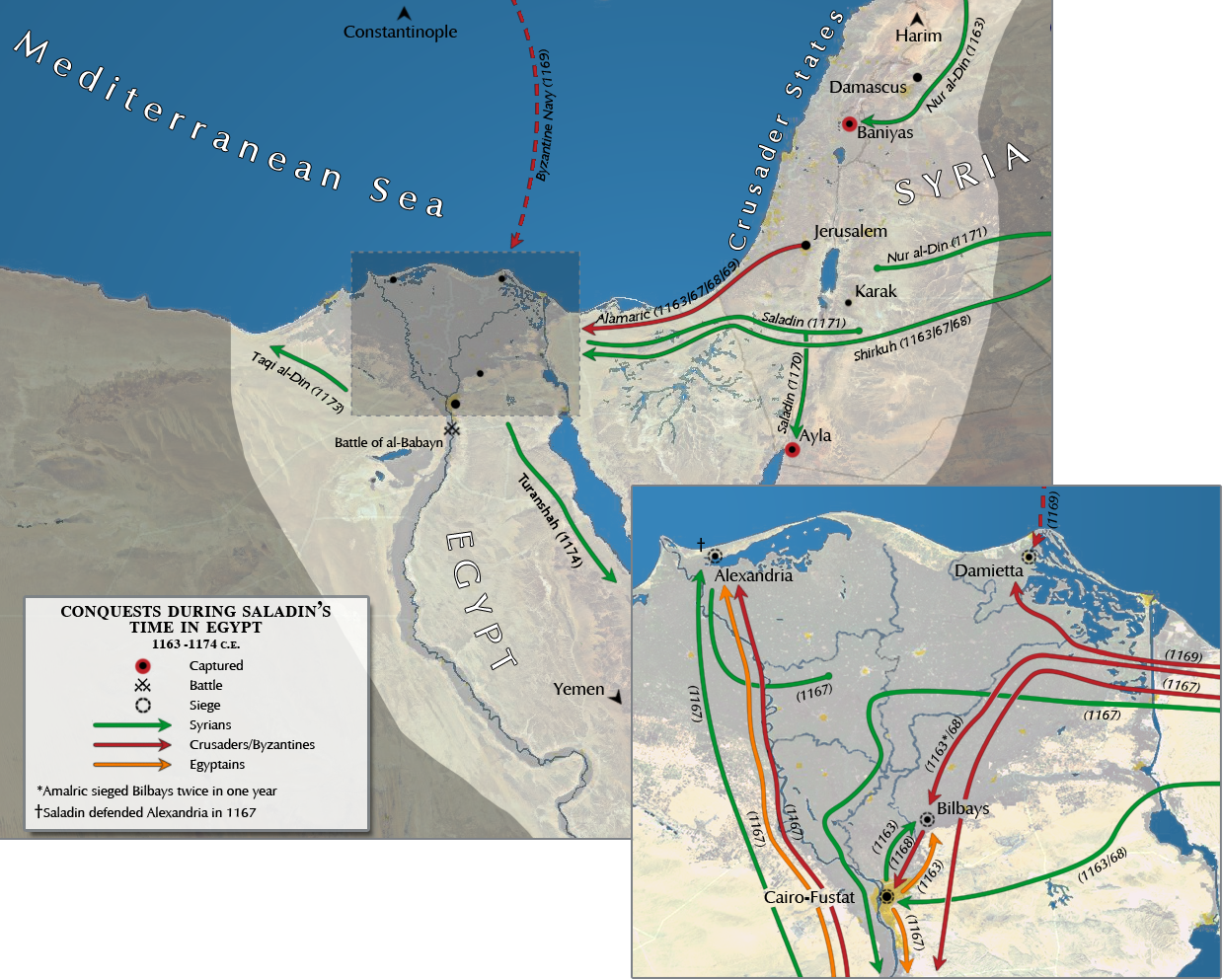
The Crusader invasions of Egypt were the repeated invasions of Fatimid Egypt from 1163 to 1169 by King Amalric of Jerusalem, who wished to strengthen the Crusader Kingdom of Jerusalem's position in the Levant by taking advantage of the weakness of the Fatimids.
The invasions began as part of a succession crisis in the caliphate, which began to crumble under the pressure of Muslim Syria ruled by the Zengids and the Christian Crusader states. While one side called for help from the emir of Syria, Nur al-Din Zengi, the other called for Crusader assistance. As the war progressed, however, it became a war of conquest. A number of Syrian campaigns into Egypt were stopped short of total victory by the aggressive campaigning of King Amalric. Even so, the Crusaders generally speaking did not have things go their way, despite several sackings. A combined Byzantine–Crusader siege of Damietta failed in 1169, the same year that Saladin took power in Egypt as vizier. In 1171, Saladin became sultan of Egypt and the crusaders thereafter turned their attention to the defence of their kingdom, which, despite being surrounded by Syria and Egypt, held for another 16 years. Later crusades tried to support the Kingdom of Jerusalem by targeting the danger that was Egypt, but to no avail.
Following the capture of Jerusalem by the forces of the First Crusade, the Fatimids of Egypt launched regular raids into Palestine against the Crusaders, while Zengi of Syria launched a series of successful attacks against the County of Edessa and Principality of Antioch. The Second Crusade aimed to reverse the gains of Zengi, ironically with an assault on Damascus, Zengi's most powerful rival. The siege failed and forced the Kingdom to turn south for better fortunes.
The Fatimid Caliphate in the 12th century was riddled with internal squabbles. In the 1160s, power lay not in the hands of the Fatimid caliph Al-'Āḍid, but in the hands of the vizier of Egypt, Shawar. The situation in Egypt made it ripe for conquest, either by crusaders or by the forces of Zengi's successor, Nur ad-Din. The first Crusader invasion of Egypt culminated in the siege of Ascalon, resulting in the capture of the city in 1153. This meant that the kingdom was now at war in two fronts, but Egypt now had an enemy supply base close at hand.
In 1163, Shawar, the ousted Fatimid vizier, who had fled to Syria called Nur ad-Din for support in reinstating him to his former position as the de facto ruler of Egypt against the new vizier, Dirgham. Dirgham attempted to thwart his rival's plans by opening negotiations with Nur al-Din for an alliance against the Crusaders, but the Syrian ruler's reply was non-committal, and on his way to Egypt, Dirgham's envoy was arrested by the crusaders, possibly on the instigation of Nur al-Din himself.
In 1163, King Amalric went to invade Egypt, claiming that the Fatimids had not paid the yearly tribute that had begun during the reign of King Baldwin III. The vizier, Dirgham, who had recently overthrown the vizier Shawar, marched out to meet Amalric at Pelusium, but was defeated and forced to retreat to Bilbeis. The Egyptians then opened up the Nile dams and let the river flood, hoping to prevent Amalric from invading any further, thus he returned home. However, Dirgham preferred to negotiate with Amalric, offering him a peace treaty guaranteed by the surrender of hostages, and the payment of an annual tribute. Meanwhile, Nur ad-Din agreed to support Shawar who offered to hand over one third of the annual land tax (kharāj) revenue to Nur al-Din. The latter manoeuvred to attract the Crusaders' attention away from the expeditionary force, as his general Shirkuh accompanied by his nephew, Saladin, crossed the lands of the Kingdom of Jerusalem to enter Egypt.
Dirgham appealed to Amalric for help, but the King of Jerusalem was unable to intervene in time, and in late April 1164, the Syrians surprised and defeated Dirgham's brother Mulham at Bilbeis, opening the way to Cairo. In May 1164, Dirgham was killed and Shawar became vizier of Egypt again. Denying the promised revenues Shawar got in conflict with Shirkuh who saw egypt as a possibilty to establish an independent power of his own. Shawar no other choice left called upon the enemy of the Sunni Muslims, King Amalric I of Jerusalem.
Following Shawar's warning about the threat Shirkuh would pose to the Franks, Amalrich agreed to launch another campaign against Egypt. The campaign lasting from August to October 1164 ended with a stalemate. Nur ad-Din had moved his forces against the Crusader state of Antioch and despite being a Byzantine protectorate, defeated and captured Bohemond III of Antioch and Raymond III of Tripoli at the Battle of Harim. Amalric immediately raced north to rescue his vassal. Shirkuh for want of troops and faced with hostile population was also forced to retreat from Egypt.
Hub AI
Crusader invasions of Egypt AI simulator
(@Crusader invasions of Egypt_simulator)
Crusader invasions of Egypt
The Crusader invasions of Egypt were the repeated invasions of Fatimid Egypt from 1163 to 1169 by King Amalric of Jerusalem, who wished to strengthen the Crusader Kingdom of Jerusalem's position in the Levant by taking advantage of the weakness of the Fatimids.
The invasions began as part of a succession crisis in the caliphate, which began to crumble under the pressure of Muslim Syria ruled by the Zengids and the Christian Crusader states. While one side called for help from the emir of Syria, Nur al-Din Zengi, the other called for Crusader assistance. As the war progressed, however, it became a war of conquest. A number of Syrian campaigns into Egypt were stopped short of total victory by the aggressive campaigning of King Amalric. Even so, the Crusaders generally speaking did not have things go their way, despite several sackings. A combined Byzantine–Crusader siege of Damietta failed in 1169, the same year that Saladin took power in Egypt as vizier. In 1171, Saladin became sultan of Egypt and the crusaders thereafter turned their attention to the defence of their kingdom, which, despite being surrounded by Syria and Egypt, held for another 16 years. Later crusades tried to support the Kingdom of Jerusalem by targeting the danger that was Egypt, but to no avail.
Following the capture of Jerusalem by the forces of the First Crusade, the Fatimids of Egypt launched regular raids into Palestine against the Crusaders, while Zengi of Syria launched a series of successful attacks against the County of Edessa and Principality of Antioch. The Second Crusade aimed to reverse the gains of Zengi, ironically with an assault on Damascus, Zengi's most powerful rival. The siege failed and forced the Kingdom to turn south for better fortunes.
The Fatimid Caliphate in the 12th century was riddled with internal squabbles. In the 1160s, power lay not in the hands of the Fatimid caliph Al-'Āḍid, but in the hands of the vizier of Egypt, Shawar. The situation in Egypt made it ripe for conquest, either by crusaders or by the forces of Zengi's successor, Nur ad-Din. The first Crusader invasion of Egypt culminated in the siege of Ascalon, resulting in the capture of the city in 1153. This meant that the kingdom was now at war in two fronts, but Egypt now had an enemy supply base close at hand.
In 1163, Shawar, the ousted Fatimid vizier, who had fled to Syria called Nur ad-Din for support in reinstating him to his former position as the de facto ruler of Egypt against the new vizier, Dirgham. Dirgham attempted to thwart his rival's plans by opening negotiations with Nur al-Din for an alliance against the Crusaders, but the Syrian ruler's reply was non-committal, and on his way to Egypt, Dirgham's envoy was arrested by the crusaders, possibly on the instigation of Nur al-Din himself.
In 1163, King Amalric went to invade Egypt, claiming that the Fatimids had not paid the yearly tribute that had begun during the reign of King Baldwin III. The vizier, Dirgham, who had recently overthrown the vizier Shawar, marched out to meet Amalric at Pelusium, but was defeated and forced to retreat to Bilbeis. The Egyptians then opened up the Nile dams and let the river flood, hoping to prevent Amalric from invading any further, thus he returned home. However, Dirgham preferred to negotiate with Amalric, offering him a peace treaty guaranteed by the surrender of hostages, and the payment of an annual tribute. Meanwhile, Nur ad-Din agreed to support Shawar who offered to hand over one third of the annual land tax (kharāj) revenue to Nur al-Din. The latter manoeuvred to attract the Crusaders' attention away from the expeditionary force, as his general Shirkuh accompanied by his nephew, Saladin, crossed the lands of the Kingdom of Jerusalem to enter Egypt.
Dirgham appealed to Amalric for help, but the King of Jerusalem was unable to intervene in time, and in late April 1164, the Syrians surprised and defeated Dirgham's brother Mulham at Bilbeis, opening the way to Cairo. In May 1164, Dirgham was killed and Shawar became vizier of Egypt again. Denying the promised revenues Shawar got in conflict with Shirkuh who saw egypt as a possibilty to establish an independent power of his own. Shawar no other choice left called upon the enemy of the Sunni Muslims, King Amalric I of Jerusalem.
Following Shawar's warning about the threat Shirkuh would pose to the Franks, Amalrich agreed to launch another campaign against Egypt. The campaign lasting from August to October 1164 ended with a stalemate. Nur ad-Din had moved his forces against the Crusader state of Antioch and despite being a Byzantine protectorate, defeated and captured Bohemond III of Antioch and Raymond III of Tripoli at the Battle of Harim. Amalric immediately raced north to rescue his vassal. Shirkuh for want of troops and faced with hostile population was also forced to retreat from Egypt.