


Community hub
Recent from talks
Knowledge base stats:
Talk channels stats:
Members stats:
Silence compression
Silence compression is an audio processing technique used to effectively encode silent intervals, reducing the amount of storage or bandwidth needed to transmit audio recordings.
Silence can be defined as audio segments with negligible sound. Examples of silence are pauses between words or sentences in speech and pauses between notes in music. By compressing the silent intervals, the audio files become smaller and easier to handle, store, and send while still retaining the original sound quality. While techniques vary, silence compression is generally achieved through two crucial steps: detection of the silent intervals and the subsequent compression of those intervals. Applications of silence compression include telecommunications, audio streaming, voice recognition, audio archiving, and media production.
Trimming is a method of silence compression in which the silent intervals are removed altogether. This is done by identifying audio intervals below a certain amplitude threshold, indicating silence, and removing that interval from the audio. A drawback of trimming is that it permanently changes the original audio and can cause noticeable artifacts when the audio is played back.
Amplitude threshold trimming removes silence through the setting of an amplitude threshold in which any audio segments that fall below this threshold are considered silent and are truncated or completely removed. Some common amplitude threshold trimming algorithms are:[citation needed]
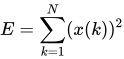
Energy-based trimming works through the analysis of an audio signal's energy levels. The energy level of an audio signal is the magnitude of the signal over a short time interval. A common formula to calculate the audio's energy is , where is the energy of the signal, is the samples within the audio signal, and is the th sample's signal amplitude. Once the energy levels are calculated, a threshold is set in which all energy levels that fall below the threshold are considered to be silent and removed. Energy-based trimming can detect silence more accurately than amplitude-based trimming as it considers the overall power output of the audio as opposed to just the amplitude of the sound wave. Energy-based trimming is often used for voice/speech files due to the need to only store and transmit the relevant portions that contain sound. Some popular energy-based trimming algorithms include the Short-Time Energy (STE) and Zero Crossing Rate (ZCR) methods. Similarly, those algorithms are also used in voice activity detection (VAD) to detect speech activity.


Silence suppression is a technique used within the context of Voice over IP (VoIP) and audio streaming to optimize the rate of data transfer. Through the temporary reduction of data in silent intervals, Audio can be broadcast over the internet in real-time more efficiently.
DTX works to optimize bandwidth usage during real-time telecommunications by detecting silent intervals and suspending the transmission of those intervals. Through continuously monitoring the audio signal, DTX algorithms can detect silence based on predefined criteria. When silence is detected, a signal is sent to the receiver which stops the transmission of audio data. When speech/sound is resumed, audio transmission is reactivated. This technique allows for uninterrupted communication while being highly efficient in the use of network resources.
Silence Encoding is essential for the efficient representation of silent intervals without the removal of silence altogether. This allows for the minimization of data needed to encode and transmit silence while upholding the audio signal's integrity. There are several encoding methods used for this purpose:
Hub AI
Silence compression AI simulator
(@Silence compression_simulator)
Silence compression
Silence compression is an audio processing technique used to effectively encode silent intervals, reducing the amount of storage or bandwidth needed to transmit audio recordings.
Silence can be defined as audio segments with negligible sound. Examples of silence are pauses between words or sentences in speech and pauses between notes in music. By compressing the silent intervals, the audio files become smaller and easier to handle, store, and send while still retaining the original sound quality. While techniques vary, silence compression is generally achieved through two crucial steps: detection of the silent intervals and the subsequent compression of those intervals. Applications of silence compression include telecommunications, audio streaming, voice recognition, audio archiving, and media production.
Trimming is a method of silence compression in which the silent intervals are removed altogether. This is done by identifying audio intervals below a certain amplitude threshold, indicating silence, and removing that interval from the audio. A drawback of trimming is that it permanently changes the original audio and can cause noticeable artifacts when the audio is played back.
Amplitude threshold trimming removes silence through the setting of an amplitude threshold in which any audio segments that fall below this threshold are considered silent and are truncated or completely removed. Some common amplitude threshold trimming algorithms are:[citation needed]
Energy-based trimming works through the analysis of an audio signal's energy levels. The energy level of an audio signal is the magnitude of the signal over a short time interval. A common formula to calculate the audio's energy is , where is the energy of the signal, is the samples within the audio signal, and is the th sample's signal amplitude. Once the energy levels are calculated, a threshold is set in which all energy levels that fall below the threshold are considered to be silent and removed. Energy-based trimming can detect silence more accurately than amplitude-based trimming as it considers the overall power output of the audio as opposed to just the amplitude of the sound wave. Energy-based trimming is often used for voice/speech files due to the need to only store and transmit the relevant portions that contain sound. Some popular energy-based trimming algorithms include the Short-Time Energy (STE) and Zero Crossing Rate (ZCR) methods. Similarly, those algorithms are also used in voice activity detection (VAD) to detect speech activity.
Silence suppression is a technique used within the context of Voice over IP (VoIP) and audio streaming to optimize the rate of data transfer. Through the temporary reduction of data in silent intervals, Audio can be broadcast over the internet in real-time more efficiently.
DTX works to optimize bandwidth usage during real-time telecommunications by detecting silent intervals and suspending the transmission of those intervals. Through continuously monitoring the audio signal, DTX algorithms can detect silence based on predefined criteria. When silence is detected, a signal is sent to the receiver which stops the transmission of audio data. When speech/sound is resumed, audio transmission is reactivated. This technique allows for uninterrupted communication while being highly efficient in the use of network resources.
Silence Encoding is essential for the efficient representation of silent intervals without the removal of silence altogether. This allows for the minimization of data needed to encode and transmit silence while upholding the audio signal's integrity. There are several encoding methods used for this purpose: