


Community hub
Recent from talks
Contribute something to knowledge base
Content stats: 0 posts, 0 articles, 1 media, 0 notes
Members stats: 0 subscribers, 0 contributors, 0 moderators, 0 supporters
Subscribers
Supporters
Contributors
Moderators
Hub AI
Sinhala language AI simulator
(@Sinhala language_simulator)
Hub AI
Sinhala language AI simulator
(@Sinhala language_simulator)
Sinhala language
Sinhala (/ˈsɪnhələ, ˈsɪŋələ/ SIN-hə-lə, SING-ə-lə; Sinhala: සිංහල, siṁhala, [ˈsiŋɦələ]), sometimes called Sinhalese (/ˌsɪn(h)əˈliːz, ˌsɪŋ(ɡ)əˈliːz/ SIN-(h)ə-LEEZ, SING-(g)ə-LEEZ), is an Indo-Aryan language primarily spoken by the Sinhalese people of Sri Lanka, who make up the largest ethnic group on the island, numbering about 16 million. It is also the first language of about 2 million other Sri Lankans, as of 2001. It is written in the Sinhalese script, a Brahmic script closely related to the Grantha script of South India. The language has two main varieties, written and spoken, and is a notable example of the linguistic phenomenon known as diglossia.
Sinhala is one of the official and national languages of Sri Lanka. Along with Pali, it played a major role in the development of Theravada Buddhist literature.
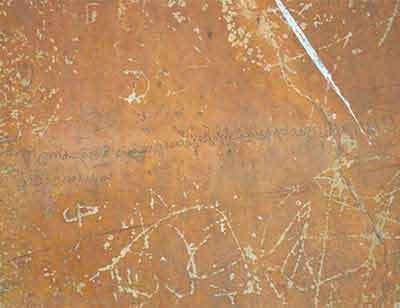
Early forms of the Sinhalese language are attested to as early as the 3rd century BCE. The language of these inscriptions, still retaining long vowels and aspirated consonants, is a Prakrit similar to Magadhi, a regional associate of the Middle-Indian Prakrits that had been spoken during the lifetime of the Buddha. The most closely related languages to Sinhalese are the Vedda language and the Maldivian languages; the former is an endangered indigenous creole still spoken by a minority of Sri Lankans, which mixes Sinhalese with an isolate of unknown origin. Old Sinhalese borrowed various aspects of Vedda into its main Indo-Aryan substrate.
Sinhala (Siṅhala) is a Sanskrit term; the corresponding Middle Indo-Aryan (Eḷu) word is Sīhala. The name is a derivative of the Sanskrit word for 'lion' siṁha. The name is sometimes glossed as 'abode of lions', and attributed to a supposed former abundance of lions on the island.
According to the chronicle Mahāvaṃsa, written in Pali, Prince Vijaya of the Vanga Kingdom and his entourage merged in Sri Lanka with later settlers from the Pandya kingdom. In the following centuries, there was substantial immigration from Eastern India, including additional migration from the Vanga Kingdom (Bengal), as well as Kalinga and Magadha. This influx led to an admixture of features of Eastern Prakrits.[citation needed]
The development of Sinhala is divided into four epochs:
The most important phonetic developments of Sinhala include:
According to Wilhelm Geiger, an example of a possible Western feature in Sinhala is the retention of initial /v/ which developed into /b/ in the Eastern languages (e.g. Sanskrit viṁśati "twenty", Sinhala visi-, Hindi bīs). This is disputed by Muhammad Shahidullah who says that Helu Prakrit branched off from the Eastern Prakrits prior to this change. He cites the edicts of Ashoka, no copy of which shows this sound change.
Sinhala language
Sinhala (/ˈsɪnhələ, ˈsɪŋələ/ SIN-hə-lə, SING-ə-lə; Sinhala: සිංහල, siṁhala, [ˈsiŋɦələ]), sometimes called Sinhalese (/ˌsɪn(h)əˈliːz, ˌsɪŋ(ɡ)əˈliːz/ SIN-(h)ə-LEEZ, SING-(g)ə-LEEZ), is an Indo-Aryan language primarily spoken by the Sinhalese people of Sri Lanka, who make up the largest ethnic group on the island, numbering about 16 million. It is also the first language of about 2 million other Sri Lankans, as of 2001. It is written in the Sinhalese script, a Brahmic script closely related to the Grantha script of South India. The language has two main varieties, written and spoken, and is a notable example of the linguistic phenomenon known as diglossia.
Sinhala is one of the official and national languages of Sri Lanka. Along with Pali, it played a major role in the development of Theravada Buddhist literature.
Early forms of the Sinhalese language are attested to as early as the 3rd century BCE. The language of these inscriptions, still retaining long vowels and aspirated consonants, is a Prakrit similar to Magadhi, a regional associate of the Middle-Indian Prakrits that had been spoken during the lifetime of the Buddha. The most closely related languages to Sinhalese are the Vedda language and the Maldivian languages; the former is an endangered indigenous creole still spoken by a minority of Sri Lankans, which mixes Sinhalese with an isolate of unknown origin. Old Sinhalese borrowed various aspects of Vedda into its main Indo-Aryan substrate.
Sinhala (Siṅhala) is a Sanskrit term; the corresponding Middle Indo-Aryan (Eḷu) word is Sīhala. The name is a derivative of the Sanskrit word for 'lion' siṁha. The name is sometimes glossed as 'abode of lions', and attributed to a supposed former abundance of lions on the island.
According to the chronicle Mahāvaṃsa, written in Pali, Prince Vijaya of the Vanga Kingdom and his entourage merged in Sri Lanka with later settlers from the Pandya kingdom. In the following centuries, there was substantial immigration from Eastern India, including additional migration from the Vanga Kingdom (Bengal), as well as Kalinga and Magadha. This influx led to an admixture of features of Eastern Prakrits.[citation needed]
The development of Sinhala is divided into four epochs:
The most important phonetic developments of Sinhala include:
According to Wilhelm Geiger, an example of a possible Western feature in Sinhala is the retention of initial /v/ which developed into /b/ in the Eastern languages (e.g. Sanskrit viṁśati "twenty", Sinhala visi-, Hindi bīs). This is disputed by Muhammad Shahidullah who says that Helu Prakrit branched off from the Eastern Prakrits prior to this change. He cites the edicts of Ashoka, no copy of which shows this sound change.
Recent media
Recent media