


Community hub
Recent from talks
Contribute something to knowledge base
Content stats: 0 posts, 0 articles, 1 media, 0 notes
Members stats: 0 subscribers, 0 contributors, 0 moderators, 0 supporters
Subscribers
Supporters
Contributors
Moderators
Hub AI
Skegby AI simulator
(@Skegby_simulator)
Hub AI
Skegby AI simulator
(@Skegby_simulator)
Skegby
Skegby is a village in the Ashfield district of Nottinghamshire, England. It lies on the B6014 road, two miles west of Mansfield and one mile north of Sutton-in-Ashfield, close to Stanton Hill. Skegby sits on both sides of a deep valley near the source of the River Meden.
Skegby took the name of 'Skeggi' which was the name of a Viking settler. His name means the ("bearded one"). The second element of the name is Danish and can mean a farmstead or village.
Skegby is an ancient parish. It covered about 1,433 acres and included the then hamlet of Stanton Hill. In 1931 the parish had a population of 6,519. It was in Skegby Rural District. On 1 April 1935 the parish was abolished and merged with Sutton in Ashfield and became part of Sutton in Ashfield Urban District. Sutton in Ashfield Urban District was in turn abolished in 1974 to become part of the new district of Ashfield.
Skegby is mentioned in the Domesday Book in 1086 as the Wapentake of Broxtow. It was the land of Roger of Bully and a "a berewick of the King's manor at Mansfield". Skegby like Mansfield and Sutton in Ashfield were in the land of Edward the Confessor and later William the Conqueror in 1066.
Skegby manor house (which is now in ruins) is located on Mansfield Road. In 1223 Godfrey Spigurnal became Lord of the Manor of Skegby. His descendants held the estate until 1334 when Elizabeth Spigurnal, who married Thomas Gobion, disposed of it to Richard Pensax. His descendant passed it to Percival Lindley in 1450 which was the beginning of the three hundred-year tenure of the Lindley family as Lords of the Manor. The estate passed to John Dodsley in 1820 and the Dodsley family remained in Skegby until the 1930s.
The Quaker House was the home of Elizabeth Hooton, one of earliest preachers of the Quakers movement in the United Kingdom. It is here that Elizabeth met George Fox founder of the Quakers in 1647. Elizabeth is mentioned in George Fox’s journal as being the first convert and preacher of Quakerism. She was also the first woman Quaker. George Fox stated in his journal ‘then it was upon me that we should have a meeting at Skegby at Elizabeth Hooton’s house and we had her there’. George was referring to a woman who needed heeling.
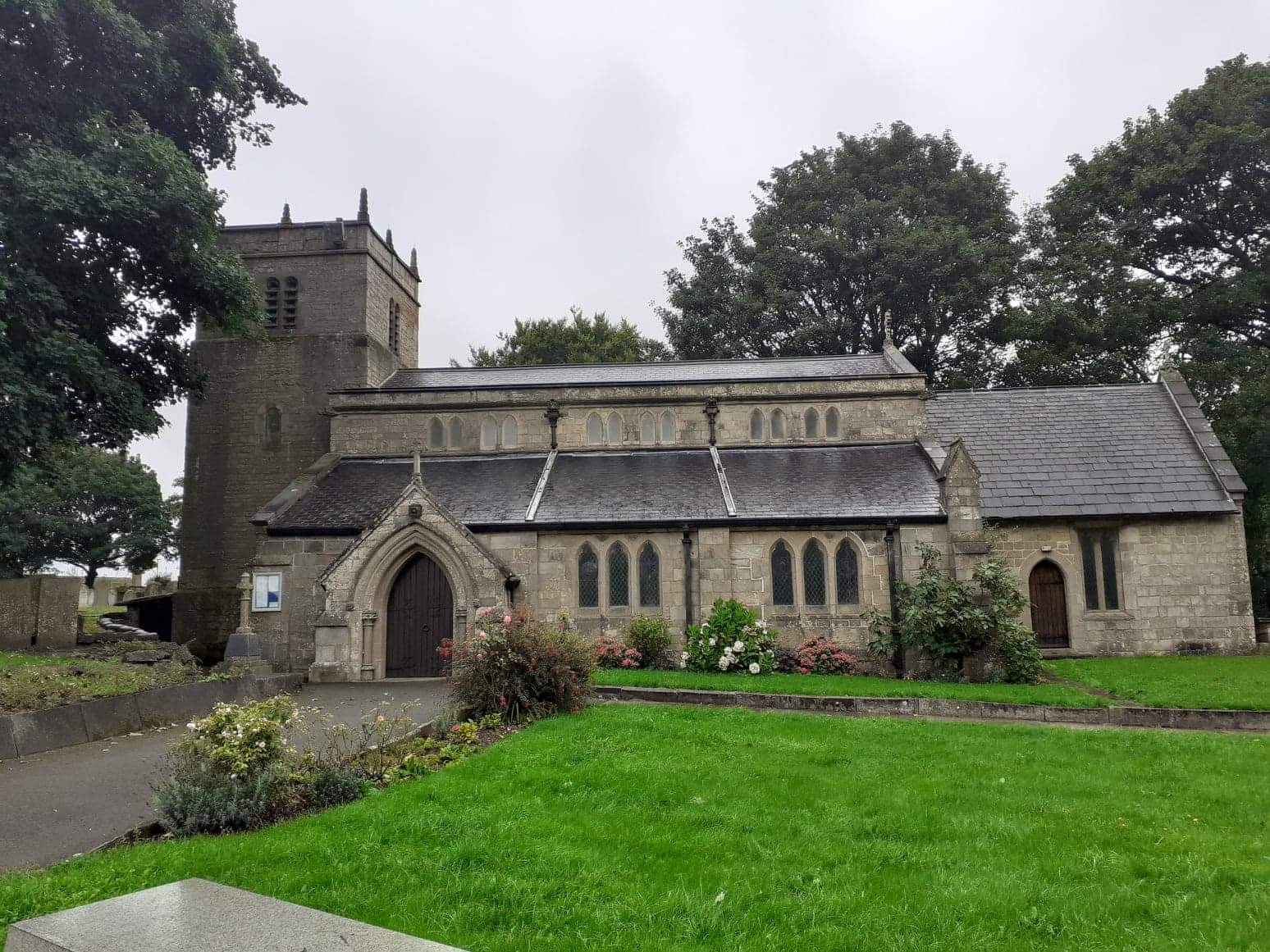
The Anglican church was built in the Norman period, prior to 1571 and was formerly a chapelry to Mansfield. The church was restored and enlarged in 1870. In 1844 a Wesleyan Methodist chapel was built, with a "Free Church" being built in 1863. In 1865 a National School for both boys and girls was built in Skegby village and a Baptist chapel was built in 1877.
Skegby Hall was built for the Lindley family in 1720. It was Grade II listed in 1988. After private residential ownership, it was used from the late 1940s as an approved school for boys, later becoming a care home with education. It was converted into residential flatlets in 1992. It gained notoriety in the 2000s after multiple allegations of child abuse, with police investigations Daybreak, launched in 2010, followed by Xeres in 2014.
Skegby
Skegby is a village in the Ashfield district of Nottinghamshire, England. It lies on the B6014 road, two miles west of Mansfield and one mile north of Sutton-in-Ashfield, close to Stanton Hill. Skegby sits on both sides of a deep valley near the source of the River Meden.
Skegby took the name of 'Skeggi' which was the name of a Viking settler. His name means the ("bearded one"). The second element of the name is Danish and can mean a farmstead or village.
Skegby is an ancient parish. It covered about 1,433 acres and included the then hamlet of Stanton Hill. In 1931 the parish had a population of 6,519. It was in Skegby Rural District. On 1 April 1935 the parish was abolished and merged with Sutton in Ashfield and became part of Sutton in Ashfield Urban District. Sutton in Ashfield Urban District was in turn abolished in 1974 to become part of the new district of Ashfield.
Skegby is mentioned in the Domesday Book in 1086 as the Wapentake of Broxtow. It was the land of Roger of Bully and a "a berewick of the King's manor at Mansfield". Skegby like Mansfield and Sutton in Ashfield were in the land of Edward the Confessor and later William the Conqueror in 1066.
Skegby manor house (which is now in ruins) is located on Mansfield Road. In 1223 Godfrey Spigurnal became Lord of the Manor of Skegby. His descendants held the estate until 1334 when Elizabeth Spigurnal, who married Thomas Gobion, disposed of it to Richard Pensax. His descendant passed it to Percival Lindley in 1450 which was the beginning of the three hundred-year tenure of the Lindley family as Lords of the Manor. The estate passed to John Dodsley in 1820 and the Dodsley family remained in Skegby until the 1930s.
The Quaker House was the home of Elizabeth Hooton, one of earliest preachers of the Quakers movement in the United Kingdom. It is here that Elizabeth met George Fox founder of the Quakers in 1647. Elizabeth is mentioned in George Fox’s journal as being the first convert and preacher of Quakerism. She was also the first woman Quaker. George Fox stated in his journal ‘then it was upon me that we should have a meeting at Skegby at Elizabeth Hooton’s house and we had her there’. George was referring to a woman who needed heeling.
The Anglican church was built in the Norman period, prior to 1571 and was formerly a chapelry to Mansfield. The church was restored and enlarged in 1870. In 1844 a Wesleyan Methodist chapel was built, with a "Free Church" being built in 1863. In 1865 a National School for both boys and girls was built in Skegby village and a Baptist chapel was built in 1877.
Skegby Hall was built for the Lindley family in 1720. It was Grade II listed in 1988. After private residential ownership, it was used from the late 1940s as an approved school for boys, later becoming a care home with education. It was converted into residential flatlets in 1992. It gained notoriety in the 2000s after multiple allegations of child abuse, with police investigations Daybreak, launched in 2010, followed by Xeres in 2014.
Recent media
Recent media