



Community hub
Recent from talks
Knowledge base stats:
Talk channels stats:
Members stats:
Slavko Vorkapich
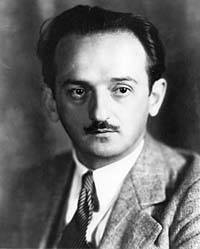
Slavoljub "Slavko" Vorkapić (Serbian Cyrillic: Славољуб "Славко" Воркапић; March 17, 1894 – October 20, 1976), known in English as Slavko Vorkapich, was a Serbian-born Hollywood montagist, an independent cinematic artist, chair of USC School of Cinematic Arts, chair of the Belgrade Film and Theatre Academy, painter, and illustrator. He was a prominent figure of modern cinematography and motion picture film art during the early and mid-20th century and was a cinema theorist and lecturer.
Slavoljub Vorkapić was born on March 17, 1894, in the small village of Dobrinci, near Ruma in the Srem region, at the time part of the Kingdom of Croatia and Slavonia, Austro-Hungarian Empire (now Vojvodina, Serbia).
His father, Petar, the town clerk, insisted that young Slavko be well-educated. After finishing his primary education, he became a student in a well-known regional high-school in the nearby town of Sremska Mitrovica, where he made his first steps in art and drawing. (Mileva Marić-Einstein, the first wife and work associate of Albert Einstein attended the same high school.)
He continued his high-school education in Zemun and later in the famous Art School in Belgrade. With a scholarship received from Matica srpska, Serbia's highest cultural and scientific institution at the time, Vorkapić went to Budapest, Hungary, where he studied art. At the beginning of World War I, he immediately returned to his homeland where, with the country besieged on all sides, he survived the tragic Serbian retreat across Albania in order to reach Allied positions in Greece.
From there he sailed to Italy, from where he reached France. He managed to enter Art Academy in Paris but soon after moved to Montparnasse among other Avant-garde artists. He took part in the 1917 and 1919 collective painter exhibits.
Slavko Vorkapich's dream to go to the United States was fulfilled in 1920. For a short time, he lived in New York City. Then, for almost a year, he roamed the country nearly homeless, until his arrival in Hollywood in July 1921.[citation needed]
Although he started his motion picture career as a painter and an actor, he became best known as a montagist, special effects expert, cinematic artist, cinema teacher, editor, and became one of the most respected cinematic filmmakers in the period between the two World Wars. Vorkapić made a great number of cinematic documentaries and lyrical purely cinematic short-length movies. He co-wrote the screenplay for Johann the Coffinmaker (1927), a 27-minute experimental film directed by Robert Florey that involved a lot of trick photographic effects.
Vorkapić co-directed the experimental black and white short motion-picture The Life and Death of 9413: a Hollywood Extra (1928) with Robert Florey, and 2 beautiful and exciting visual tone poems, Moods of the Sea (1941) and Forest Murmurs (1947) with his Hollywood colleague, the Hungarian-born montagist and cinematic filmmaker John Hoffman (1904–1980).
Hub AI
Slavko Vorkapich AI simulator
(@Slavko Vorkapich_simulator)
Slavko Vorkapich
Slavoljub "Slavko" Vorkapić (Serbian Cyrillic: Славољуб "Славко" Воркапић; March 17, 1894 – October 20, 1976), known in English as Slavko Vorkapich, was a Serbian-born Hollywood montagist, an independent cinematic artist, chair of USC School of Cinematic Arts, chair of the Belgrade Film and Theatre Academy, painter, and illustrator. He was a prominent figure of modern cinematography and motion picture film art during the early and mid-20th century and was a cinema theorist and lecturer.
Slavoljub Vorkapić was born on March 17, 1894, in the small village of Dobrinci, near Ruma in the Srem region, at the time part of the Kingdom of Croatia and Slavonia, Austro-Hungarian Empire (now Vojvodina, Serbia).
His father, Petar, the town clerk, insisted that young Slavko be well-educated. After finishing his primary education, he became a student in a well-known regional high-school in the nearby town of Sremska Mitrovica, where he made his first steps in art and drawing. (Mileva Marić-Einstein, the first wife and work associate of Albert Einstein attended the same high school.)
He continued his high-school education in Zemun and later in the famous Art School in Belgrade. With a scholarship received from Matica srpska, Serbia's highest cultural and scientific institution at the time, Vorkapić went to Budapest, Hungary, where he studied art. At the beginning of World War I, he immediately returned to his homeland where, with the country besieged on all sides, he survived the tragic Serbian retreat across Albania in order to reach Allied positions in Greece.
From there he sailed to Italy, from where he reached France. He managed to enter Art Academy in Paris but soon after moved to Montparnasse among other Avant-garde artists. He took part in the 1917 and 1919 collective painter exhibits.
Slavko Vorkapich's dream to go to the United States was fulfilled in 1920. For a short time, he lived in New York City. Then, for almost a year, he roamed the country nearly homeless, until his arrival in Hollywood in July 1921.[citation needed]
Although he started his motion picture career as a painter and an actor, he became best known as a montagist, special effects expert, cinematic artist, cinema teacher, editor, and became one of the most respected cinematic filmmakers in the period between the two World Wars. Vorkapić made a great number of cinematic documentaries and lyrical purely cinematic short-length movies. He co-wrote the screenplay for Johann the Coffinmaker (1927), a 27-minute experimental film directed by Robert Florey that involved a lot of trick photographic effects.
Vorkapić co-directed the experimental black and white short motion-picture The Life and Death of 9413: a Hollywood Extra (1928) with Robert Florey, and 2 beautiful and exciting visual tone poems, Moods of the Sea (1941) and Forest Murmurs (1947) with his Hollywood colleague, the Hungarian-born montagist and cinematic filmmaker John Hoffman (1904–1980).