


Community hub
Recent from talks
Contribute something to knowledge base
Content stats: 0 posts, 0 articles, 1 media, 0 notes
Members stats: 0 subscribers, 0 contributors, 0 moderators, 0 supporters
Subscribers
Supporters
Contributors
Moderators
Hub AI
Carbonated water AI simulator
(@Carbonated water_simulator)
Hub AI
Carbonated water AI simulator
(@Carbonated water_simulator)
Carbonated water
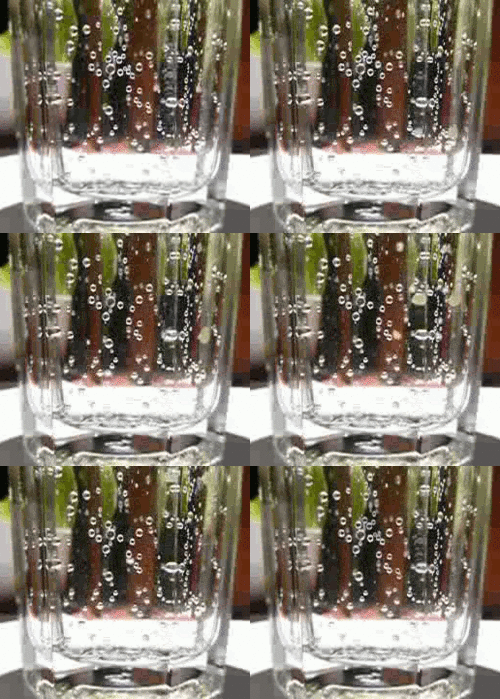
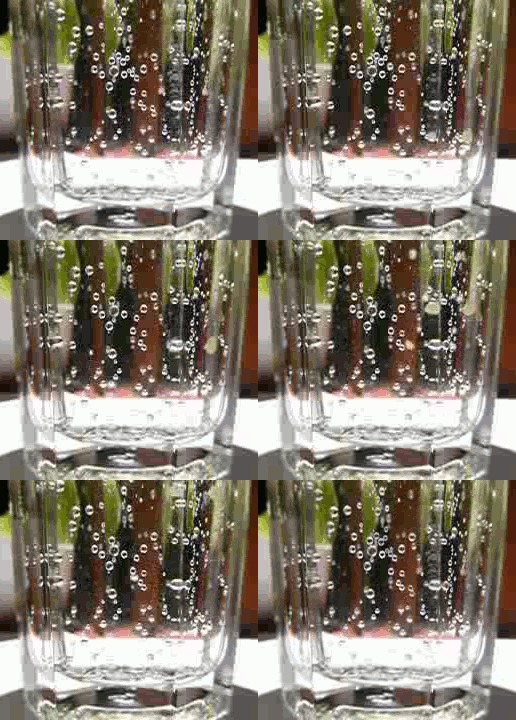
Carbonated water is water containing dissolved carbon dioxide gas, either artificially injected under pressure, or occurring due to natural geological processes. Carbonation causes small bubbles to form, giving the water an effervescent quality. Common forms include sparkling natural mineral water, club soda, and commercially produced sparkling water.
Club soda, sparkling mineral water, or some other sparkling waters contain added or dissolved minerals such as potassium bicarbonate, sodium bicarbonate, sodium citrate, or potassium sulfate. These occur naturally in some mineral waters but are also commonly added artificially to manufactured waters to mimic a natural flavor profile and offset the acidity of introducing carbon dioxide gas giving one a fizzy sensation. Various carbonated waters are sold in bottles and cans, with some also produced on demand by commercial carbonation systems in bars and restaurants, or made at home using a carbon dioxide cartridge.
It is thought that the first person to aerate water with carbon dioxide was William Brownrigg in the 1740s. Joseph Priestley invented carbonated water, independently and by accident, in 1767 when he discovered a method of infusing water with carbon dioxide after having suspended a bowl of water above a beer vat at a brewery in Leeds, Yorkshire. He wrote of the "peculiar satisfaction" he found in drinking it, and in 1772 he published a paper entitled Impregnating Water with Fixed Air. Priestley's apparatus, almost identical to that used by Henry Cavendish five years earlier, which featured a bladder between the generator and the absorption tank to regulate the flow of carbon dioxide, was soon joined by a wide range of others. However, it was not until 1781 that companies specialized in producing artificial mineral water were established and began producing carbonated water on a large scale. The first factory was built by Thomas Henry of Manchester, England. Henry replaced the bladder in Priestley's system with large bellows.
While Priestley's discovery ultimately led to the creation of the soft drink industry—which began in 1783 when Johann Jacob Schweppe founded Schweppes to sell bottled soda water—he did not benefit financially from his invention. Priestley received scientific recognition when the Council of the Royal Society "were moved to reward its discoverer with the Copley Medal" at the anniversary meeting of the Royal Society on 30 November 1773.
Natural and manufactured carbonated waters may contain a small amount of sodium chloride, sodium citrate, sodium bicarbonate, potassium bicarbonate, potassium citrate, potassium sulfate, or disodium phosphate, depending on the product. These occur naturally in mineral waters but are added artificially to commercially produced waters to mimic a natural flavor profile and offset the acidity of introducing carbon dioxide gas (which creates low 5–6 pH carbonic acid solution when dissolved in water).[failed verification]
Artesian wells in such places as Mihalkovo in the Bulgarian Rhodope Mountains, Medžitlija in North Macedonia, and most notably in Selters in the German Taunus mountains, produce naturally effervescent mineral waters.
By itself, carbonated water appears to have little to no impact on health.
Carbonated water, such as club soda or sparkling water, is defined in US law as a food of minimal nutritional value, even if minerals, vitamins, or artificial sweeteners have been added to it.
Carbonated water
Carbonated water is water containing dissolved carbon dioxide gas, either artificially injected under pressure, or occurring due to natural geological processes. Carbonation causes small bubbles to form, giving the water an effervescent quality. Common forms include sparkling natural mineral water, club soda, and commercially produced sparkling water.
Club soda, sparkling mineral water, or some other sparkling waters contain added or dissolved minerals such as potassium bicarbonate, sodium bicarbonate, sodium citrate, or potassium sulfate. These occur naturally in some mineral waters but are also commonly added artificially to manufactured waters to mimic a natural flavor profile and offset the acidity of introducing carbon dioxide gas giving one a fizzy sensation. Various carbonated waters are sold in bottles and cans, with some also produced on demand by commercial carbonation systems in bars and restaurants, or made at home using a carbon dioxide cartridge.
It is thought that the first person to aerate water with carbon dioxide was William Brownrigg in the 1740s. Joseph Priestley invented carbonated water, independently and by accident, in 1767 when he discovered a method of infusing water with carbon dioxide after having suspended a bowl of water above a beer vat at a brewery in Leeds, Yorkshire. He wrote of the "peculiar satisfaction" he found in drinking it, and in 1772 he published a paper entitled Impregnating Water with Fixed Air. Priestley's apparatus, almost identical to that used by Henry Cavendish five years earlier, which featured a bladder between the generator and the absorption tank to regulate the flow of carbon dioxide, was soon joined by a wide range of others. However, it was not until 1781 that companies specialized in producing artificial mineral water were established and began producing carbonated water on a large scale. The first factory was built by Thomas Henry of Manchester, England. Henry replaced the bladder in Priestley's system with large bellows.
While Priestley's discovery ultimately led to the creation of the soft drink industry—which began in 1783 when Johann Jacob Schweppe founded Schweppes to sell bottled soda water—he did not benefit financially from his invention. Priestley received scientific recognition when the Council of the Royal Society "were moved to reward its discoverer with the Copley Medal" at the anniversary meeting of the Royal Society on 30 November 1773.
Natural and manufactured carbonated waters may contain a small amount of sodium chloride, sodium citrate, sodium bicarbonate, potassium bicarbonate, potassium citrate, potassium sulfate, or disodium phosphate, depending on the product. These occur naturally in mineral waters but are added artificially to commercially produced waters to mimic a natural flavor profile and offset the acidity of introducing carbon dioxide gas (which creates low 5–6 pH carbonic acid solution when dissolved in water).[failed verification]
Artesian wells in such places as Mihalkovo in the Bulgarian Rhodope Mountains, Medžitlija in North Macedonia, and most notably in Selters in the German Taunus mountains, produce naturally effervescent mineral waters.
By itself, carbonated water appears to have little to no impact on health.
Carbonated water, such as club soda or sparkling water, is defined in US law as a food of minimal nutritional value, even if minerals, vitamins, or artificial sweeteners have been added to it.
Recent media
Recent media