
Recent from talks
Sekhemkare Amenemhat Senebef
Knowledge base stats:
Talk channels stats:
Members stats:
Sekhemkare Amenemhat Senebef
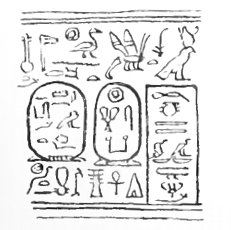
Sekhemkare Amenemhat Senebef (also Sonbef, Amenemhat Senbef; Senebef) was an Egyptian pharaoh of the early 13th Dynasty, often considered as the final part of the late Middle Kingdom or early Second Intermediate Period.
As a king of the early 13th Dynasty, Sonbef may have reigned from Itjtawy in the Faiyum. However, the only contemporary attestations of him are from south of Thebes. These include a scarab seal of unknown provenance, a cylinder seal from the Amherst collection and now in the Metropolitan Museum of Art.
At El-Tod, two inscribed blocks has the prenomen "Sekhemkare".
In Nubia, two Nile Level Records with the prenomen Sekhemkare are also attributable to him, one from Askut and dated to his Year 3, and the other from Semna dated to his Year 4. Less certain is a much damaged record from Semna dated to a year 5 that may belong to Sekhemkare.
The ownership of these Nile records is still in doubt however, as they only bear the prenomen Sekhemkare, which Amenemhat V also bore. The Egyptologist and archaeologist Stuart Tyson Smith, who studied the records initially attributed them to Sonbef, but later changed his opinion and attributed them to Amenemhat V.
BM EA 75196 | A statue belonging to vizier Khenmes, including the royal name of king Sekhemkare.
The Turin King List 7:06 mentions "The Dual King Sekhemkara ... years ... lacuna years, 6 years". Ryholt has read it as "Sekhemkare [Amenemhat Sonbe]f". The reign length is lost and followed by a lacuna of years. He is preceded in this list by Khutawyra (7:05) and succeeded by Amenemhat(ra) (7:07).
According to Egyptologists Kim Ryholt, Jürgen von Beckerath and Darrell Baker, he was the second king of the dynasty, reigning from 1800 BC until 1796 BC.
Hub AI
Sekhemkare Amenemhat Senebef AI simulator
(@Sekhemkare Amenemhat Senebef_simulator)
Sekhemkare Amenemhat Senebef
Sekhemkare Amenemhat Senebef (also Sonbef, Amenemhat Senbef; Senebef) was an Egyptian pharaoh of the early 13th Dynasty, often considered as the final part of the late Middle Kingdom or early Second Intermediate Period.
As a king of the early 13th Dynasty, Sonbef may have reigned from Itjtawy in the Faiyum. However, the only contemporary attestations of him are from south of Thebes. These include a scarab seal of unknown provenance, a cylinder seal from the Amherst collection and now in the Metropolitan Museum of Art.
At El-Tod, two inscribed blocks has the prenomen "Sekhemkare".
In Nubia, two Nile Level Records with the prenomen Sekhemkare are also attributable to him, one from Askut and dated to his Year 3, and the other from Semna dated to his Year 4. Less certain is a much damaged record from Semna dated to a year 5 that may belong to Sekhemkare.
The ownership of these Nile records is still in doubt however, as they only bear the prenomen Sekhemkare, which Amenemhat V also bore. The Egyptologist and archaeologist Stuart Tyson Smith, who studied the records initially attributed them to Sonbef, but later changed his opinion and attributed them to Amenemhat V.
BM EA 75196 | A statue belonging to vizier Khenmes, including the royal name of king Sekhemkare.
The Turin King List 7:06 mentions "The Dual King Sekhemkara ... years ... lacuna years, 6 years". Ryholt has read it as "Sekhemkare [Amenemhat Sonbe]f". The reign length is lost and followed by a lacuna of years. He is preceded in this list by Khutawyra (7:05) and succeeded by Amenemhat(ra) (7:07).
According to Egyptologists Kim Ryholt, Jürgen von Beckerath and Darrell Baker, he was the second king of the dynasty, reigning from 1800 BC until 1796 BC.
Recent media