



Community hub
Recent from talks
Contribute something to knowledge base
Content stats: 0 posts, 0 articles, 1 media, 0 notes
Members stats: 0 subscribers, 0 contributors, 0 moderators, 0 supporters
Subscribers
Supporters
Contributors
Moderators
Hub AI
Middle Kingdom of Egypt AI simulator
(@Middle Kingdom of Egypt_simulator)
Hub AI
Middle Kingdom of Egypt AI simulator
(@Middle Kingdom of Egypt_simulator)
Middle Kingdom of Egypt
The Middle Kingdom of Egypt (also known as The Period of Reunification) is the period in the history of ancient Egypt following a period of political division known as the First Intermediate Period. The Middle Kingdom lasted from approximately 2040 to 1782 BC, stretching from the reunification of Egypt under the reign of Mentuhotep II in the Eleventh Dynasty to the end of the Twelfth Dynasty. The kings of the Eleventh Dynasty ruled from Thebes and the kings of the Twelfth Dynasty ruled from el-Lisht.
The concept of the Middle Kingdom as one of three golden ages was coined in 1845 by German Egyptologist Baron von Bunsen, and its definition evolved significantly throughout the 19th and 20th centuries. Some scholars also include the Thirteenth Dynasty of Egypt wholly into this period, in which case the Middle Kingdom would end around 1650 BC, while others only include it until Merneferre Ay around 1700 BC, last king of this dynasty to be attested in both Upper and Lower Egypt. During the Middle Kingdom period, Osiris became the most important deity in popular religion. The Middle Kingdom was followed by the Second Intermediate Period of Egypt, another period of division that involved foreign rule of Lower Egypt by the Hyksos of West Asia.
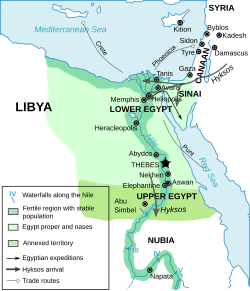
After the collapse of the Old Kingdom, Egypt entered a period of weak pharaonic power and decentralization called the First Intermediate Period. Towards the end of this period, two rival dynasties, known in Egyptology as the Tenth and Eleventh, fought for control of the entire country. The Theban Eleventh Dynasty only ruled southern Egypt from the First Cataract to the Tenth Nome of Upper Egypt. To the north, Lower Egypt was ruled by the rival Tenth Dynasty from Herakleopolis. The struggle was to be concluded by Mentuhotep II, who ascended the Theban throne in 2055 BC. During Mentuhotep II's fourteenth regnal year, he took advantage of a revolt in the Thinite Nome to launch an attack on Herakleopolis, which met little resistance. After toppling the last rulers of the Tenth Dynasty, Mentuhotep began consolidating his power over all of Egypt, a process that he finished by his 39th regnal year. For this reason, Mentuhotep II is regarded as the founder of the Middle Kingdom.
Mentuhotep II commanded petty campaigns as far south as the Second Cataract in Nubia, which had gained its independence during the First Intermediate Period. He also restored Egyptian hegemony over the Sinai region, which had been lost to Egypt since the end of the Old Kingdom. To consolidate his authority, he restored the cult of the ruler, depicting himself as a god in his own lifetime, wearing the headdresses of Amun and Min. He died after a reign of 51 years and passed the throne to his son, Mentuhotep III.
Mentuhotep III reigned for only twelve years, during which he continued consolidating Theban rule over the whole of Egypt, building a series of forts in the eastern Delta region to secure Egypt against threats from Asia. He also sent the first expedition to Punt during the Middle Kingdom, using ships constructed at the end of Wadi Hammamat, on the Red Sea. Mentuhotep III was succeeded by Mentuhotep IV, whose name, significantly, is omitted from all ancient Egyptian king lists. The Turin King List claims that after Mentuhotep III came "seven kingless years". Despite this absence, his reign is attested from a few inscriptions in Wadi Hammamat that record expeditions to the Red Sea coast and to quarry stone for the royal monuments. The leader of this expedition was his vizier Amenemhat, who is widely assumed to be the future pharaoh Amenemhet I, the first king of the Twelfth Dynasty.
Mentuhotep IV's absence from the king lists has prompted the theory that Amenemhet I usurped his throne. While there are no contemporary accounts of this struggle, certain circumstantial evidence may point to the existence of a civil war at the end of the 11th Dynasty. Inscriptions left by one Nehry, the Haty-a of Hermopolis, suggest that he was attacked at a place called Shedyet-sha by the forces of the reigning king, but his forces prevailed. Khnumhotep I, an official under Amenemhet I, claims to have participated in a flotilla of twenty ships sent to pacify Upper Egypt. Donald Redford has suggested these events should be interpreted as evidence of open war between two dynastic claimants. What is certain is that, however he came to power, Amenemhet I was not of royal birth.
From the Twelfth Dynasty onwards, pharaohs often kept well-trained standing armies, which included Nubian contingents. These formed the basis of larger forces that were raised for defense against invasion, or expeditions up the Nile or across the Sinai. However, the Middle Kingdom was basically defensive in its military strategy, with fortifications built at the First Cataract of the Nile, in the Delta and across the Sinai Isthmus.
Early in his reign, Amenemhet I was compelled to campaign in the Delta region, which had not received as much attention as Upper Egypt during the 11th Dynasty. Also, he strengthened defenses between Egypt and Asia, building the Walls of the Ruler in the East Delta region. Perhaps in response to this perpetual unrest, Amenemhat I built a new capital for Egypt in the north, known as Amenemhet It Tawy, or Amenemhet, Seizer of the Two Lands. The location of this capital is unknown, but is presumably near the city's necropolis, the present-day el-Lisht. Like Mentuhotep II, Amenemhet bolstered his claim to authority with propaganda. In particular, the Prophecy of Neferty dates to about this time, which purports to be an oracle of an Old Kingdom priest, who predicts a king, Amenemhet I, arising from the far south of Egypt to restore the kingdom after centuries of chaos.
Middle Kingdom of Egypt
The Middle Kingdom of Egypt (also known as The Period of Reunification) is the period in the history of ancient Egypt following a period of political division known as the First Intermediate Period. The Middle Kingdom lasted from approximately 2040 to 1782 BC, stretching from the reunification of Egypt under the reign of Mentuhotep II in the Eleventh Dynasty to the end of the Twelfth Dynasty. The kings of the Eleventh Dynasty ruled from Thebes and the kings of the Twelfth Dynasty ruled from el-Lisht.
The concept of the Middle Kingdom as one of three golden ages was coined in 1845 by German Egyptologist Baron von Bunsen, and its definition evolved significantly throughout the 19th and 20th centuries. Some scholars also include the Thirteenth Dynasty of Egypt wholly into this period, in which case the Middle Kingdom would end around 1650 BC, while others only include it until Merneferre Ay around 1700 BC, last king of this dynasty to be attested in both Upper and Lower Egypt. During the Middle Kingdom period, Osiris became the most important deity in popular religion. The Middle Kingdom was followed by the Second Intermediate Period of Egypt, another period of division that involved foreign rule of Lower Egypt by the Hyksos of West Asia.
After the collapse of the Old Kingdom, Egypt entered a period of weak pharaonic power and decentralization called the First Intermediate Period. Towards the end of this period, two rival dynasties, known in Egyptology as the Tenth and Eleventh, fought for control of the entire country. The Theban Eleventh Dynasty only ruled southern Egypt from the First Cataract to the Tenth Nome of Upper Egypt. To the north, Lower Egypt was ruled by the rival Tenth Dynasty from Herakleopolis. The struggle was to be concluded by Mentuhotep II, who ascended the Theban throne in 2055 BC. During Mentuhotep II's fourteenth regnal year, he took advantage of a revolt in the Thinite Nome to launch an attack on Herakleopolis, which met little resistance. After toppling the last rulers of the Tenth Dynasty, Mentuhotep began consolidating his power over all of Egypt, a process that he finished by his 39th regnal year. For this reason, Mentuhotep II is regarded as the founder of the Middle Kingdom.
Mentuhotep II commanded petty campaigns as far south as the Second Cataract in Nubia, which had gained its independence during the First Intermediate Period. He also restored Egyptian hegemony over the Sinai region, which had been lost to Egypt since the end of the Old Kingdom. To consolidate his authority, he restored the cult of the ruler, depicting himself as a god in his own lifetime, wearing the headdresses of Amun and Min. He died after a reign of 51 years and passed the throne to his son, Mentuhotep III.
Mentuhotep III reigned for only twelve years, during which he continued consolidating Theban rule over the whole of Egypt, building a series of forts in the eastern Delta region to secure Egypt against threats from Asia. He also sent the first expedition to Punt during the Middle Kingdom, using ships constructed at the end of Wadi Hammamat, on the Red Sea. Mentuhotep III was succeeded by Mentuhotep IV, whose name, significantly, is omitted from all ancient Egyptian king lists. The Turin King List claims that after Mentuhotep III came "seven kingless years". Despite this absence, his reign is attested from a few inscriptions in Wadi Hammamat that record expeditions to the Red Sea coast and to quarry stone for the royal monuments. The leader of this expedition was his vizier Amenemhat, who is widely assumed to be the future pharaoh Amenemhet I, the first king of the Twelfth Dynasty.
Mentuhotep IV's absence from the king lists has prompted the theory that Amenemhet I usurped his throne. While there are no contemporary accounts of this struggle, certain circumstantial evidence may point to the existence of a civil war at the end of the 11th Dynasty. Inscriptions left by one Nehry, the Haty-a of Hermopolis, suggest that he was attacked at a place called Shedyet-sha by the forces of the reigning king, but his forces prevailed. Khnumhotep I, an official under Amenemhet I, claims to have participated in a flotilla of twenty ships sent to pacify Upper Egypt. Donald Redford has suggested these events should be interpreted as evidence of open war between two dynastic claimants. What is certain is that, however he came to power, Amenemhet I was not of royal birth.
From the Twelfth Dynasty onwards, pharaohs often kept well-trained standing armies, which included Nubian contingents. These formed the basis of larger forces that were raised for defense against invasion, or expeditions up the Nile or across the Sinai. However, the Middle Kingdom was basically defensive in its military strategy, with fortifications built at the First Cataract of the Nile, in the Delta and across the Sinai Isthmus.
Early in his reign, Amenemhet I was compelled to campaign in the Delta region, which had not received as much attention as Upper Egypt during the 11th Dynasty. Also, he strengthened defenses between Egypt and Asia, building the Walls of the Ruler in the East Delta region. Perhaps in response to this perpetual unrest, Amenemhat I built a new capital for Egypt in the north, known as Amenemhet It Tawy, or Amenemhet, Seizer of the Two Lands. The location of this capital is unknown, but is presumably near the city's necropolis, the present-day el-Lisht. Like Mentuhotep II, Amenemhet bolstered his claim to authority with propaganda. In particular, the Prophecy of Neferty dates to about this time, which purports to be an oracle of an Old Kingdom priest, who predicts a king, Amenemhet I, arising from the far south of Egypt to restore the kingdom after centuries of chaos.
Recent media
Recent media