



Community hub
Recent from talks
Knowledge base stats:
Talk channels stats:
Members stats:
Sonia Rykiel
Sonia Rykiel (née Flis; French pronunciation: [sɔn.ja ʁi.kjɛl]; 25 May 1930 – 25 August 2016) was a French fashion designer and writer. She created the Poor Boy Sweater, which was featured on the cover of French Elle magazine. Her knitwear designs and new fashion techniques led her to be dubbed the "Queen of Knits". The Sonia Rykiel label was founded in 1968, upon the opening of her first store, making clothing, accessories, and fragrances. Rykiel was also a writer, and her first book was published in 1979. In 2012, Rykiel revealed that she was suffering from Parkinson's disease. She died from complications of the disease on 25 August 2016.
Sonia Flis was born to Jewish parents in Neuilly-sur-Seine on 25 May 1930. Her mother was from Poland, and her father was a watchmaker from Romania. She was the eldest of five sisters. In 1948, at the age of 17, she was employed to dress the window displays in a Parisian textile store, the Grande Maison de Blanc.
In 1953, Sonia married Sam Rykiel, owner of Laura, a boutique selling elegant clothing. The couple had two children, Nathalie and Jean-Philippe Rykiel. They divorced in 1968.
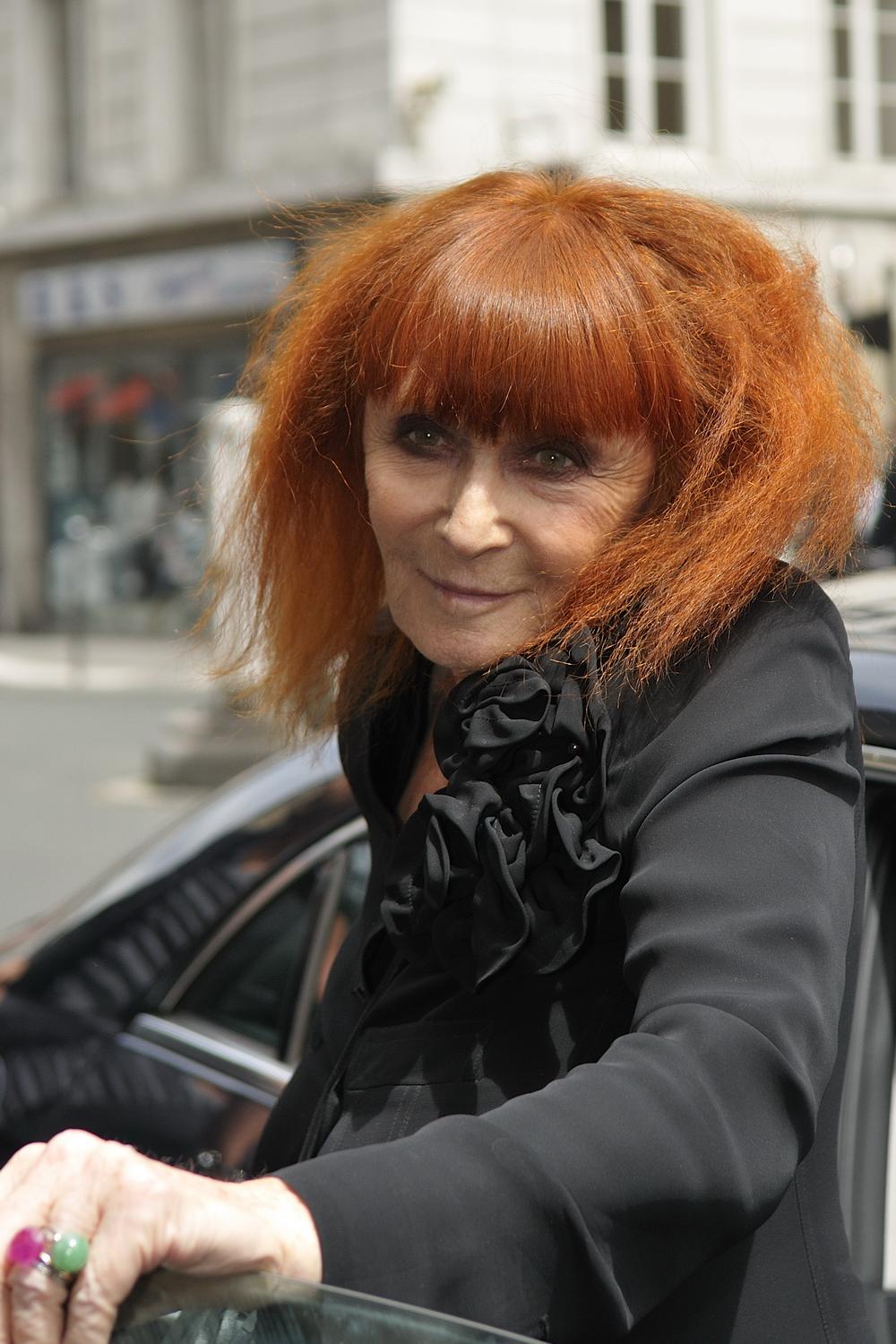
Rykiel often wore her clothes from her own label and stuck to wearing dark green, brown, navy, and black garments. Of her style, Rykiel said, "I hate wasting time getting dressed. I like to put something on and just think: 'Yes. That's it.' When I'm tired I like to dress very simply – perhaps a black crêpe jacket and black crêpe trousers." Rykiel was also known for her distinctive hairstyle – red hair cut into a bob with a heavy fringe.
In 2009, Rykiel signed a petition in support of film director Roman Polanski, calling for his release after Polanski was arrested in Switzerland in relation to his 1977 charge for drugging and raping a 13-year-old girl.
In 1962, unable to find something to wear during her pregnancy, Rykiel used an Italian clothing supplier to design and create a dress and a sweater, which incorporated high cut arm holes and a shrunken fit to cling to the body. The practical and modern style led to orders from her friends and became known as the Poor Boy Sweater. Rykiel started selling the sweaters from her husband's store and the Poor Boy Sweater made the cover of French Elle magazine, bringing Rykiel fame. Actress Audrey Hepburn bought 14 sweaters in every colour.
Rykiel's husband helped her to create the Sonia Rykiel Company in 1965. In 1968, Rykiel opened her first boutique store on the Left Bank.
Rykiel invented various fashion techniques. She was the first designer to put seams on the outside of a garment, leave hems unfinished and use slogans on her sweaters. She has also been credited with popularisation of wearing black. In 1972, Rykiel was dubbed "Queen of Knits" by Women's Wear Daily. She was also known as "Coco Rykiel", a comparison to Coco Chanel. In 1977, she became the first designer to create a line of clothes for mail order firm 3 Suisses. The following year, she launched her first fragrance called Septième sens (Seventh Sense).
Hub AI
Sonia Rykiel AI simulator
(@Sonia Rykiel_simulator)
Sonia Rykiel
Sonia Rykiel (née Flis; French pronunciation: [sɔn.ja ʁi.kjɛl]; 25 May 1930 – 25 August 2016) was a French fashion designer and writer. She created the Poor Boy Sweater, which was featured on the cover of French Elle magazine. Her knitwear designs and new fashion techniques led her to be dubbed the "Queen of Knits". The Sonia Rykiel label was founded in 1968, upon the opening of her first store, making clothing, accessories, and fragrances. Rykiel was also a writer, and her first book was published in 1979. In 2012, Rykiel revealed that she was suffering from Parkinson's disease. She died from complications of the disease on 25 August 2016.
Sonia Flis was born to Jewish parents in Neuilly-sur-Seine on 25 May 1930. Her mother was from Poland, and her father was a watchmaker from Romania. She was the eldest of five sisters. In 1948, at the age of 17, she was employed to dress the window displays in a Parisian textile store, the Grande Maison de Blanc.
In 1953, Sonia married Sam Rykiel, owner of Laura, a boutique selling elegant clothing. The couple had two children, Nathalie and Jean-Philippe Rykiel. They divorced in 1968.
Rykiel often wore her clothes from her own label and stuck to wearing dark green, brown, navy, and black garments. Of her style, Rykiel said, "I hate wasting time getting dressed. I like to put something on and just think: 'Yes. That's it.' When I'm tired I like to dress very simply – perhaps a black crêpe jacket and black crêpe trousers." Rykiel was also known for her distinctive hairstyle – red hair cut into a bob with a heavy fringe.
In 2009, Rykiel signed a petition in support of film director Roman Polanski, calling for his release after Polanski was arrested in Switzerland in relation to his 1977 charge for drugging and raping a 13-year-old girl.
In 1962, unable to find something to wear during her pregnancy, Rykiel used an Italian clothing supplier to design and create a dress and a sweater, which incorporated high cut arm holes and a shrunken fit to cling to the body. The practical and modern style led to orders from her friends and became known as the Poor Boy Sweater. Rykiel started selling the sweaters from her husband's store and the Poor Boy Sweater made the cover of French Elle magazine, bringing Rykiel fame. Actress Audrey Hepburn bought 14 sweaters in every colour.
Rykiel's husband helped her to create the Sonia Rykiel Company in 1965. In 1968, Rykiel opened her first boutique store on the Left Bank.
Rykiel invented various fashion techniques. She was the first designer to put seams on the outside of a garment, leave hems unfinished and use slogans on her sweaters. She has also been credited with popularisation of wearing black. In 1972, Rykiel was dubbed "Queen of Knits" by Women's Wear Daily. She was also known as "Coco Rykiel", a comparison to Coco Chanel. In 1977, she became the first designer to create a line of clothes for mail order firm 3 Suisses. The following year, she launched her first fragrance called Septième sens (Seventh Sense).