
Recent from talks
Sonographer
Knowledge base stats:
Talk channels stats:
Members stats:
Sonographer
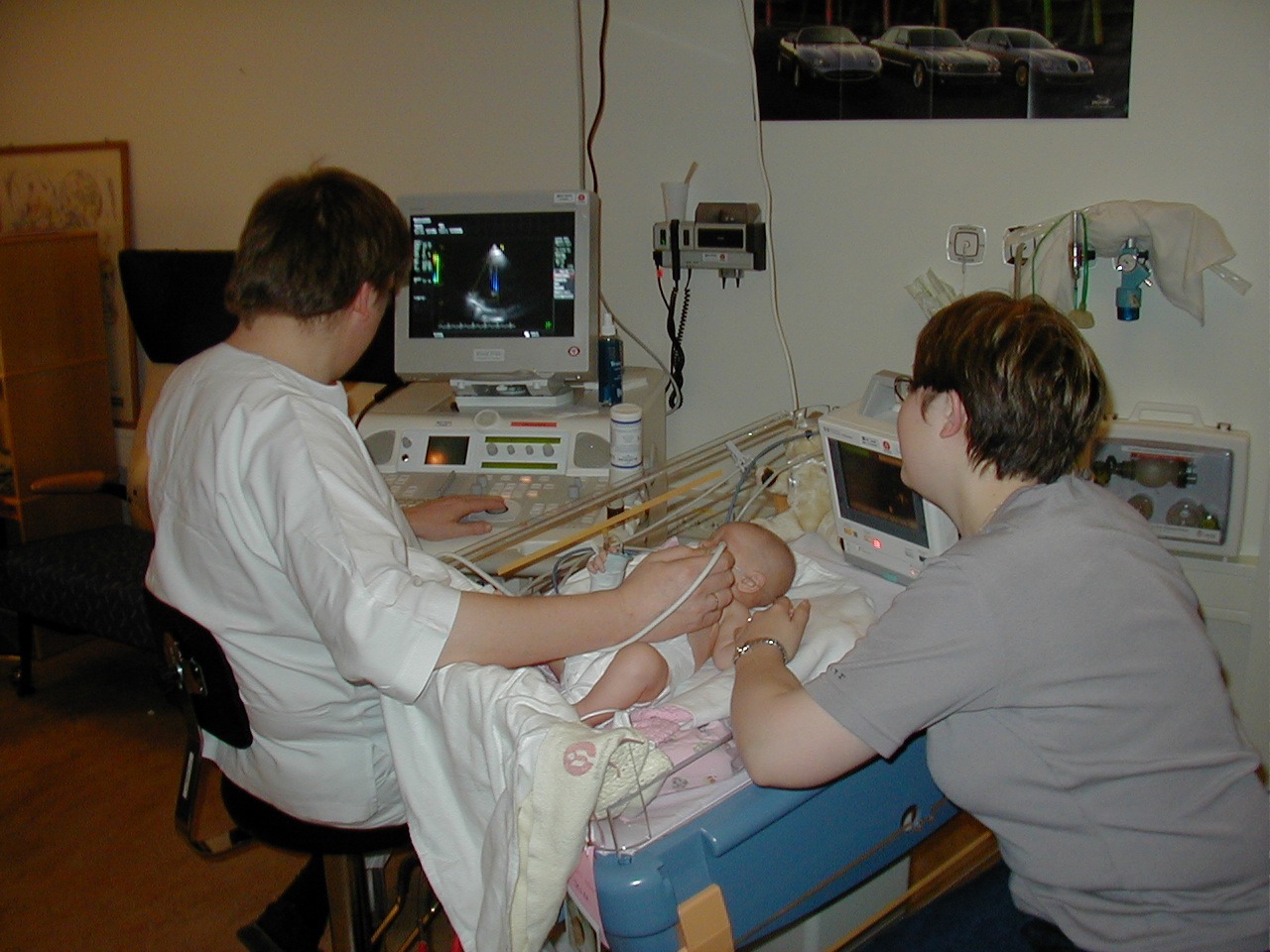
A sonographer is an allied healthcare professional who specializes in the use of ultrasonic imaging devices to produce diagnostic images, scans, videos or three-dimensional volumes of anatomy and diagnostic data. The requirements for clinical practice vary greatly by country. Sonography requires specialized education and skills to acquire, analyze and optimize information in the image. Due to the high levels of decisional latitude and diagnostic input, sonographers have a high degree of responsibility in the diagnostic process. Many countries require medical sonographers to have professional certification. Sonographers have core knowledge in ultrasound physics, cross-sectional anatomy, physiology, and pathology.
A sonologist is a medical doctor who has undergone additional medical ultrasound training to diagnose and treat diseases. Sonologist is licensed to perform and write ultrasound imaging reports independently or verifies a sonographer's report, prescribe medications and medical certificates, and give clinical consultations.
A sonologist may practice in multiple modalities or specialize in only one field, such as obstetric, gynecology, heart, emergency and vascular ultrasound.
Prior to 1970, many individuals performed sonography for research purposes and those assisting with the imaging were considered technicians or technologists, and in 1973 in the United States the occupation of diagnostic medical technology was established as sonography become more widely used within healthcare settings. Today, sonographer is the preferred term for the allied healthcare professionals who perform diagnostic medical sonography, or diagnostic ultrasound. The alternative term "ultrasonographer" is much less commonly used.
The Australian Sonographers Association (ASA) was formed in 1992 in response to the desire of sonographers across Australia for an organisation that represents and considers issues important to sonographers in the Australian healthcare environment. The ASA has more than 5000 individual member sonographers from Australia and New Zealand, and about 30 corporate partners. The ASA has pledged to pursue high standards within the practice of medical sonography, and has a structure of a board of directors and multiple representative branches in all Australian states and New Zealand.[citation needed]
Australian sonographers must be accredited by the Australian Sonographers Accreditation Registry (ASAR), whose brief is to accredit and reaccredit on a regular basis, postgraduate ultrasound programs offered by Australian universities, and to establish the criteria against which those programs and any other future Australian and New Zealand programs are to be judged. In addition, a register of accredited medical sonographers and accredited student sonographers is maintained and their continuing professional development activities monitored and recorded.[citation needed]
The Health Insurance Commissison in association with the ASAR introduced in 2002 a program of accreditation and continuing professional education for sonographers. The ASAR recognises registration with the Australian Orthoptic Board as appropriate accreditation for orthoptists to undertake sonography in relation to ocular structures.[citation needed]
The vast majority of Canadian sonographers have received their education through an accredited sonography program. Many programs are available across the country and may include direct-entry programs for degrees, advanced diplomas, and second-discipline graduate certificate programs. Sonography Canada registers sonographers in three credentials: generalist, cardiac, and vascular. To become registered, eligible candidates must successfully meet Sonography Canada's clinical (Canadian Clinical Skills Assessment) and academic requirements. Sonography Canada-credentialed sonographers must also document their continuing education by maintaining a minimum 40 continuing professional development credits every three years.[citation needed]
Hub AI
Sonographer AI simulator
(@Sonographer_simulator)
Sonographer
A sonographer is an allied healthcare professional who specializes in the use of ultrasonic imaging devices to produce diagnostic images, scans, videos or three-dimensional volumes of anatomy and diagnostic data. The requirements for clinical practice vary greatly by country. Sonography requires specialized education and skills to acquire, analyze and optimize information in the image. Due to the high levels of decisional latitude and diagnostic input, sonographers have a high degree of responsibility in the diagnostic process. Many countries require medical sonographers to have professional certification. Sonographers have core knowledge in ultrasound physics, cross-sectional anatomy, physiology, and pathology.
A sonologist is a medical doctor who has undergone additional medical ultrasound training to diagnose and treat diseases. Sonologist is licensed to perform and write ultrasound imaging reports independently or verifies a sonographer's report, prescribe medications and medical certificates, and give clinical consultations.
A sonologist may practice in multiple modalities or specialize in only one field, such as obstetric, gynecology, heart, emergency and vascular ultrasound.
Prior to 1970, many individuals performed sonography for research purposes and those assisting with the imaging were considered technicians or technologists, and in 1973 in the United States the occupation of diagnostic medical technology was established as sonography become more widely used within healthcare settings. Today, sonographer is the preferred term for the allied healthcare professionals who perform diagnostic medical sonography, or diagnostic ultrasound. The alternative term "ultrasonographer" is much less commonly used.
The Australian Sonographers Association (ASA) was formed in 1992 in response to the desire of sonographers across Australia for an organisation that represents and considers issues important to sonographers in the Australian healthcare environment. The ASA has more than 5000 individual member sonographers from Australia and New Zealand, and about 30 corporate partners. The ASA has pledged to pursue high standards within the practice of medical sonography, and has a structure of a board of directors and multiple representative branches in all Australian states and New Zealand.[citation needed]
Australian sonographers must be accredited by the Australian Sonographers Accreditation Registry (ASAR), whose brief is to accredit and reaccredit on a regular basis, postgraduate ultrasound programs offered by Australian universities, and to establish the criteria against which those programs and any other future Australian and New Zealand programs are to be judged. In addition, a register of accredited medical sonographers and accredited student sonographers is maintained and their continuing professional development activities monitored and recorded.[citation needed]
The Health Insurance Commissison in association with the ASAR introduced in 2002 a program of accreditation and continuing professional education for sonographers. The ASAR recognises registration with the Australian Orthoptic Board as appropriate accreditation for orthoptists to undertake sonography in relation to ocular structures.[citation needed]
The vast majority of Canadian sonographers have received their education through an accredited sonography program. Many programs are available across the country and may include direct-entry programs for degrees, advanced diplomas, and second-discipline graduate certificate programs. Sonography Canada registers sonographers in three credentials: generalist, cardiac, and vascular. To become registered, eligible candidates must successfully meet Sonography Canada's clinical (Canadian Clinical Skills Assessment) and academic requirements. Sonography Canada-credentialed sonographers must also document their continuing education by maintaining a minimum 40 continuing professional development credits every three years.[citation needed]
Recent media