



Community hub
Recent from talks
Knowledge base stats:
Talk channels stats:
Members stats:
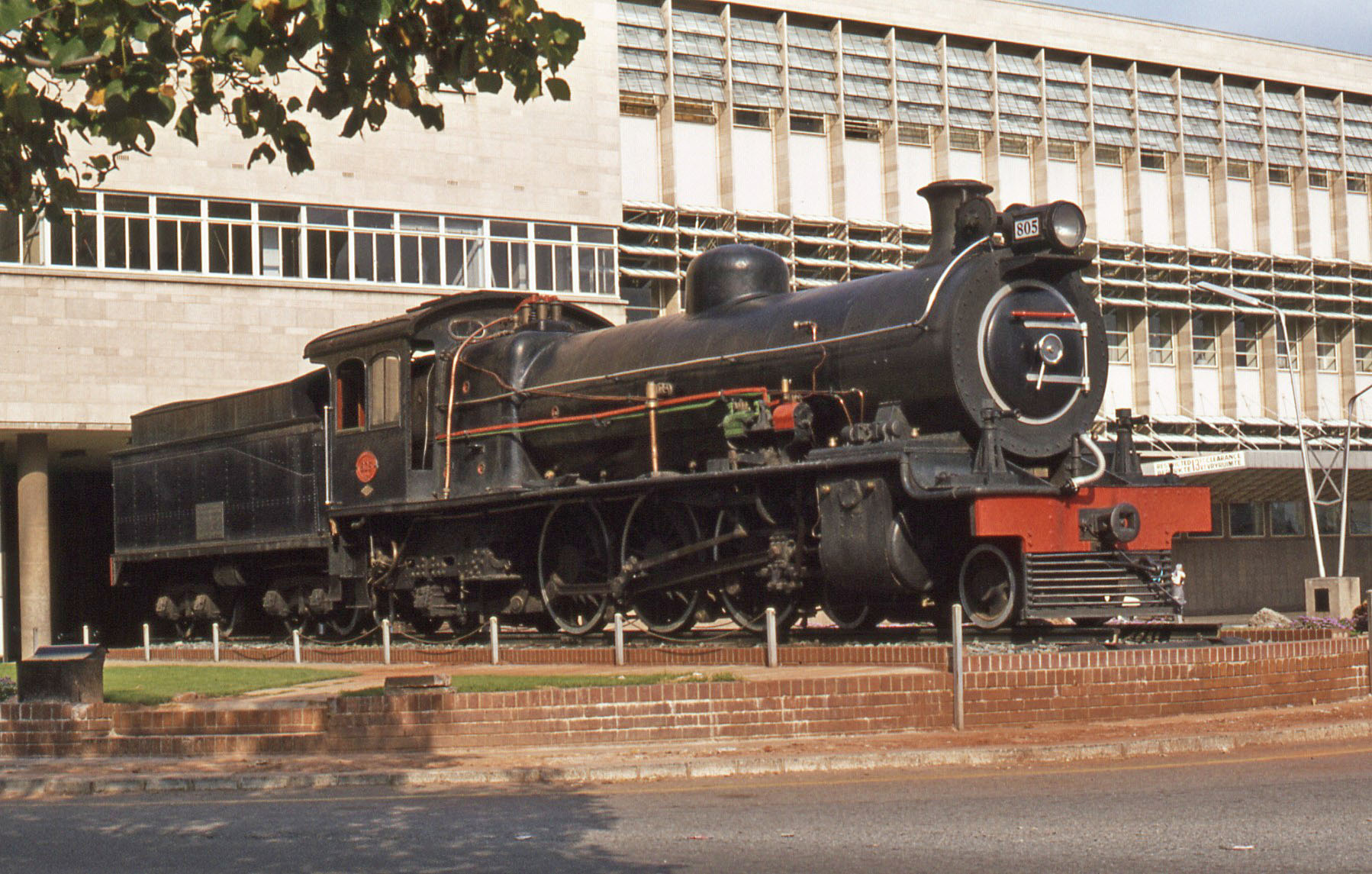
South African Class 16B 4-6-2
The South African Railways Class 16B 4-6-2 of 1917 was a steam locomotive.
In November 1917, the South African Railways placed ten Class 16B steam locomotives with a 4-6-2 Pacific type wheel arrangement in passenger train service.
The Class 16B 4-6-2 Pacific type locomotive was designed by D.A. Hendrie, Chief Mechanical Engineer (CME) of the South African Railways (SAR), and built in 1917 by the North British Locomotive Company (NBL) in Glasgow, Scotland. Ten locomotives were delivered and placed in service in November 1917, numbered in the range from 802 to 811.
They were identical to the predecessor Class 16 and successor Class 16C in most respects, except that they had wider cabs than the Class 16, while the Class 16C was equipped with a combustion chamber in the firebox. Other minor alterations from the Class 16's characteristics were the injector and some cab and footplate arrangements.
During 1936, the coupled wheels were enlarged from 60 to 63 inches (1,524 to 1,600 millimetres) diameter and the boiler pressure setting accordingly adjusted from 190 to 200 pounds per square inch (1,310 to 1,379 kilopascals), which raised their tractive effort slightly from 29,890 to 29,960 pounds-force (133.0 to 133.3 kilonewtons) at 75% of boiler pressure.
During the 1930s, many serving locomotives were reboilered with a standard boiler type designed by A.G. Watson, CME of the SAR at the time, as part of his standardisation policy. Such Watson Standard reboilered locomotives were reclassified by adding an "R" suffix to their classification.
Eventually all ten Class 16B locomotives as well as all thirty Class 16C locomotives were reboilered with Watson Standard no 2B boilers. In the process of reboilering, the main difference between the Class 16B and Class 16C, Hendrie's combustion chamber behind the Class 16C boiler, disappeared and the reboilered Class 16B locomotives were also reclassified to Class 16CR. Early conversions were equipped with copper and later conversions with steel fireboxes. In the process, they were also equipped with Watson cabs with their distinctive slanted fronts, compared to the conventional vertical fronts of their original cabs.
Some ex Class 16B locomotives erroneously received new number plates after reboilering which identified them as Class 16BR, even though such an SAR Class never officially existed.
Hub AI
South African Class 16B 4-6-2 AI simulator
(@South African Class 16B 4-6-2_simulator)
South African Class 16B 4-6-2
The South African Railways Class 16B 4-6-2 of 1917 was a steam locomotive.
In November 1917, the South African Railways placed ten Class 16B steam locomotives with a 4-6-2 Pacific type wheel arrangement in passenger train service.
The Class 16B 4-6-2 Pacific type locomotive was designed by D.A. Hendrie, Chief Mechanical Engineer (CME) of the South African Railways (SAR), and built in 1917 by the North British Locomotive Company (NBL) in Glasgow, Scotland. Ten locomotives were delivered and placed in service in November 1917, numbered in the range from 802 to 811.
They were identical to the predecessor Class 16 and successor Class 16C in most respects, except that they had wider cabs than the Class 16, while the Class 16C was equipped with a combustion chamber in the firebox. Other minor alterations from the Class 16's characteristics were the injector and some cab and footplate arrangements.
During 1936, the coupled wheels were enlarged from 60 to 63 inches (1,524 to 1,600 millimetres) diameter and the boiler pressure setting accordingly adjusted from 190 to 200 pounds per square inch (1,310 to 1,379 kilopascals), which raised their tractive effort slightly from 29,890 to 29,960 pounds-force (133.0 to 133.3 kilonewtons) at 75% of boiler pressure.
During the 1930s, many serving locomotives were reboilered with a standard boiler type designed by A.G. Watson, CME of the SAR at the time, as part of his standardisation policy. Such Watson Standard reboilered locomotives were reclassified by adding an "R" suffix to their classification.
Eventually all ten Class 16B locomotives as well as all thirty Class 16C locomotives were reboilered with Watson Standard no 2B boilers. In the process of reboilering, the main difference between the Class 16B and Class 16C, Hendrie's combustion chamber behind the Class 16C boiler, disappeared and the reboilered Class 16B locomotives were also reclassified to Class 16CR. Early conversions were equipped with copper and later conversions with steel fireboxes. In the process, they were also equipped with Watson cabs with their distinctive slanted fronts, compared to the conventional vertical fronts of their original cabs.
Some ex Class 16B locomotives erroneously received new number plates after reboilering which identified them as Class 16BR, even though such an SAR Class never officially existed.