
Recent from talks
SPAD S.VII
Knowledge base stats:
Talk channels stats:
Members stats:
SPAD S.VII
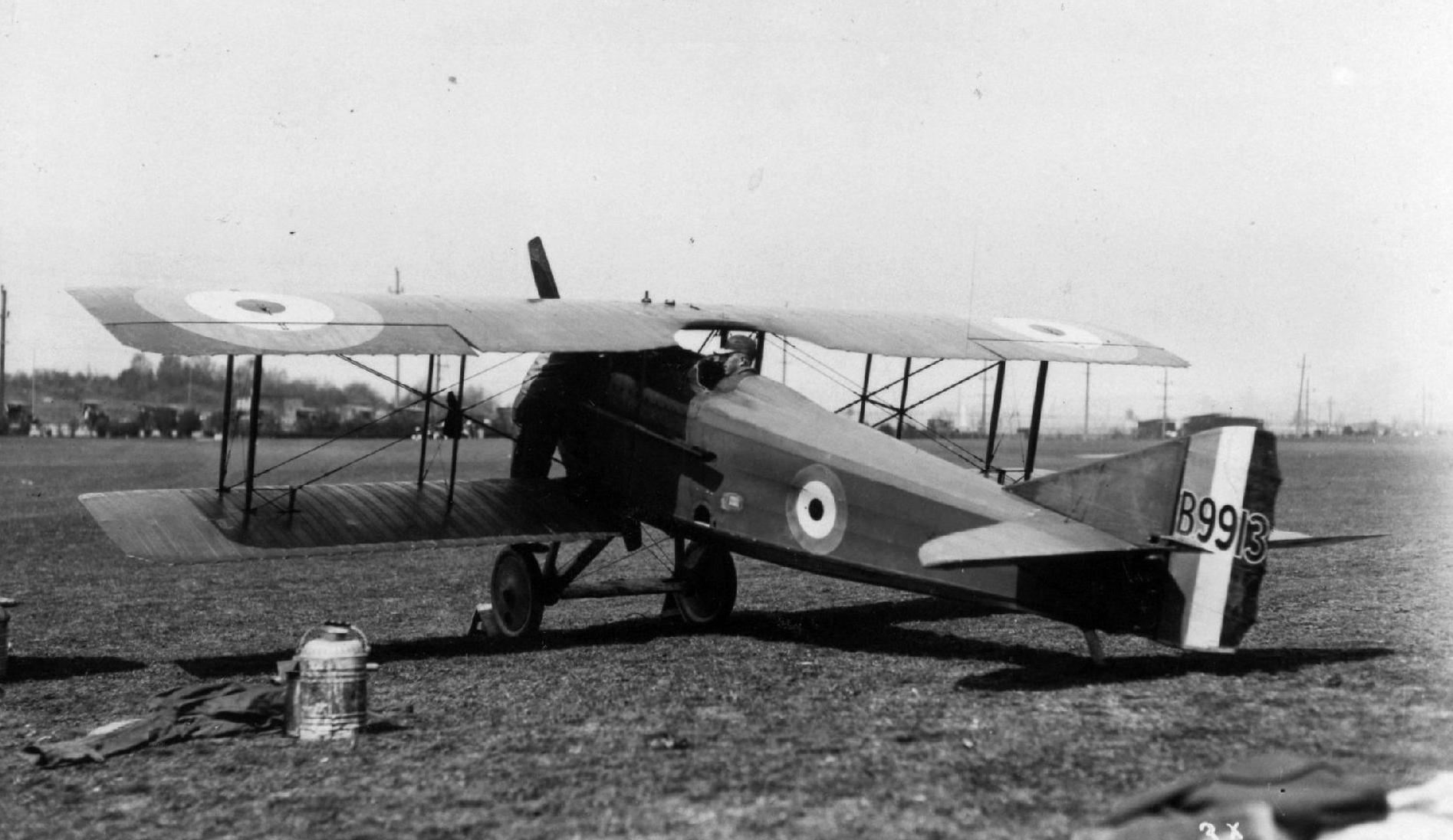
The SPAD S.VII C.1 was the first in a series of single-seat biplane fighter aircraft produced by Société Pour L'Aviation et ses Dérivés (SPAD) during the First World War. Like its successors, the S.VII was renowned as a sturdy and rugged aircraft with good diving characteristics. It was also a stable gun platform, although pilots used to the more manoeuvrable Nieuport fighters found it heavy on the controls. It was flown by a number of famous aces, such as France's Georges Guynemer, Italy's Francesco Baracca and Australia's Alexander Pentland.
In February 1915, Swiss designer Marc Birkigt had created an overhead cam aviation powerplant based on his Hispano-Suiza V8 automobile engine, resulting in a 150-kilogram (330 lb) engine capable of producing 100 kW (140 hp) at 1,400 rpm. Further refinement brought the power to 110 kW (150 hp) by July 1915. Given the engine's potential, French officials ordered called upon aircraft designers to create a new high-performance fighter around the engine, called the Hispano-Suiza 8A, with production to begin as soon as possible.
Louis Béchereau, chief designer of the SPAD company, quickly produced a prototype fighter with the new engine. The SPAD V was a version of the SPAD S.A two-seat "pulpit fighter", which dispensed with the so-called "pulpit" which carried the observer in front of the propeller.
One of many many common design features between the new SPAD V and the S.A.2 was the use of a single-bay biplane wing with additional struts mounted mid-bay at the point of junction of the flying and landing wires. This design simplified rigging and reduced drag. The fuselage was of the standard construction for the time, consisting of a wooden frame covered with fabric, while the forward part was covered with metal sheeting. A .303 (7.7mm) Vickers machine gun was installed above the engine, synchronized to fire through the propeller arc. The prototype was also fitted with a large spinner, to be abandoned later. Another common design feature of both the "pulpit fighters" and the S.VII – also shared with the S.XIII – was the pushrod aileron control linkage, which used a pair of exposed, 90° bellcranks protruding from the lower wing panels to operate vertical pushrods, going up to forward-projecting aileron control horns.
SPAD test pilot Bequet flew the SPAD V for the first time in April 1916. Flight testing revealed excellent maximum speed (192 km/h (119 mph) and climb rate of 4.5 min to 2,000 m (6,560 ft)). The airframe's sound construction also enabled a good diving performance. In comparison, the Nieuport 17 sesquiplane fighters that equipped a large part of the fighter units couldn't dive as fast because of their lower weight, but could outclimb the SPADs by a wide margin. The high diving speed promised to give lower-skilled Allied pilots the initiative to engage or leave combat against heavier German fighters. If the new fighter was a rugged and stable shooting platform, many pilots regretted its lack of manoeuvrability.
An initial production contract was made on 10 May 1916, calling for 268 machines, to be designated SPAD VII C.1 (C.1, from avion de chasse in French, indicating the aircraft was a fighter, while the 1 indicated it was a single seater).
Early production aircraft suffered from numerous defects which took time to resolve and limited deliveries. While a few SPADs arrived at frontline units as early as August 1916, large numbers only began to appear in the first months of 1917. In hot weather, the engine overheated and in cold weather, the engine would not warm up. Field modifications attempted to counter the problem, including cutting extra holes in the metal sheeting to provide more air over the engine. On the production lines, the cowling opening was enlarged and then redesigned with vertical shutters to solve both problems. The engine mount also proved weak, and reinforcements were added. Early production aircraft had two ammunition drums: one for the loaded canvas cartridge belt, and one to hold the empty belt after the rounds had been fired. However, dealing with the fabric belt as it came out of the gun was a significant problem, and was prone to jamming, which was only solved when Prideaux disintegrating ammo links were introduced.
With the initial teething problems solved, several subcontractors began producing the SPAD VII under license. The subcontractors included the firms Grémont, Janoir, Kellner et Fils, de Marçay, Société d'Etudes Aéronautiques, Régy and Sommer. It was not, however, until February 1917 that the last examples from the initial batch of 268 aircraft was delivered. In early 1917, an improved version of the engine developing 130 kW (180 hp), the Hispano-Suiza 8Ab, was made available. This provided the SPAD VII with better performance, the top speed increasing from 192 to 208 km/h (119 to 129 mph). The new engine gradually became the standard powerplant for the SPAD VII and by April 1917, all newly produced aircraft were equipped with it.
Hub AI
SPAD S.VII AI simulator
(@SPAD S.VII_simulator)
SPAD S.VII
The SPAD S.VII C.1 was the first in a series of single-seat biplane fighter aircraft produced by Société Pour L'Aviation et ses Dérivés (SPAD) during the First World War. Like its successors, the S.VII was renowned as a sturdy and rugged aircraft with good diving characteristics. It was also a stable gun platform, although pilots used to the more manoeuvrable Nieuport fighters found it heavy on the controls. It was flown by a number of famous aces, such as France's Georges Guynemer, Italy's Francesco Baracca and Australia's Alexander Pentland.
In February 1915, Swiss designer Marc Birkigt had created an overhead cam aviation powerplant based on his Hispano-Suiza V8 automobile engine, resulting in a 150-kilogram (330 lb) engine capable of producing 100 kW (140 hp) at 1,400 rpm. Further refinement brought the power to 110 kW (150 hp) by July 1915. Given the engine's potential, French officials ordered called upon aircraft designers to create a new high-performance fighter around the engine, called the Hispano-Suiza 8A, with production to begin as soon as possible.
Louis Béchereau, chief designer of the SPAD company, quickly produced a prototype fighter with the new engine. The SPAD V was a version of the SPAD S.A two-seat "pulpit fighter", which dispensed with the so-called "pulpit" which carried the observer in front of the propeller.
One of many many common design features between the new SPAD V and the S.A.2 was the use of a single-bay biplane wing with additional struts mounted mid-bay at the point of junction of the flying and landing wires. This design simplified rigging and reduced drag. The fuselage was of the standard construction for the time, consisting of a wooden frame covered with fabric, while the forward part was covered with metal sheeting. A .303 (7.7mm) Vickers machine gun was installed above the engine, synchronized to fire through the propeller arc. The prototype was also fitted with a large spinner, to be abandoned later. Another common design feature of both the "pulpit fighters" and the S.VII – also shared with the S.XIII – was the pushrod aileron control linkage, which used a pair of exposed, 90° bellcranks protruding from the lower wing panels to operate vertical pushrods, going up to forward-projecting aileron control horns.
SPAD test pilot Bequet flew the SPAD V for the first time in April 1916. Flight testing revealed excellent maximum speed (192 km/h (119 mph) and climb rate of 4.5 min to 2,000 m (6,560 ft)). The airframe's sound construction also enabled a good diving performance. In comparison, the Nieuport 17 sesquiplane fighters that equipped a large part of the fighter units couldn't dive as fast because of their lower weight, but could outclimb the SPADs by a wide margin. The high diving speed promised to give lower-skilled Allied pilots the initiative to engage or leave combat against heavier German fighters. If the new fighter was a rugged and stable shooting platform, many pilots regretted its lack of manoeuvrability.
An initial production contract was made on 10 May 1916, calling for 268 machines, to be designated SPAD VII C.1 (C.1, from avion de chasse in French, indicating the aircraft was a fighter, while the 1 indicated it was a single seater).
Early production aircraft suffered from numerous defects which took time to resolve and limited deliveries. While a few SPADs arrived at frontline units as early as August 1916, large numbers only began to appear in the first months of 1917. In hot weather, the engine overheated and in cold weather, the engine would not warm up. Field modifications attempted to counter the problem, including cutting extra holes in the metal sheeting to provide more air over the engine. On the production lines, the cowling opening was enlarged and then redesigned with vertical shutters to solve both problems. The engine mount also proved weak, and reinforcements were added. Early production aircraft had two ammunition drums: one for the loaded canvas cartridge belt, and one to hold the empty belt after the rounds had been fired. However, dealing with the fabric belt as it came out of the gun was a significant problem, and was prone to jamming, which was only solved when Prideaux disintegrating ammo links were introduced.
With the initial teething problems solved, several subcontractors began producing the SPAD VII under license. The subcontractors included the firms Grémont, Janoir, Kellner et Fils, de Marçay, Société d'Etudes Aéronautiques, Régy and Sommer. It was not, however, until February 1917 that the last examples from the initial batch of 268 aircraft was delivered. In early 1917, an improved version of the engine developing 130 kW (180 hp), the Hispano-Suiza 8Ab, was made available. This provided the SPAD VII with better performance, the top speed increasing from 192 to 208 km/h (119 to 129 mph). The new engine gradually became the standard powerplant for the SPAD VII and by April 1917, all newly produced aircraft were equipped with it.
Recent media