



Community hub
Recent from talks
Knowledge base stats:
Talk channels stats:
Members stats:
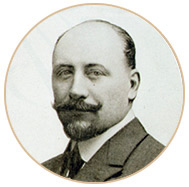
Marc Birkigt
Marc Birkigt (8 March 1878, Geneva – 15 March 1953, Versoix) was a Swiss engineer, automotive and aviation pioneer, and co-founder of Hispano-Suiza in 1904.
He lived in Barcelona, Spain when he was hired by Emilio de la Cuadra in 1898 to work as an automobile engineer in Cuadra's firm La Cuadra. After several bankruptcies and changes in ownership, the firm was reborn in 1904 as the luxury automobile company Hispano-Suiza with Birkigt as chief engineer. Later he co-founded the Dewoitine company along with Émile Dewoitine. Birkigt was nominated for the Car Engineer of the Century prize for the luxurious Hispano-Suiza H6 car in the 1920s. He also won fame for the aircraft engines and guns he designed as chief engineer at Hispano-Suiza, the former including the liquid-cooled V8 engine that powered the famous French SPAD VII and SPAD XIII World War I fighters, and the British Sopwith Dolphin and S.E. 5a, whilst in the field of ordnance he created the Hispano-Suiza HS.404 20mm autocannon, which was of great importance in WW II as the main fighter gun of the RAF from 1941 onwards.
Marc was born on March 8, 1878, in Geneva, Switzerland. Son of a tailor in rue Rousseau, his mother died when he was 2 and his father when he was 12. He was raised by his grandmother.
Marc entered the Geneva Mechanical School at the age of 17 from where he graduated as an engineer at the age of 20 and then worked in a company manufacturing machines and tools for watchmaking. During his military service in Switzerland, he served as gunsmith.
Aged 21, he joined Carlos Vellino (engineering school friend) in 1899 in Barcelona (industrial capital of Catalonia) and worked unsuccessfully on a prototype electric omnibus for Barcelona for the company “La Cuadra”. He then designed and manufactured two models of gasoline powered carts: a 4.5 hp single-cylinder and the 7.5-horsepower twin-cylinder La Cuadra Centauro, which in 1901 traveled 1,000 km without incident. He filed his first mechanical patents but the company went bankrupt.
Marc Birkigt founded with the financier José Castro de La Cuadra in November 1902 the José Castro s.en.c Fábrica Hispano-Suiza de Automóviles in Barcelona. They manufactured automobiles with internal combustion engines, the 10 hp, 1,873 cc twin-cylinder and the 14 hp, 2,535 cc 4-cylinder chassis. At the beginning of 1904, production was again suspended for lack of money. The Spanish businessmen Damian Mateù and Francisco Seix then finance on June 14, 1904, the new company Hispano-Suiza Fabrica de Automóviles SA in Barcelona.
King Alfonso XIII of Spain ordered a 20/24 hp Hispano-Suiza chassis and assured the company of his full support. He awarded Birkigt the title of Knight of Isabella the Catholic in 1908.
A new factory was built in Sagrera and sales offices were created in Geneva and Paris, then in the rest of Europe[citation needed].
Hub AI
Marc Birkigt AI simulator
(@Marc Birkigt_simulator)
Marc Birkigt
Marc Birkigt (8 March 1878, Geneva – 15 March 1953, Versoix) was a Swiss engineer, automotive and aviation pioneer, and co-founder of Hispano-Suiza in 1904.
He lived in Barcelona, Spain when he was hired by Emilio de la Cuadra in 1898 to work as an automobile engineer in Cuadra's firm La Cuadra. After several bankruptcies and changes in ownership, the firm was reborn in 1904 as the luxury automobile company Hispano-Suiza with Birkigt as chief engineer. Later he co-founded the Dewoitine company along with Émile Dewoitine. Birkigt was nominated for the Car Engineer of the Century prize for the luxurious Hispano-Suiza H6 car in the 1920s. He also won fame for the aircraft engines and guns he designed as chief engineer at Hispano-Suiza, the former including the liquid-cooled V8 engine that powered the famous French SPAD VII and SPAD XIII World War I fighters, and the British Sopwith Dolphin and S.E. 5a, whilst in the field of ordnance he created the Hispano-Suiza HS.404 20mm autocannon, which was of great importance in WW II as the main fighter gun of the RAF from 1941 onwards.
Marc was born on March 8, 1878, in Geneva, Switzerland. Son of a tailor in rue Rousseau, his mother died when he was 2 and his father when he was 12. He was raised by his grandmother.
Marc entered the Geneva Mechanical School at the age of 17 from where he graduated as an engineer at the age of 20 and then worked in a company manufacturing machines and tools for watchmaking. During his military service in Switzerland, he served as gunsmith.
Aged 21, he joined Carlos Vellino (engineering school friend) in 1899 in Barcelona (industrial capital of Catalonia) and worked unsuccessfully on a prototype electric omnibus for Barcelona for the company “La Cuadra”. He then designed and manufactured two models of gasoline powered carts: a 4.5 hp single-cylinder and the 7.5-horsepower twin-cylinder La Cuadra Centauro, which in 1901 traveled 1,000 km without incident. He filed his first mechanical patents but the company went bankrupt.
Marc Birkigt founded with the financier José Castro de La Cuadra in November 1902 the José Castro s.en.c Fábrica Hispano-Suiza de Automóviles in Barcelona. They manufactured automobiles with internal combustion engines, the 10 hp, 1,873 cc twin-cylinder and the 14 hp, 2,535 cc 4-cylinder chassis. At the beginning of 1904, production was again suspended for lack of money. The Spanish businessmen Damian Mateù and Francisco Seix then finance on June 14, 1904, the new company Hispano-Suiza Fabrica de Automóviles SA in Barcelona.
King Alfonso XIII of Spain ordered a 20/24 hp Hispano-Suiza chassis and assured the company of his full support. He awarded Birkigt the title of Knight of Isabella the Catholic in 1908.
A new factory was built in Sagrera and sales offices were created in Geneva and Paris, then in the rest of Europe[citation needed].