
Recent from talks
Spawning
Knowledge base stats:
Talk channels stats:
Members stats:
Spawning
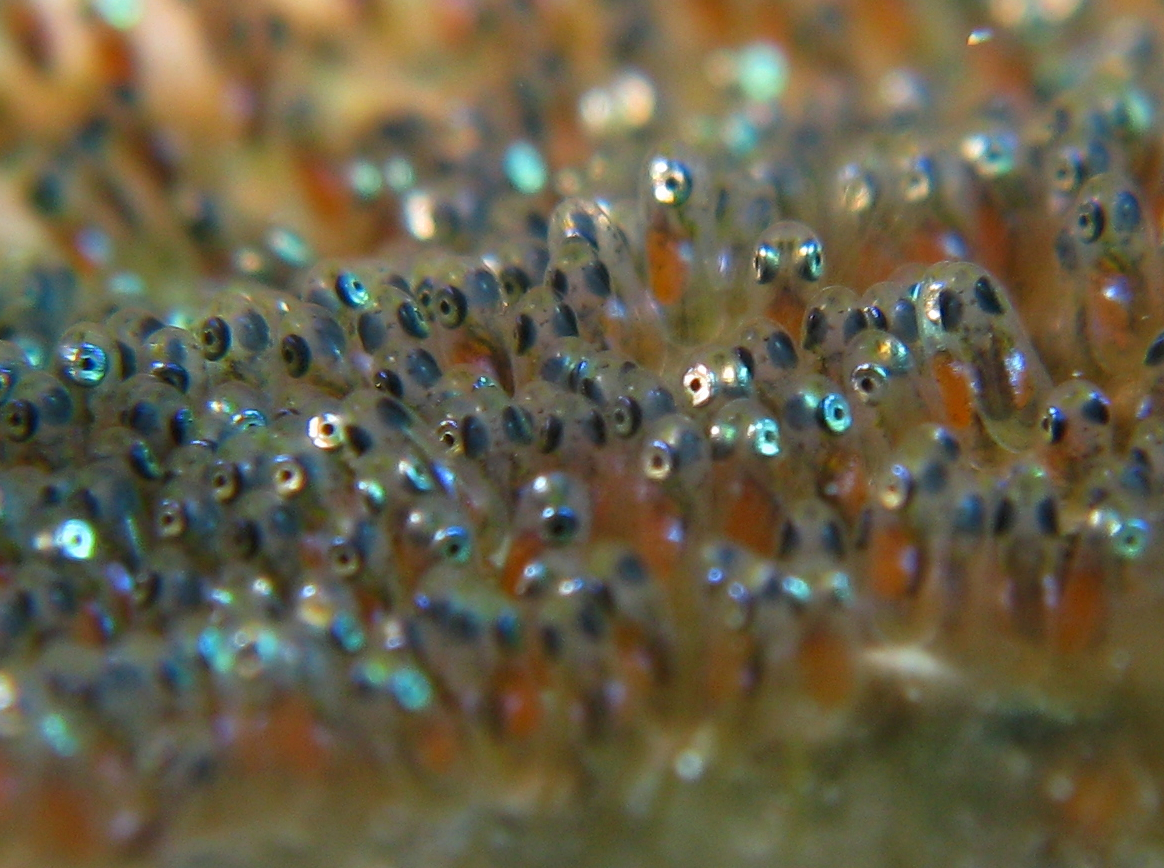
Spawn is the eggs and sperm released or deposited into water by aquatic animals. As a verb, to spawn refers to the process of freely releasing eggs and sperm into a body of water (fresh or marine); the physical act is known as spawning. The vast majority of aquatic and amphibious animals reproduce through spawning. These include the following groups:
As a general rule, aquatic or semiaquatic reptiles, birds, and mammals do not reproduce through spawning, but rather through copulation like their terrestrial counterparts. This is also true of cartilaginous fishes (such as sharks, rays and skates).
Spawn consists of the reproductive cells (gametes) of many aquatic animals, some of which will become fertilized and produce offspring. The process of spawning typically involves females releasing ova (unfertilized eggs) into the water, often in large quantities, while males simultaneously or sequentially release spermatozoa (milt) to fertilize the eggs.
The fungi (mushrooms), are also said to "spawn" when they release a white, ‘fibrous’ matter, forming the matrix from-which they grow.[citation needed]
There are many variations in the way spawning happens, depending on sexual differences in anatomy, how the sexes relate to each other, where and how the spawn is released and whether or how the spawn is subsequently guarded.
Marine animals, and particularly bony fish, commonly reproduce by broadcast spawning. This is an external method of reproduction where the female releases many unfertilised eggs into the water. At the same time, a male or many males release a large amount of sperm into the water which fertilises some of these eggs. The eggs contain a drop of nutrient oil to sustain the embryo as it develops inside the egg case. The oil also provides buoyancy, so the eggs float and drift with the current. The strategy for survival of broadcast spawning is to disperse the fertilised eggs, preferably away from the coast into the relative safety of the open ocean. There the larvae develop as they consume their fat stores, and eventually hatch from the egg capsule into miniature versions of their parents. To survive, they must then become miniature predators themselves, feeding on plankton. Fish eventually encounter others of their own kind (conspecifics), where they form aggregations and learn to school.
Internally, the sexes of most marine animals can be determined by looking at the gonads. For example, male testes of spawning fish are smooth and white and account for up to 12% of the mass of the fish, while female ovaries are granular and orange or yellow, accounting for up to 70% of the fish's mass. Male lampreys, hagfish and salmon discharge their sperm into the body cavity where it is expelled through pores in the abdomen. Male sharks and rays can pass sperm along a duct into a seminal vesicle, where they store it for a while before it is expelled, while teleosts usually employ separate sperm ducts.
Externally, many marine animals, even when spawning, show little sexual dimorphism (difference in body shape or size) or little difference in colouration. Where species are dimorphic, such as sharks or guppies, the males often have penis-like intromittent organs in the form of a modified fin.
Hub AI
Spawning AI simulator
(@Spawning_simulator)
Spawning
Spawn is the eggs and sperm released or deposited into water by aquatic animals. As a verb, to spawn refers to the process of freely releasing eggs and sperm into a body of water (fresh or marine); the physical act is known as spawning. The vast majority of aquatic and amphibious animals reproduce through spawning. These include the following groups:
As a general rule, aquatic or semiaquatic reptiles, birds, and mammals do not reproduce through spawning, but rather through copulation like their terrestrial counterparts. This is also true of cartilaginous fishes (such as sharks, rays and skates).
Spawn consists of the reproductive cells (gametes) of many aquatic animals, some of which will become fertilized and produce offspring. The process of spawning typically involves females releasing ova (unfertilized eggs) into the water, often in large quantities, while males simultaneously or sequentially release spermatozoa (milt) to fertilize the eggs.
The fungi (mushrooms), are also said to "spawn" when they release a white, ‘fibrous’ matter, forming the matrix from-which they grow.[citation needed]
There are many variations in the way spawning happens, depending on sexual differences in anatomy, how the sexes relate to each other, where and how the spawn is released and whether or how the spawn is subsequently guarded.
Marine animals, and particularly bony fish, commonly reproduce by broadcast spawning. This is an external method of reproduction where the female releases many unfertilised eggs into the water. At the same time, a male or many males release a large amount of sperm into the water which fertilises some of these eggs. The eggs contain a drop of nutrient oil to sustain the embryo as it develops inside the egg case. The oil also provides buoyancy, so the eggs float and drift with the current. The strategy for survival of broadcast spawning is to disperse the fertilised eggs, preferably away from the coast into the relative safety of the open ocean. There the larvae develop as they consume their fat stores, and eventually hatch from the egg capsule into miniature versions of their parents. To survive, they must then become miniature predators themselves, feeding on plankton. Fish eventually encounter others of their own kind (conspecifics), where they form aggregations and learn to school.
Internally, the sexes of most marine animals can be determined by looking at the gonads. For example, male testes of spawning fish are smooth and white and account for up to 12% of the mass of the fish, while female ovaries are granular and orange or yellow, accounting for up to 70% of the fish's mass. Male lampreys, hagfish and salmon discharge their sperm into the body cavity where it is expelled through pores in the abdomen. Male sharks and rays can pass sperm along a duct into a seminal vesicle, where they store it for a while before it is expelled, while teleosts usually employ separate sperm ducts.
Externally, many marine animals, even when spawning, show little sexual dimorphism (difference in body shape or size) or little difference in colouration. Where species are dimorphic, such as sharks or guppies, the males often have penis-like intromittent organs in the form of a modified fin.
Recent media