Hubbry Logo
Seminal vesiclesSeminal vesiclesMain
Open search
Seminal vesicles
Community hub
Seminal vesicles
logo
8 pages, 0 posts
0 subscribers
Be the first to start a discussion here.
Seminal vesicles
Seminal vesicles
from Wikipedia

Seminal vesicle
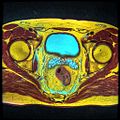
Cross-section of the lower abdomen in a male, showing parts of the urinary tract and male reproductive system, with the seminal vesicles seen top right
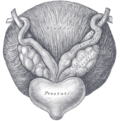
The seminal vesicles seen near the prostate, viewed from in front and above.
Details
PrecursorMesonephric ducts
SystemMale reproductive system
ArteryInferior vesical artery, middle rectal artery
LymphExternal iliac lymph nodes, internal iliac lymph nodes
Identifiers
Latinvesiculae seminales, glandulae vesiculosae
MeSHD012669
TA98A09.3.06.001
TA23631
FMA19386
Anatomical terminology

The seminal vesicles (also called vesicular glands[1] or seminal glands) are a pair of convoluted tubular accessory glands that lie behind the urinary bladder of male mammals. They secrete fluid that largely composes the semen.

The vesicles are 5–10 cm in size, 3–5 cm in diameter, and are located between the bladder and the rectum. They have multiple outpouchings, which contain secretory glands, which join together with the vasa deferentia at the ejaculatory ducts. They receive blood from the vesiculodeferential artery, and drain into the vesiculodeferential veins. The glands are lined with column-shaped and cuboidal cells. The vesicles are present in many groups of mammals, but not marsupials, monotremes or carnivores.

Inflammation of the seminal vesicles is called seminal vesiculitis and most often is due to bacterial infection as a result of a sexually transmitted infection or following a surgical procedure. Seminal vesiculitis can cause pain in the lower abdomen, scrotum, penis or peritoneum, painful ejaculation, and blood in the semen. It is usually treated with antibiotics, although may require surgical drainage in complicated cases. Other conditions may affect the vesicles, including congenital abnormalities such as failure or incomplete formation, and, uncommonly, tumours.

The seminal vesicles have been described as early as the second century AD by Galen, although the vesicles only received their name much later, as they were initially described using the term from which the word prostate is derived.

Structure

[edit]

The human seminal vesicles are a pair of glands in males that are positioned below the urinary bladder and at the end of the vasa deferentia, where they enter the prostate. Each vesicle is a coiled and folded tube, with occasional outpouchings termed diverticula in its wall.[2] The lower part of the tube ends as a straight tube called the excretory duct, which joins with the vas deferens of that side of the body to form an ejaculatory duct. The ejaculatory ducts pass through the prostate gland before opening separately into the verumontanum of the prostatic urethra.[2] The vesicles are between 5–10 cm in size, 3–5 cm in diameter, and have a volume of around 13 mL.[3]

The vesicles receive blood supply from the vesiculodeferential artery, and also from the inferior vesical artery. The vesiculodeferential artery arises from the umbilical arteries, which branch directly from the internal iliac arteries.[3] Blood is drained into the vesiculodeferential veins and the inferior vesical plexus, which drain into the internal iliac veins.[3] Lymphatic drainage occurs along the venous routes, draining into the internal iliac nodes.[3]

The vesicles lie behind the bladder at the end of the vasa deferentia. They lie in the space between the bladder and the rectum; the bladder and prostate lie in front, the tip of the ureter as it enters the bladder above, and Denonvilliers' fascia and the rectum behind.[3]

Development

[edit]

In the developing embryo, at the hind end lies a cloaca. This, over the fourth to the seventh week, divides into a urogenital sinus and the beginnings of the anal canal, with a wall forming between these two inpouchings called the urorectal septum.[4] Two ducts form next to each other that connect to the urogenital sinus; the mesonephric duct and the paramesonephric duct, which go on to form the reproductive tracts of the male and female respectively.[4]

In the male, under the influence of testosterone, the mesonephric ducts proliferate, forming the epididymis, ductus deferens and, via a small outpouching near the developing prostate, the seminal vesicles.[4] Sertoli cells secrete anti-Müllerian hormone, which causes the paramesonephric ducts to regress.[4]

The development and maintenance of the seminal vesicles, as well as their secretion and size/weight, are highly dependent on androgens.[5][6] The seminal vesicles contain 5α-reductase, which metabolizes testosterone into its much more potent metabolite, dihydrotestosterone (DHT).[6] The seminal vesicles have also been found to contain luteinizing hormone receptors, and hence may also be regulated by the ligand of this receptor, luteinizing hormone.[6]

Microanatomy

[edit]
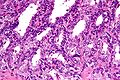
Histology of seminal vesicle glands on H&E stain. They may mimic prostatic adenocarcinoma by crowded glands with enlarged hyperchromatic and irregular nuclei, but will have inconspicuous nucleoli and coarse refractile golden brown lipofuscin granules.[7]

The inner lining of the seminal vesicles (the epithelium) is made of a lining of interspersed column-shaped and cube-shaped cells.[8] There are varying descriptions of the lining as being pseudostratified and consisting of column-shaped cells only.[9] When viewed under a microscope, the cells are seen to have large bubbles in their interior. This is because their interior, called cytoplasm, contains lipid droplets involved in secretion during ejaculation.[8] The tissue of the seminal vesicles is full of glands, spaced irregularly.[8] As well as glands, the seminal vesicles contain smooth muscle and connective tissue.[8] This fibrous and muscular tissue surrounds the glands, helping to expel their contents.[3] The outer surface of the glands is covered in peritoneum.[3]

Function

[edit]

The seminal vesicles secrete a significant proportion of the fluid that ultimately becomes semen.[10] Fluid is secreted from the ejaculatory ducts of the vesicles into the vas deferens and ejaculated through the urethra during the male sexual response.[9]

About 70-85% of the seminal fluid in humans originates from the seminal vesicles.[11] The fluid consists of nutrients including fructose and citric acid, prostaglandins, and fibrinogen.[10] Fructose is not produced anywhere else in the body except in the seminal vesicles. It provides a forensic test in rape cases.

Nutrients help support sperm until fertilisation occurs; prostaglandins may also assist by softening mucus of the cervix, and by causing reverse contractions of parts of the female reproductive tract such as the fallopian tubes, to ensure that sperm are less likely to be expelled.[10]

Clinical significance

[edit]

Disease

[edit]

Diseases of the seminal vesicles as opposed to that of prostate gland are extremely rare and are infrequently reported in the medical literature.[12]

Congenital anomalies associated with the seminal vesicles include failure to develop, either completely (agenesis) or partially (hypoplasia), and cysts.[13][14] Failure of the vesicles to form is often associated with absent vas deferens, or an abnormal connection between the vas deferens and the ureter.[3] The seminal vesicles may also be affected by cysts, amyloidosis, and stones.[13][14] Stones or cysts that become infected, or obstruct the vas deferens or seminal vesicles, may require surgical intervention.[9]

Seminal vesiculitis (also known as spermatocystitis) is an inflammation of the seminal vesicles, most often caused by bacterial infection.[15] Symptoms can include vague back or lower abdominal pain; pain of the penis, scrotum or peritoneum; painful ejaculation; blood in the semen on ejaculation; irritative and obstructive voiding symptoms; and impotence.[16] Infection may be due to sexually transmitted infections, as a complication of a procedure such as prostate biopsy.[9] It is usually treated with antibiotics. If a person experiences ongoing discomfort, transurethral seminal vesiculoscopy may be considered.[17][18] Intervention in the form of drainage through the skin or surgery may also be required if the infection becomes an abscess.[9] The seminal vesicles may also be affected by tuberculosis, schistosomiasis and hydatid disease.[13][14] These diseases are investigated, diagnosed and treated according to the underlying disease.[9]

Benign tumours of the seminal vesicles are rare.[9] When they do occur, they are usually papillary adenomata and cystadenomata. They do not cause elevation of tumour markers and are usually diagnosed based on examination of tissue that has been removed after surgery.[9] Primary adenocarcinoma, although rare, constitutes the most common malignant tumour of the seminal vesicles;[19] that said, malignant involvement of the vesicles is typically the result of local invasion from an extra-vesicular lesion.[9] When adenocarcinoma occurs, it can cause blood in the urine, blood in the semen, painful urination, urinary retention, or even urinary obstruction.[9] Adenocarcinomata are usually diagnosed after they are excised, based on tissue diagnosis.[9] Some produce the tumour marker Ca-125, which can be used to monitor for reoccurrence afterwards.[9] Even rarer neoplasms include sarcoma, squamous cell carcinoma, yolk sac tumour, neuroendocrine carcinoma, paraganglioma, epithelial stromal tumours and lymphoma.[19]

Investigations

[edit]

Symptoms due to diseases of the seminal vesicles may be vague and not able to be specifically attributable to the vesicles themselves; additionally, some conditions such as tumours or cysts may not cause any symptoms at all.[9] When diseases is suspected, such as due to pain on ejaculation, blood in the urine, infertility, due to urinary tract obstruction, further investigations may be conducted.[9]

A digital rectal examination, which involves a finger inserted by a medical practitioner through the anus, may cause greater than usual tenderness of the prostate gland, or may reveal a large seminal vesicle.[9] Palpation is dependent on the length of index finger as seminal vesicles are located above the prostate gland and retrovesical (behind the bladder).

A urine specimen may be collected, and is likely to demonstrate blood within the urine.[9] Laboratory examination of seminal vesicle fluid requires a semen sample, e.g. for semen culture or semen analysis. Fructose levels provide a measure of seminal vesicle function and, if absent, bilateral agenesis or obstruction is suspected.[13]

Imaging of the vesicles is provided by medical imaging; either by transrectal ultrasound, CT or MRI scans.[9] An examination using cystoscopy, where a flexible tube is inserted in the urethra, may show disease of the vesicles because of changes in the normal appearance of the nearby bladder trigone, or prostatic urethra.[9]

Other animals

[edit]

The evolution of seminal vesicles may have been influenced by sexual selection.[20] They occur in birds and reptiles[21] and many groups of mammals,[22] but are absent in marsupials,[23][24] monotremes, and carnivorans.[25][20] The function is similar in all mammals they are present in, which is to secrete a fluid as part of semen that is ejaculated during the sexual response.[22]

History

[edit]

The action of the seminal vesicles has been described as early the second century AD by Galen, as "glandular bodies" that secrete substances alongside semen during reproduction.[25] By the time of Herophilus the presence of the glands and associated ducts had been described.[25] Around the time of the early 17th century the word used to describe the vesicles, parastatai, eventually and unambiguously was used to refer to the prostate gland, rather than the vesicles.[25] The first time the prostate was portrayed in an individual drawing was by Regnier De Graaf in 1678.[25]

The first described use of laparoscopic surgery on the vesicles was described in 1993; this is now the preferred approach because of decreased pain, complications, and a shorter hospital stay.[9]

Additional images

[edit]

See also

[edit]

References

[edit]
[edit]
Revisions and contributorsEdit on WikipediaRead on Wikipedia
from Grokipedia
The seminal vesicles are a pair of coiled, tubular glands in the male reproductive system, located in the pelvis posterior to the urinary bladder base, superior to the rectum, and anterior to the prostate gland, from which they are separated by Denonvilliers' fascia. Each measures approximately 3 to 5 cm in length and 1 cm in diameter; when uncoiled, up to 10 to 15 cm in length, consisting of mucosal, muscular, and adventitial layers, with the mucosa lined by pseudostratified columnar epithelium that secretes fluid. Their ducts join the ampulla of the vas deferens to form the ejaculatory ducts, which empty into the prostatic urethra at the verumontanum. Functionally, the seminal vesicles produce a viscous, slightly alkaline fluid that comprises about 70% of semen volume, containing fructose for sperm energy, prostaglandins to enhance sperm motility and viability, semenogelin proteins for post-ejaculatory coagulation, enzymes, vitamin C, and other substances that create a protective and nutritious environment for spermatozoa during transport and fertilization. Secretion is regulated by parasympathetic nerves for glandular activity and sympathetic nerves for muscular contraction during ejaculation, ensuring fluid release coincides with sperm emission. This contribution is vital for male fertility, as deficiencies in seminal vesicle function can impair semen quality, sperm survival, and reproductive success. Embryologically, the seminal vesicles develop from the mesonephric (Wolffian) ducts around the 10th week of fetal life, under the influence of testosterone, in conjunction with the epididymis and vas deferens. Blood supply derives from the middle and inferior vesical arteries, with venous drainage via the vesical plexus to the internal iliac veins, and lymphatic drainage to the internal and external iliac nodes. Clinically, the seminal vesicles are involved in conditions such as congenital cysts, agenesis (often linked to renal or vas deferens abnormalities or cystic fibrosis), infections, stones, or neoplasms, which may cause pelvic pain, infertility, or hematospermia, though many remain asymptomatic. They are often affected in prostate cancer, with surgical removal during radical prostatectomy potentially leading to anejaculation, though nerve-sparing techniques aim to preserve function.

Anatomy

Gross anatomy

The seminal vesicles are a pair of convoluted, sac-like glandular structures in the male reproductive system, located posterior to the urinary bladder and superior to the prostate gland. Each vesicle measures approximately 5 cm in length and 3 cm in diameter when distended, though if uncoiled, it can extend up to 10-15 cm. They exhibit a pyramidal form, consisting of a broad body and a narrow excretory duct that joins the ampulla of the vas deferens to form the ejaculatory duct, which then penetrates the prostate to open into the prostatic urethra. In terms of anatomical relations, the seminal vesicles lie anterior to the rectum, separated by the rectovesical pouch and Denonvilliers' fascia, and are positioned lateral to the ampulla of the vas deferens and medial to the ureters. Their superior aspect is covered indirectly by the peritoneum of the rectovesical pouch, while inferiorly and anteriorly they relate to the base of the bladder and the prostate. Laterally, they are adjacent to the prostatic venous plexus. The blood supply to the seminal vesicles is primarily derived from branches of the inferior vesical artery and the middle rectal artery, both arising from the internal iliac artery. Venous drainage occurs via tributaries that join the prostatic venous plexus, ultimately draining into the internal iliac veins. Innervation is provided by the inferior hypogastric plexus, which carries both sympathetic fibers from the superior hypogastric plexus and parasympathetic fibers from the pelvic splanchnic nerves, facilitating functions such as glandular secretion and smooth muscle contraction. Lymphatic drainage follows the vascular supply, emptying into the internal iliac lymph nodes.

Microscopic anatomy

The seminal vesicles are composed of a mucosal layer lined by a pseudostratified columnar epithelium consisting of principal secretory cells and supportive basal cells, an underlying lamina propria of loose connective tissue, and concentric layers of smooth muscle for contraction. The principal cells are tall columnar cells responsible for fluid secretion, featuring microvilli on their apical surface, abundant rough endoplasmic reticulum, and secretory granules, while basal cells are small, round cells lying on the basement membrane that provide structural support. Occasional goblet cells are present within the epithelium, contributing to mucin production. The glandular architecture is highly branched and tubuloalveolar, forming a complex of coiled tubules and alveolar (acinar) outpouchings with extensive mucosal folds that maximize the secretory surface area. These structures empty into a central lumen, creating an irregular, pouch-like interior without a distinct submucosa; instead, the mucosa transitions directly to the muscularis. The surrounding stroma comprises fibromuscular connective tissue rich in elastic fibers, interspersed with autonomic nerve endings that innervate the smooth muscle layers—inner circular and outer longitudinal—for coordinated expulsion during ejaculation. The outer adventitia is a thin layer of loose areolar connective tissue that blends seamlessly with adjacent pelvic structures, lacking a serosal covering. Epithelial cell height and secretory activity vary with hormonal influences, particularly androgens like testosterone, which maintain tall columnar morphology in humans; reductions occur in hypogonadal states, leading to epithelial flattening.

Embryological development

The seminal vesicles originate from the mesonephric (Wolffian) ducts during early fetal development, specifically as lateral evaginations from the caudal portion of these ducts near their junction with the urogenital sinus. These structures arise in the male embryo under the influence of androgens, differentiating alongside other Wolffian duct derivatives such as the epididymis, vas deferens, and ejaculatory ducts. In the absence of a Y chromosome and subsequent male hormonal signaling, the mesonephric ducts regress, preventing seminal vesicle formation. Development begins around the 10th week of gestation, when the seminal vesicles sprout as outpouchings from the distal mesonephric ducts. By week 13 (crown-rump length approximately 80 mm), these buds elongate and form initial sacculations, progressing to 3 distinct diverticula per vesicle by week 14. Branching morphogenesis continues, with 3-8 sacculations evident by week 19 (crown-rump length 170 mm), and the structures approaching their adult configuration with 9-12 diverticula by week 25 (crown-rump length 220 mm). Toward late gestation, the seminal vesicles fuse with the ampulla of the vas deferens to form the ejaculatory ducts, completing the basic architectural framework. Hormonal regulation is critical, with fetal testosterone produced by Leydig cells in the testes inducing differentiation through androgen receptors in the mesenchyme and epithelium. This androgen-dependent mesenchymal-epithelial interaction drives outgrowth and branching, while anti-Müllerian hormone from Sertoli cells suppresses paramesonephric (Müllerian) duct remnants to prevent female structure formation. The glands remain immature until puberty, when further androgen surges promote functional maturation. Congenital anomalies of the seminal vesicles stem from disruptions in mesonephric duct development and are often associated with ipsilateral renal agenesis or other Wolffian duct malformations. Unilateral or bilateral agenesis is rare but can occur in conjunction with congenital bilateral absence of the vas deferens (CBAVD), frequently linked to mutations in the CFTR gene on chromosome 7p, leading to obstructive azoospermia. Other anomalies include hypoplasia, cysts, or fusion/duplication, typically identified through imaging in cases of infertility or urinary tract issues.

Function

Composition of secretions

The secretions of the seminal vesicles constitute approximately 65-70% of the total semen volume in humans, forming a viscous, alkaline fluid with a pH ranging from 7.2 to 8.0 that helps neutralize the acidic environment of the vagina. This fluid is rich in several key biochemical components essential for sperm function. Fructose, present at concentrations of 2-5 mg/mL, serves as the primary energy source for spermatozoa via glycolysis. Prostaglandins, abundant in the secretion, enhance sperm motility and induce uterine contractions to facilitate sperm transport. Semenogelin proteins, secreted in high amounts, contribute to the formation of a coagulum immediately after ejaculation, temporarily immobilizing sperm at the cervical os. Additional components include flavins, which may support redox reactions in the seminal environment, and citrate, which acts as a buffer and metabolic intermediate. The secretory process involves principal epithelial cells in the seminal vesicle lining, which release material through an apocrine-like mechanism involving blebbing of the apical cytoplasm. This secretion is tightly regulated by androgens, particularly testosterone, which maintain glandular function and protein synthesis via androgen receptor signaling. Each gland produces approximately 1-2 mL of fluid daily under normal conditions, accumulating for release during ejaculation. The seminal vesicles produce fluid continuously, and excess is reabsorbed if not ejaculated to maintain balance; however, reliable medical sources do not provide a specific daily reabsorption rate in ml or cubic cm, as production and reabsorption rates match individually to prevent accumulation. Recent proteomic analyses post-2020 have identified over 500 proteins in seminal vesicle-derived fluid, including antimicrobial zinc-binding proteins such as those derived from semenogelins, which exhibit bactericidal activity against pathogens in the reproductive tract. Additionally, studies have highlighted the presence of polyamines like spermine and spermidine, which stabilize sperm DNA structure by binding to nucleic acids and promoting compact conformations resistant to damage. Updated metabolomics research from 2022 emphasizes the role of fructose metabolism in seminal vesicle function, linking reduced fructose levels to infertility due to impaired energy provision for sperm.

Physiological role

The seminal vesicles contribute the majority of the seminal plasma volume, approximately 60-70%, which is essential for semen formation during ejaculation. This viscous, alkaline fluid mixes with spermatozoa from the testes and secretions from other accessory glands to create semen, facilitating sperm transport through the male reproductive tract, providing nutritional support via energy substrates, and offering protection against oxidative stress and acidic environments during transit to the female reproductive tract. Key components of the seminal vesicle secretions play critical roles in sperm function. Fructose, produced in high concentrations by the vesicular epithelium, serves as the primary energy source for sperm glycolysis, powering flagellar motility and enabling progressive movement essential for fertilization. Prostaglandins, predominantly synthesized in the seminal vesicles, promote sperm capacitation and hyperactivation in the female tract by modulating calcium influx and membrane fluidity, and induce uterine contractions to facilitate sperm transport. Semenogelin II, a major protein secreted by the vesicles, initiates the coagulation of semen upon ejaculation, forming a temporary gel matrix in the female genital tract that stabilizes sperm positioning; this coagulum subsequently liquefies through proteolytic action, releasing motile sperm for ascent toward the oocyte. Secretion from the seminal vesicles is under androgen-dependent hormonal control, primarily testosterone and its metabolite dihydrotestosterone (DHT), which drive glandular development and secretory activity peaking at puberty. Neural regulation via sympathetic innervation triggers vesicular contraction and fluid expulsion during sexual arousal and ejaculation, ensuring synchronized contribution to semen. In terms of fertility, the seminal vesicles are vital for maintaining normal semen viscosity, volume, and biochemical milieu; their congenital absence or dysfunction results in aspermia or severe oligospermia, leading to infertility due to inadequate sperm support and delivery. Recent studies highlight the seminal vesicles' role in immune modulation through seminal plasma components, including extracellular vesicles that interact with female immune cells to induce tolerance toward paternal antigens, reducing inflammation and enhancing implantation success. For instance, seminal plasma immunosuppressants, such as transforming growth factor-beta and prostaglandin E, derived largely from vesicular secretions, dampen T-cell responses in the female reproductive tract, preventing rejection of spermatozoa and supporting early embryonic development.

Clinical significance

Associated diseases

Congenital anomalies of the seminal vesicles, such as agenesis or cysts, are rare developmental abnormalities that often occur in association with ipsilateral renal agenesis or Müllerian duct remnants, with the specific triad of ipsilateral renal agenesis, seminal vesicle cyst, and ejaculatory duct obstruction collectively known as Zinner syndrome. These conditions arise from disruptions in Wolffian duct embryogenesis and contribute to a small subset of male infertility cases due to obstructive azoospermia or severe oligospermia. Affected individuals typically present with infertility as the primary manifestation, alongside low semen volume and acidic pH from absent seminal contributions. Seminal vesiculitis, an inflammatory condition of the seminal vesicles, is predominantly bacterial in etiology and frequently occurs as a secondary complication of prostatitis or urinary tract infections. Common pathogens include Chlamydia trachomatis and, in endemic regions, Mycobacterium tuberculosis or Schistosoma species, leading to acute or chronic presentations with symptoms such as dysuria, hematuria, pelvic or lower abdominal pain, and painful ejaculation. Epidemiologically, chronic bacterial seminal vesiculitis coexists in a significant proportion of chronic prostatitis cases, with inflammatory changes commonly observed via transrectal ultrasound. This association underscores its role in persistent genitourinary symptoms and potential fertility impairment through altered seminal fluid composition. Neoplastic involvement of the seminal vesicles is uncommon as a primary site but frequently results from local extension of prostate adenocarcinoma, classified as T3b disease in staging systems. Primary seminal vesicle adenocarcinoma is exceedingly rare, with delayed diagnosis contributing to a poor prognosis and high mortality within three years. Additionally, calculi formation within the seminal vesicles can develop due to secretory stagnation, often presenting with recurrent hematospermia and requiring imaging for confirmation. Functional disorders, including seminal vesicle hypoplasia, are associated with hypogonadism, where androgen deficiency impairs glandular development and secretion. This leads to reduced ejaculate volume (hypospermia) and asthenospermia, as the seminal vesicles normally contribute 40-80% of semen volume and essential motility factors like fructose. In such cases, low testosterone levels directly correlate with diminished vesicular output, exacerbating infertility. Research has highlighted links between seminal vesicle pathology and systemic conditions. Metabolic syndrome and diabetes mellitus impair vesicular secretion quality through hyperglycemia-induced oxidative stress, resulting in decreased seminal fluid volume, altered fructose levels, and reduced sperm motility. Studies indicate that microbiome dysbiosis in semen may contribute to infertility, with altered bacterial communities observed in men with abnormal semen parameters. Genetic predispositions, such as HOXB13 mutations (e.g., G84E variant), increase susceptibility to prostate cancer with seminal vesicle invasion, while also disrupting normal prostate and vesicular development. Furthermore, post-COVID-19 inflammatory sequelae have been implicated in persistent male reproductive inflammation, potentially affecting seminal vesicle function via elevated cytokines and tissue damage.

Diagnostic and therapeutic approaches

Diagnosis of seminal vesicle disorders typically begins with non-invasive imaging techniques to assess structural abnormalities such as cysts, inflammation, or calculi. Transrectal ultrasound (TRUS) serves as the initial modality of choice due to its accessibility and ability to visualize the seminal vesicles in detail, particularly for detecting cysts and inflammatory changes. For more precise anatomical delineation and staging of malignancies involving the seminal vesicles, magnetic resonance imaging (MRI), especially high-field 3T MRI, provides superior soft-tissue contrast and multiplanar imaging, enabling accurate assessment of tumor extension and invasion. Computed tomography (CT) scans are particularly useful for identifying calculi within the seminal vesicles, as they offer high-density resolution for stone detection and associated complications like obstruction. Semen analysis plays a crucial role in indirectly evaluating seminal vesicle function by measuring parameters influenced by vesicular secretions, including ejaculate volume (typically 60-70% contributed by the vesicles), pH (alkaline due to vesicular input), and fructose levels (a marker of vesicular activity), with reductions suggesting hypofunction or obstruction. For more definitive assessment in cases of suspected ductal anomalies or persistent symptoms, invasive procedures such as vesiculography—performed via catheterization of the ejaculatory duct or vas deferens—allow contrast injection to outline the vesicular lumen and identify strictures or reflux. Biopsy, often guided by TRUS or MRI, is employed when malignancy is suspected, providing histopathological confirmation through transrectal or transperineal approaches, though it carries risks of infection or bleeding. Therapeutic approaches to seminal vesicle disorders are tailored to the underlying pathology, prioritizing conservative management when possible. Infections, such as seminal vesiculitis, are primarily treated with antibiotics like fluoroquinolones (e.g., ciprofloxacin), often administered for 2-4 weeks. For cysts or abscesses causing obstruction or pain, surgical interventions include drainage via percutaneous or transrectal aspiration, or resection through minimally invasive techniques such as laparoscopic or robotic-assisted procedures, which have reduced recovery times and complication rates compared to open surgery. Calculi are managed with endoscopic aspiration or holmium laser lithotripsy, offering stone fragmentation with minimal tissue damage and success rates exceeding 90% in accessible cases. In the context of fertility impairment due to seminal vesicle hypofunction, assisted reproductive technologies like in vitro fertilization (IVF) combined with intracytoplasmic sperm injection (ICSI) are employed to bypass vesicular contributions to semen quality, achieving pregnancy rates of 30-50% per cycle in affected couples. Additionally, hormone replacement therapy with testosterone is indicated for associated hypogonadism, restoring vesicular secretory function and improving semen parameters in up to 70% of cases. Recent advancements have enhanced diagnostic precision, including expanded use of 3T MRI for early cancer detection. Therapeutic options have also evolved, with robotic surgery enabling precise minimally invasive resections for complex cysts, reducing operative times and hospital stays.

Comparative anatomy

In mammals

Seminal vesicles are present in most mammals, including humans, bulls, and rodents, where they serve as paired accessory glands that contribute 50–80% of the total semen volume through their alkaline, protein-rich secretions. These glands are essential for providing the bulk of seminal plasma, which supports sperm motility and viability across species. In ruminants such as bovines, the seminal vesicles are notably larger and more complex, exhibiting a compact, lobulated structure with multiple lobes that enhance secretory capacity tailored to high-volume ejaculates. By contrast, in rodents like mice, the glands are smaller and produce relatively fructose-poor secretions, reflecting adaptations to lower semen volumes and different metabolic demands for sperm energy. Functional variations among mammals highlight species-specific adaptations in seminal vesicle secretions. In primates, high concentrations of prostaglandins produced by the glands modulate the female immune response, promoting embryo implantation by inducing tolerance and reducing inflammation at the uterine site. In equines, polyamines such as spermine and spermidine dominate the seminal plasma proteome, enhancing sperm longevity by protecting against oxidative stress and supporting extended viability in the female tract. The development of seminal vesicles is conserved across mammals through androgen-dependent pathways, ensuring glandular differentiation during embryogenesis. However, gland size shows evolutionary correlation with mating strategies, being larger in promiscuous species to counter sperm competition via increased seminal fluid investment.

In other vertebrates

In non-mammalian vertebrates, structures analogous to seminal vesicles vary widely, reflecting adaptations to diverse reproductive strategies such as external versus internal fertilization. These glands, when present, typically derive from mesodermal tissues associated with the Wolffian (mesonephric) ducts, contributing fluids that aid sperm maturation, storage, or protection. However, they are absent in the most basal vertebrates, the cyclostomes (lampreys and hagfishes), which lack dedicated genital ducts altogether; instead, mature sperm are released directly into the coelomic cavity for external fertilization. Among gnathostomes, chondrichthyans (sharks, rays, and chimaeras) possess functional analogs in the form of Leydig glands, which are branched tubular structures derived from the anterior kidney region. These glands empty their secretions—primarily a matrix rich in proteins and mucins—directly onto the epididymis and ductus deferens, facilitating sperm storage and nourishment in species with internal fertilization. In contrast, teleost fish (bony fish) often feature true seminal vesicles or testicular accessory glands, which are lobular outpouchings along the spermatic ducts that produce viscous fluids containing sialoglycoproteins and mucins to enhance sperm motility and form spermatophores during spawning. For example, in the grass goby (Zosterisessor ophiocephalus), these glands secrete seasonally to support external fertilization in marine environments. Amphibians exhibit seasonal glandular outpouchings in the cloaca that function similarly to seminal vesicles, storing sperm and producing seminal fluid components essential for spermatophore formation and transfer. In anurans like the common frog (Rana temporaria), these structures develop post-metamorphosis from mesonephric derivatives, aiding internal fertilization in terrestrial breeding. Reptiles and birds, however, generally lack well-developed seminal vesicles; instead, semen storage and fluid production occur via rudimentary cloacal glands or sperm storage tubules. In reptiles such as lizards, these cloacal structures secrete minimal fluids for sperm maintenance during prolonged storage, while in birds, the cloacal protuberance facilitates direct sperm transfer via "cloacal kiss," with glandular secretions limited to vas deferens-associated tissues. These variations underscore evolutionary ties to fertilization modes, with more complex glands emerging in lineages favoring internal insemination. Recent phylogenomic analyses of chordate genomes have traced homologs of reproductive glandular tissues to ancient deuterostome ancestors, suggesting that mesodermally derived secretory structures predated vertebrate innovations but diversified with the evolution of gonadal ducts. For instance, conserved gene modules involved in glandular development appear in basal chordates like amphioxus, implying a shared origin for fluid-producing accessories across vertebrates, though specific seminal vesicle homologs remain elusive in non-gnathostome lineages.

History

Discovery and early descriptions

The earliest known references to structures akin to the seminal vesicles appear in the writings of the Roman physician Galen during the 2nd century AD, where he described "spermatic vessels" as part of the male reproductive tract, though these accounts were largely inaccurate, derived from animal dissections, and conflated with other vascular elements. The first precise anatomical identification in humans occurred in 1521, when Italian anatomist Berengario da Carpi documented the paired glands during dissections and coined the term vesiculae seminales, distinguishing them from the prostate and emphasizing their vesicular appearance near the bladder base. This identification was overlooked by Andreas Vesalius in his seminal 1543 anatomical atlas De humani corporis fabrica, underscoring the foundational role of Berengario's earlier work. In the 1770s, Scottish surgeon John Hunter further clarified their function in mammals, demonstrating through comparative dissections that the seminal vesicles contribute fluid to semen rather than storing sperm, thereby correcting a prevalent pre-19th-century misconception that portrayed them as reservoirs for spermatozoa.

Evolution of understanding

In the mid-19th century, histological studies advanced the understanding of seminal vesicle structure and function. Albert von Kölliker, through microscopic examination detailed in his 1854 Manual of Human Histology, confirmed the glandular nature of the seminal vesicles, describing their epithelial lining and secretory capabilities, which established them as accessory glands contributing to seminal fluid rather than mere storage organs. This work built on earlier anatomical observations by providing cellular-level evidence of their exocrine role. Early 20th-century biochemical analyses revealed key components of seminal vesicle secretions. In the 1940s, Thaddeus Mann identified fructose as a major carbohydrate in mammalian semen, primarily derived from seminal vesicle contributions, highlighting its role in providing energy for spermatozoa motility. Concurrently, the 1930s marked the elucidation of hormonal regulation; experiments by Carl R. Moore and Dorothy Price demonstrated that testosterone implants in castrated rats restored seminal vesicle weight and secretory activity, establishing androgens as essential for maintaining glandular development and function. By the 1960s, electron microscopy provided ultrastructural insights; Helen Wendler Deane's studies revealed the detailed morphology of principal and basal cells, including secretory granules and smooth muscle layers, underscoring the vesicles' apocrine secretion mechanism. Molecular and genomic investigations in the late 20th century shifted focus to genetic underpinnings. In the 1990s, researchers cloned and characterized the semenogelin genes (SEMG1 and SEMG2) from seminal vesicle cDNA libraries, identifying them as the primary proteins forming the seminal coagulum and revealing their chromosomal location on 20q13, with implications for liquefaction and fertility. Entering the 2000s, proteomic approaches mapped the diverse protein repertoire of seminal vesicle secretions; a landmark 2006 study identified over 900 proteins in human seminal plasma, including semenogelins, prostate-specific antigen, and antioxidants, providing a comprehensive catalog that linked specific proteins to sperm protection and motility enhancement. Post-2020 research has integrated advanced tools like CRISPR/Cas9 to probe gene functions and environmental impacts. Additionally, investigations into reproductive toxicology have linked endocrine disruptors, such as bisphenol A and phthalates, to seminal vesicle dysfunction; recent analyses as of 2023 show these chemicals alter androgen signaling and secretory profiles, contributing to reduced semen quality and fertility declines observed in human populations.

References

Add your contribution
Related Hubs
User Avatar
No comments yet.