
Recent from talks
Track spikes
Knowledge base stats:
Talk channels stats:
Members stats:
Track spikes
Track spikes, or just spikes, are a type of footwear featuring protruding spikes on the soles used by athletes when racing on the track. Some spikes are designed for longer-term training on tracks, but generally the shoes are used for racing. The term "spikes" can also refer to track shoes featuring such protrusions, though these are technically called pins. Spikes are similar to studs, which are used for team sports, although generally smaller and with a sharp point.
Track spikes had become popular in England by the 1860s, but the concept of spikes in shoes to give running traction has been around much longer. As written in the 1852 publication of Calmet's Dictionary of the Holy Bible regarding military arms at the time of Paul the Apostle (c. 5 – c. 67):
"Having the feet shod with the preparation of the gospel of peace;" not iron, not steel; but patient investigation, calm inquiry; assiduous, laborious, lasting; if not, rather, with firm footing in the gospel of peace. Whether the apostle here means stout, well-tanned leather, leather well prepared, by his "preparation of the gospel of peace" or shoes which had spikes in them, which, running into the ground, gave a steadfastness to the soldier who wore them, may come under remark hereafter. We shall only add, that Moses seems, at least according to our rendering, to have some allusion to shoes, either plated, or spiked, on the sole, when he says, (Deut. xxxiii. 25.) "Thy shoes shall be iron and brass; and as thy days shall thy strength be."
For pioneering the use of spikes, J.W. Foster and Sons's revolutionary running pumps appear in the book, Golden Kicks: The Shoes that changed Sport. The company began distributing shoes across the United Kingdom and were worn by British athletes. They were made famous by 100m Olympic champion Harold Abrahams (who would be immortalized in the Oscar winning film Chariots of Fire) in the 1924 Summer Olympics held in Paris.
In 1934, American football player and coach Pop Warner recommended them for running events in his widely distributed book, "Pop" Warner's book for boys.
Additionally, Adolf Dassler, the founder of Adidas, assisted in the development of track spikes for multiple events. In an effort to enhance the quality of spiked athletic footwear, he transitioned from a previous model of heavy metal spikes to attempting to utilize canvas and rubber. He carved them by hand and were eventually worn during the 1936 Olympics by Jesse Owens. People began to take notice, and Owens inherently helped popularize Dassler's design. Track spikes continued to gain notable recognition when Emil Zátopek, a distance runner from Czech Republic, wore them during the 1952 Olympics in Helsinki.
In contrast to earlier eras when spikes were produced by external manufacturers—such as J.W. Foster & Sons in the early 1900s or the Dassler brothers in the 1920s—the landscape of athlete-influenced footwear shifted with Allyson Felix's Tokyo 2020 debut of the Saysh Spike One. According to media reports, she became the first track and field athlete to race and win Olympic medals in shoes branded and produced by herself.
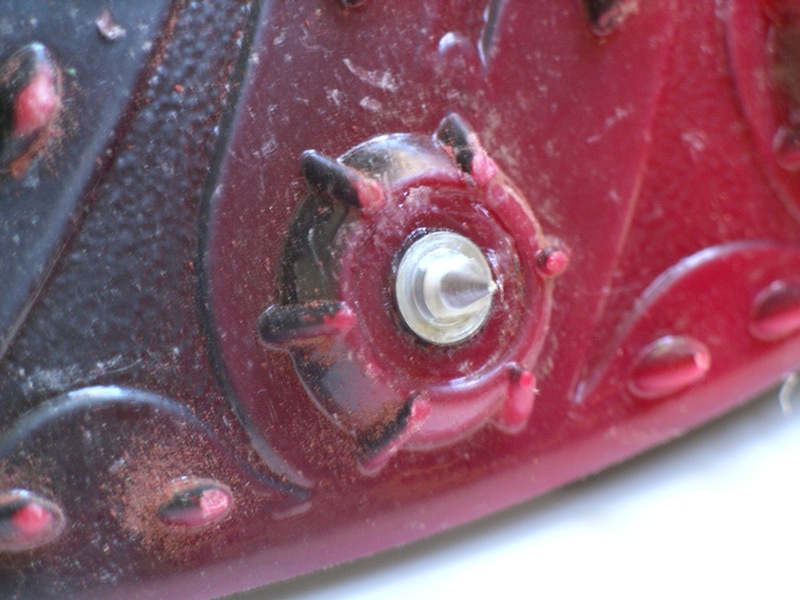
The front of the sole features a rigid or semi-rigid spike plate containing between 3 and 9 threaded holes called spike wells. Spikes can be screwed into each well using a spike wrench. Recently, some individuals have attempted to add a "through hole" at the bottom of the spike to make them easier to tighten, remove, and install.
Hub AI
Track spikes AI simulator
(@Track spikes_simulator)
Track spikes
Track spikes, or just spikes, are a type of footwear featuring protruding spikes on the soles used by athletes when racing on the track. Some spikes are designed for longer-term training on tracks, but generally the shoes are used for racing. The term "spikes" can also refer to track shoes featuring such protrusions, though these are technically called pins. Spikes are similar to studs, which are used for team sports, although generally smaller and with a sharp point.
Track spikes had become popular in England by the 1860s, but the concept of spikes in shoes to give running traction has been around much longer. As written in the 1852 publication of Calmet's Dictionary of the Holy Bible regarding military arms at the time of Paul the Apostle (c. 5 – c. 67):
"Having the feet shod with the preparation of the gospel of peace;" not iron, not steel; but patient investigation, calm inquiry; assiduous, laborious, lasting; if not, rather, with firm footing in the gospel of peace. Whether the apostle here means stout, well-tanned leather, leather well prepared, by his "preparation of the gospel of peace" or shoes which had spikes in them, which, running into the ground, gave a steadfastness to the soldier who wore them, may come under remark hereafter. We shall only add, that Moses seems, at least according to our rendering, to have some allusion to shoes, either plated, or spiked, on the sole, when he says, (Deut. xxxiii. 25.) "Thy shoes shall be iron and brass; and as thy days shall thy strength be."
For pioneering the use of spikes, J.W. Foster and Sons's revolutionary running pumps appear in the book, Golden Kicks: The Shoes that changed Sport. The company began distributing shoes across the United Kingdom and were worn by British athletes. They were made famous by 100m Olympic champion Harold Abrahams (who would be immortalized in the Oscar winning film Chariots of Fire) in the 1924 Summer Olympics held in Paris.
In 1934, American football player and coach Pop Warner recommended them for running events in his widely distributed book, "Pop" Warner's book for boys.
Additionally, Adolf Dassler, the founder of Adidas, assisted in the development of track spikes for multiple events. In an effort to enhance the quality of spiked athletic footwear, he transitioned from a previous model of heavy metal spikes to attempting to utilize canvas and rubber. He carved them by hand and were eventually worn during the 1936 Olympics by Jesse Owens. People began to take notice, and Owens inherently helped popularize Dassler's design. Track spikes continued to gain notable recognition when Emil Zátopek, a distance runner from Czech Republic, wore them during the 1952 Olympics in Helsinki.
In contrast to earlier eras when spikes were produced by external manufacturers—such as J.W. Foster & Sons in the early 1900s or the Dassler brothers in the 1920s—the landscape of athlete-influenced footwear shifted with Allyson Felix's Tokyo 2020 debut of the Saysh Spike One. According to media reports, she became the first track and field athlete to race and win Olympic medals in shoes branded and produced by herself.
The front of the sole features a rigid or semi-rigid spike plate containing between 3 and 9 threaded holes called spike wells. Spikes can be screwed into each well using a spike wrench. Recently, some individuals have attempted to add a "through hole" at the bottom of the spike to make them easier to tighten, remove, and install.
Recent media