



Community hub
Recent from talks
Knowledge base stats:
Talk channels stats:
Members stats:
Spring Byington
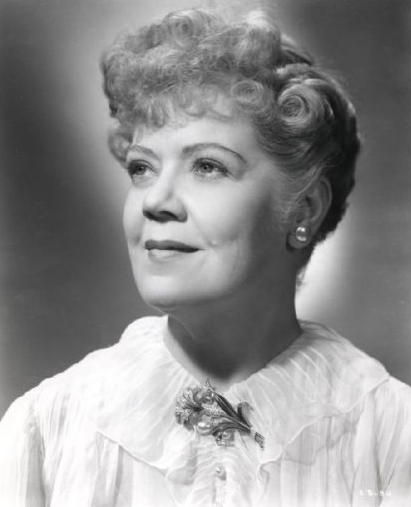
Spring Dell Byington (October 17, 1886 – September 7, 1971) was an American actress. Her career included a seven-year run on radio and television as the star of December Bride. She was an MGM contract player who appeared in films from the 1930s to the 1960s.
Byington received a nomination for an Academy Award for Best Supporting Actress for her role as Penelope Sycamore in You Can't Take It with You (1938).
Byington was born in Colorado Springs, Colorado, the daughter of Edwin Lee Byington, an educator and superintendent of schools in Colorado, and his wife Helene Maud (Cleghorn) Byington, later a doctor. She had a younger sister, Helene Kimball Byington. Her father died in 1891, and her mother sent her younger daughter to live with her grandparents in Port Hope, Ontario, while Spring remained with relatives in Denver. Helene Maud Byington moved to Boston and enrolled in the Boston University School of Medicine, where she graduated in 1896. She then returned to Denver and opened a practice with her classmate, Dr. Mary Ford.
Byington performed occasionally in amateur shows as a student, graduating from North High School in 1904. She soon became a professional actress with the Elitch Garden Stock Company. When their mother died in 1907, Spring and Helene were legally adopted by their aunt Margaret Eddy. Byington stated in a 1949 interview that she briefly tried newspaper reporting. However, since she was already of legal age, she decided to start her acting career in New York City, saying that she enjoyed it, and, "I can't do anything else very well."
In 1903, Byington joined a repertory company, Belasco De Mille Company of New York, that was touring Buenos Aires, Argentina. Among the plays that she performed in Buenos Aires was Dr. Morris, written by Dr. Alberto del Solar. Between 1903 and 1916, the company performed American plays, translated into Spanish and Portuguese in Argentina and Brazil. Upon returning to New York, Byington divided her time between working in Manhattan and staying with her daughters. Her daughters were living with friends J. Allen and Lois Babcock, in Leonardsville, New York, who were taking care of them while Byington worked in the city. She began touring in 1919 with a production of The Bird of Paradise, which brought the Hawaiian culture to the mainland, and in 1921 began work with the Stuart Walker Company, for which she played roles in Mr. Pim Passes By, The Ruined Lady, and Rollo's Wild Oat, among others. This connection landed her a role in her first Broadway performance in 1924, George S. Kaufman and Marc Connelly's Beggar on Horseback which ran for six months. She renewed the role in March and April 1925, and continued on Broadway with an additional 18 productions from 1925 to 1935. These included roles in Kaufman and Moss Hart's Once in a Lifetime, Rachel Crothers's When Ladies Meet (which had 173 performances on Broadway during the 1932-33 winter season, with Spring Byington playing the role of Bridget Drake), and Dawn Powell's Jig Saw.
In her last years on Broadway, Byington began work in films. The first was a short film titled Papa's Slay Ride (1930), performing the role of Mama, and the second role, and better known, was in Little Women (1933) as Marmee, with Katharine Hepburn as her daughter Jo. For MGM, she played Midshipman Roger Byam's (Franchot Tone) mother in Mutiny on the Bounty (1935). She became a household name during The Jones Family series of films, and continued as a character actress in Hollywood for several years. Byington was nominated for the Academy Award for Best Supporting Actress for You Can't Take it with You (1938), which was won by Fay Bainter for Jezebel (in which Byington also had a role as antebellum society matron, Mrs. Kendrick).[citation needed]. In 1941, she played “Mrs. Mitchell”, mother to Barbara Stanwyck's star character, in Meet John Doe.
During World War II, Byington worked in radio, and decided to continue working in this medium, as her film career began to decline after the war.
In 1951, she appeared in Food for Thought, a 22-minute color film sponsored by Pressure Cooking Institute.
Hub AI
Spring Byington AI simulator
(@Spring Byington_simulator)
Spring Byington
Spring Dell Byington (October 17, 1886 – September 7, 1971) was an American actress. Her career included a seven-year run on radio and television as the star of December Bride. She was an MGM contract player who appeared in films from the 1930s to the 1960s.
Byington received a nomination for an Academy Award for Best Supporting Actress for her role as Penelope Sycamore in You Can't Take It with You (1938).
Byington was born in Colorado Springs, Colorado, the daughter of Edwin Lee Byington, an educator and superintendent of schools in Colorado, and his wife Helene Maud (Cleghorn) Byington, later a doctor. She had a younger sister, Helene Kimball Byington. Her father died in 1891, and her mother sent her younger daughter to live with her grandparents in Port Hope, Ontario, while Spring remained with relatives in Denver. Helene Maud Byington moved to Boston and enrolled in the Boston University School of Medicine, where she graduated in 1896. She then returned to Denver and opened a practice with her classmate, Dr. Mary Ford.
Byington performed occasionally in amateur shows as a student, graduating from North High School in 1904. She soon became a professional actress with the Elitch Garden Stock Company. When their mother died in 1907, Spring and Helene were legally adopted by their aunt Margaret Eddy. Byington stated in a 1949 interview that she briefly tried newspaper reporting. However, since she was already of legal age, she decided to start her acting career in New York City, saying that she enjoyed it, and, "I can't do anything else very well."
In 1903, Byington joined a repertory company, Belasco De Mille Company of New York, that was touring Buenos Aires, Argentina. Among the plays that she performed in Buenos Aires was Dr. Morris, written by Dr. Alberto del Solar. Between 1903 and 1916, the company performed American plays, translated into Spanish and Portuguese in Argentina and Brazil. Upon returning to New York, Byington divided her time between working in Manhattan and staying with her daughters. Her daughters were living with friends J. Allen and Lois Babcock, in Leonardsville, New York, who were taking care of them while Byington worked in the city. She began touring in 1919 with a production of The Bird of Paradise, which brought the Hawaiian culture to the mainland, and in 1921 began work with the Stuart Walker Company, for which she played roles in Mr. Pim Passes By, The Ruined Lady, and Rollo's Wild Oat, among others. This connection landed her a role in her first Broadway performance in 1924, George S. Kaufman and Marc Connelly's Beggar on Horseback which ran for six months. She renewed the role in March and April 1925, and continued on Broadway with an additional 18 productions from 1925 to 1935. These included roles in Kaufman and Moss Hart's Once in a Lifetime, Rachel Crothers's When Ladies Meet (which had 173 performances on Broadway during the 1932-33 winter season, with Spring Byington playing the role of Bridget Drake), and Dawn Powell's Jig Saw.
In her last years on Broadway, Byington began work in films. The first was a short film titled Papa's Slay Ride (1930), performing the role of Mama, and the second role, and better known, was in Little Women (1933) as Marmee, with Katharine Hepburn as her daughter Jo. For MGM, she played Midshipman Roger Byam's (Franchot Tone) mother in Mutiny on the Bounty (1935). She became a household name during The Jones Family series of films, and continued as a character actress in Hollywood for several years. Byington was nominated for the Academy Award for Best Supporting Actress for You Can't Take it with You (1938), which was won by Fay Bainter for Jezebel (in which Byington also had a role as antebellum society matron, Mrs. Kendrick).[citation needed]. In 1941, she played “Mrs. Mitchell”, mother to Barbara Stanwyck's star character, in Meet John Doe.
During World War II, Byington worked in radio, and decided to continue working in this medium, as her film career began to decline after the war.
In 1951, she appeared in Food for Thought, a 22-minute color film sponsored by Pressure Cooking Institute.