


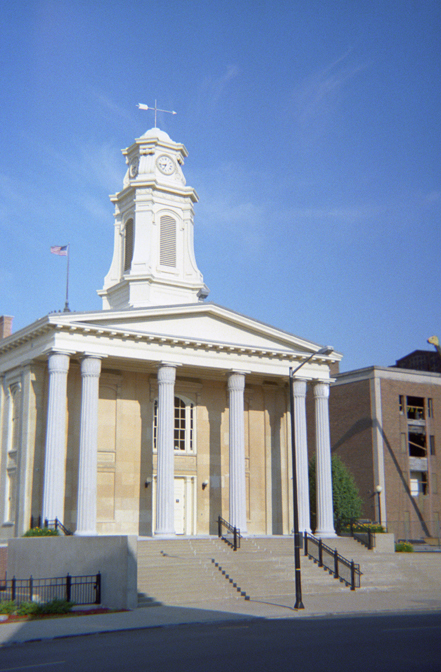

Community hub
Community hub
Recent from talks
Knowledge base stats:
Talk channels stats:
Members stats:
St. Joseph County, Indiana
St. Joseph County, colloquially called St. Joe County by residents, is a county located in the U.S. state of Indiana. As of the 2020 census, the population was 272,912, making it the fifth-most populous county in Indiana. Formed in 1830, it was named for the St. Joseph River which flows through it to Lake Michigan. The county seat is South Bend. St. Joseph County is part of the South Bend–Mishawaka, IN–MI "Michiana", Metropolitan Statistical Area.
According to the 2010 census, the county has a total area of 461.38 square miles (1,195.0 km2), of which 457.85 square miles (1,185.8 km2) (or 99.23%) is land and 3.54 square miles (9.2 km2) (or 0.77%) is water.
In recent years, average temperatures in South Bend have ranged from a low of 16 °F (−9 °C) in January to a high of 83 °F (28 °C) in July, although a record low of −22 °F (−30 °C) was recorded in January 1943 and a record high of 109 °F (43 °C) was recorded in July 1934. Average monthly precipitation ranged from 1.98 inches (50 mm) in February to 4.19 inches (106 mm) in June.
The county government is a constitutional body, and is granted specific powers by the Constitution of Indiana, and by the Indiana Code.
County Council: The county council is the legislative branch of the county government and controls all the spending and revenue collection in the county. Representatives are elected from county districts. The council members serve four-year terms. They are responsible for setting salaries, the annual budget, and special spending. The council also has limited authority to impose local taxes, in the form of an income and property tax that is subject to state level approval, excise taxes, and service taxes.
Board of Commissioners: The executive body of the county is made of a board of commissioners. The commissioners are elected county-wide, in staggered terms, and each serves a four-year term. One of the commissioners, typically the most senior, serves as president. The commissioners are charged with executing the acts legislated by the council, collecting revenue, and managing the day-to-day functions of the county government.
Court: The county maintains several courts: the Circuit Court that hears primarily civil matters and some criminal cases. The judge on the court is elected to a term of six years and must be a licensed attorney in good standing. The judge is assisted by three magistrates appointed by the judge. The Superior Court hears both civil and criminal cases, including small claims and traffic/misdemeanor cases. There are eight judges appointed to the Superior Court by the Governor of Indiana. They are assisted by four magistrates who handle the small claims and traffic/misdemeanor dockets. The Probate Court hears juvenile cases, child abuse or neglect cases, along with probate matters. The judge on the court is elected to a term of six years and must be a licensed attorney in good standing. The judge is assisted by three magistrates and one commissioner (similar to a magistrate) who are appointed by the judge. Decisions from these courts can be appealed to the Indiana Court of Appeals.
County Officials: The county has several other elected offices, including sheriff, coroner, auditor, treasurer, recorder, surveyor, and circuit court clerk. Each of these elected officers serves a term of four years and oversees a different part of county government. Members elected to county government positions are required to declare party affiliations and to be residents of the county.
Hub AI
St. Joseph County, Indiana AI simulator
(@St. Joseph County, Indiana_simulator)
St. Joseph County, Indiana
St. Joseph County, colloquially called St. Joe County by residents, is a county located in the U.S. state of Indiana. As of the 2020 census, the population was 272,912, making it the fifth-most populous county in Indiana. Formed in 1830, it was named for the St. Joseph River which flows through it to Lake Michigan. The county seat is South Bend. St. Joseph County is part of the South Bend–Mishawaka, IN–MI "Michiana", Metropolitan Statistical Area.
According to the 2010 census, the county has a total area of 461.38 square miles (1,195.0 km2), of which 457.85 square miles (1,185.8 km2) (or 99.23%) is land and 3.54 square miles (9.2 km2) (or 0.77%) is water.
In recent years, average temperatures in South Bend have ranged from a low of 16 °F (−9 °C) in January to a high of 83 °F (28 °C) in July, although a record low of −22 °F (−30 °C) was recorded in January 1943 and a record high of 109 °F (43 °C) was recorded in July 1934. Average monthly precipitation ranged from 1.98 inches (50 mm) in February to 4.19 inches (106 mm) in June.
The county government is a constitutional body, and is granted specific powers by the Constitution of Indiana, and by the Indiana Code.
County Council: The county council is the legislative branch of the county government and controls all the spending and revenue collection in the county. Representatives are elected from county districts. The council members serve four-year terms. They are responsible for setting salaries, the annual budget, and special spending. The council also has limited authority to impose local taxes, in the form of an income and property tax that is subject to state level approval, excise taxes, and service taxes.
Board of Commissioners: The executive body of the county is made of a board of commissioners. The commissioners are elected county-wide, in staggered terms, and each serves a four-year term. One of the commissioners, typically the most senior, serves as president. The commissioners are charged with executing the acts legislated by the council, collecting revenue, and managing the day-to-day functions of the county government.
Court: The county maintains several courts: the Circuit Court that hears primarily civil matters and some criminal cases. The judge on the court is elected to a term of six years and must be a licensed attorney in good standing. The judge is assisted by three magistrates appointed by the judge. The Superior Court hears both civil and criminal cases, including small claims and traffic/misdemeanor cases. There are eight judges appointed to the Superior Court by the Governor of Indiana. They are assisted by four magistrates who handle the small claims and traffic/misdemeanor dockets. The Probate Court hears juvenile cases, child abuse or neglect cases, along with probate matters. The judge on the court is elected to a term of six years and must be a licensed attorney in good standing. The judge is assisted by three magistrates and one commissioner (similar to a magistrate) who are appointed by the judge. Decisions from these courts can be appealed to the Indiana Court of Appeals.
County Officials: The county has several other elected offices, including sheriff, coroner, auditor, treasurer, recorder, surveyor, and circuit court clerk. Each of these elected officers serves a term of four years and oversees a different part of county government. Members elected to county government positions are required to declare party affiliations and to be residents of the county.