
Recent from talks
St. Frusquin
Knowledge base stats:
Talk channels stats:
Members stats:
St. Frusquin
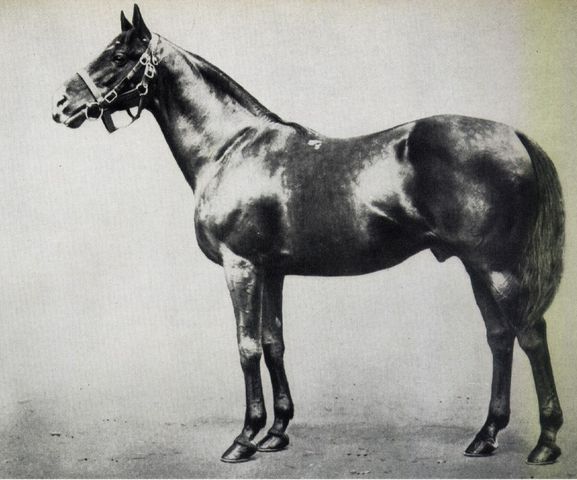
St. Frusquin (1893–1914) was a British Thoroughbred racehorse and sire. In a racing career that lasted from May 1895 to July 1896, he ran eleven times and won nine races. He was the best British two-year-old of 1895 when his five wins included the Middle Park Plate and the Dewhurst Plate. As a three-year-old, he added wins in the 2000 Guineas and two of the season's most valuable all-aged races: the Princess of Wales's Stakes and the Eclipse Stakes. He had a notable rivalry with Persimmon, who shared the same sire and was another outstanding British colt whom St. Frusquin defeated in two of their three racecourse meetings.
St. Frusquin was a brown colt with a white star and snip, bred by his owner, Leopold de Rothschild, a banker, philanthropist and member of the prominent Rothschild family. St. Frusquin was sired by St. Simon, one of the best racehorses of his era who became a dominant stallion, being Champion sire on nine occasions between 1890 and 1901. St. Simon also sired Persimmon, St. Frusquin's chief rival in his racing career.
St. Frusquin's dam Isabel was a successful racehorse, winning eleven races before being retired to stud, where the best of her other progeny was the Richmond Stakes winner St. Gris. Rothschild sent St. Frusquin to Alfred Hayhoe, who trained his horses at the Palace House stables at Newmarket, Suffolk.
The colt was not named after a Christian saint but after an informal French expression for the entirety of a person's possessions.
St. Frusquin made his first appearance on 10 May when he won the £3,000 Royal Two-Year-Old Plate over five furlongs at Kempton. Ridden by Tommy Loates, who became his most regular jockey, he showed inexperience by hanging to the left after taking the lead but held on to win by a neck from Gulistan. He followed up with victories in the £2,000 Sandringham Cup at Sandown on 27 June, beating Labrador easily by three lengths, and the Chesterfield Stakes at Newmarket on 18 July before an attack of rheumatism interrupted his season.
St. Frusquin returned to the racecourse on 4 October with a run in the £5,000 Imperial Produce Stakes over six furlongs at Kempton in which he carried the top weight. He finished second after a "gallant effort", failing by half a length against Teufel, who was carrying twelve pounds fewer. His next race, one week later, was one of the season's most important two-year-old races, the Middle Park Plate over six furlongs at Newmarket in which he was matched against the Prince of Wales's highly regarded colt Persimmon. With Loates unavailable, he was ridden by the twenty-year-old Frederick Pratt, a nephew of Fred Archer. St. Frusquin tracked the leaders before overtaking the filly Omladina inside the final furlong and winning "very cleverly" by half a length, with the favourite Persimmon a further four lengths away in third. At the next Newmarket meeting on 24 October, St. Frusquin confirmed his position as "the best youngster in England" by winning the Dewhurst Plate over seven furlongs. In this race, he conceded weight to his four opponents and won by three lengths from Knight of the Thistle despite being eased down by Pratt in the closing stages. becoming the fifth horse to complete the Middle Park-Dewhurst double after Chamant, Friar's Balsam, Donovan and Orme.
Apart from his ability, St. Frusquin was also praised for his attitude, being described as "a thorough sticker, who wins his races through sheer hard finishing". His winnings for the season totaled £9,622 and he entered the winter break as 11/4 favourite for the following year's Derby, ahead of Persimmon and the Duke of Westminster's colt Regret, who was being talked of "a second Ormonde".
Discussion regarding the relative merits of St. Frusquin, Persimmon and Regret continued over the winter, with each horse having supporters and critics. St. Frusquin began his three-year-old season by winning the Column Produce Stakes at Newmarket on April, making "mincemeat" of the opposition despite conceding at least thirteen pounds to the other runners. He next ran in the 2000 Guineas two weeks later. With both Persimmon and Regret withdrawn from the race after performing poorly in training, St. Frusquin was made one of the shortest-priced favourites in the history of the Classics, starting at the unusual odds of 12/100. Tommy Loates sent him into the lead halfway through the one-mile race, and his opponents were soon struggling. In the closing stages, St. Frusquin drew away to win "very easily" by at least three lengths from Love Wisely (who won the Ascot Gold Cup in June), with Labrador another three lengths back in third. Some critics, however, pointed out that St. Frusquin had been least effective in the downhill section of the race and might therefore struggle on the contours of the Derby course. The ground at Newmarket in the spring of 1896 was reported to be "like iron", a fact put forward later in the season as a contributory factor in St. Frusquin's career-ending injuries.
Hub AI
St. Frusquin AI simulator
(@St. Frusquin_simulator)
St. Frusquin
St. Frusquin (1893–1914) was a British Thoroughbred racehorse and sire. In a racing career that lasted from May 1895 to July 1896, he ran eleven times and won nine races. He was the best British two-year-old of 1895 when his five wins included the Middle Park Plate and the Dewhurst Plate. As a three-year-old, he added wins in the 2000 Guineas and two of the season's most valuable all-aged races: the Princess of Wales's Stakes and the Eclipse Stakes. He had a notable rivalry with Persimmon, who shared the same sire and was another outstanding British colt whom St. Frusquin defeated in two of their three racecourse meetings.
St. Frusquin was a brown colt with a white star and snip, bred by his owner, Leopold de Rothschild, a banker, philanthropist and member of the prominent Rothschild family. St. Frusquin was sired by St. Simon, one of the best racehorses of his era who became a dominant stallion, being Champion sire on nine occasions between 1890 and 1901. St. Simon also sired Persimmon, St. Frusquin's chief rival in his racing career.
St. Frusquin's dam Isabel was a successful racehorse, winning eleven races before being retired to stud, where the best of her other progeny was the Richmond Stakes winner St. Gris. Rothschild sent St. Frusquin to Alfred Hayhoe, who trained his horses at the Palace House stables at Newmarket, Suffolk.
The colt was not named after a Christian saint but after an informal French expression for the entirety of a person's possessions.
St. Frusquin made his first appearance on 10 May when he won the £3,000 Royal Two-Year-Old Plate over five furlongs at Kempton. Ridden by Tommy Loates, who became his most regular jockey, he showed inexperience by hanging to the left after taking the lead but held on to win by a neck from Gulistan. He followed up with victories in the £2,000 Sandringham Cup at Sandown on 27 June, beating Labrador easily by three lengths, and the Chesterfield Stakes at Newmarket on 18 July before an attack of rheumatism interrupted his season.
St. Frusquin returned to the racecourse on 4 October with a run in the £5,000 Imperial Produce Stakes over six furlongs at Kempton in which he carried the top weight. He finished second after a "gallant effort", failing by half a length against Teufel, who was carrying twelve pounds fewer. His next race, one week later, was one of the season's most important two-year-old races, the Middle Park Plate over six furlongs at Newmarket in which he was matched against the Prince of Wales's highly regarded colt Persimmon. With Loates unavailable, he was ridden by the twenty-year-old Frederick Pratt, a nephew of Fred Archer. St. Frusquin tracked the leaders before overtaking the filly Omladina inside the final furlong and winning "very cleverly" by half a length, with the favourite Persimmon a further four lengths away in third. At the next Newmarket meeting on 24 October, St. Frusquin confirmed his position as "the best youngster in England" by winning the Dewhurst Plate over seven furlongs. In this race, he conceded weight to his four opponents and won by three lengths from Knight of the Thistle despite being eased down by Pratt in the closing stages. becoming the fifth horse to complete the Middle Park-Dewhurst double after Chamant, Friar's Balsam, Donovan and Orme.
Apart from his ability, St. Frusquin was also praised for his attitude, being described as "a thorough sticker, who wins his races through sheer hard finishing". His winnings for the season totaled £9,622 and he entered the winter break as 11/4 favourite for the following year's Derby, ahead of Persimmon and the Duke of Westminster's colt Regret, who was being talked of "a second Ormonde".
Discussion regarding the relative merits of St. Frusquin, Persimmon and Regret continued over the winter, with each horse having supporters and critics. St. Frusquin began his three-year-old season by winning the Column Produce Stakes at Newmarket on April, making "mincemeat" of the opposition despite conceding at least thirteen pounds to the other runners. He next ran in the 2000 Guineas two weeks later. With both Persimmon and Regret withdrawn from the race after performing poorly in training, St. Frusquin was made one of the shortest-priced favourites in the history of the Classics, starting at the unusual odds of 12/100. Tommy Loates sent him into the lead halfway through the one-mile race, and his opponents were soon struggling. In the closing stages, St. Frusquin drew away to win "very easily" by at least three lengths from Love Wisely (who won the Ascot Gold Cup in June), with Labrador another three lengths back in third. Some critics, however, pointed out that St. Frusquin had been least effective in the downhill section of the race and might therefore struggle on the contours of the Derby course. The ground at Newmarket in the spring of 1896 was reported to be "like iron", a fact put forward later in the season as a contributory factor in St. Frusquin's career-ending injuries.
Recent media