
Recent from talks
Stanislav Grof
Knowledge base stats:
Talk channels stats:
Members stats:
Stanislav Grof
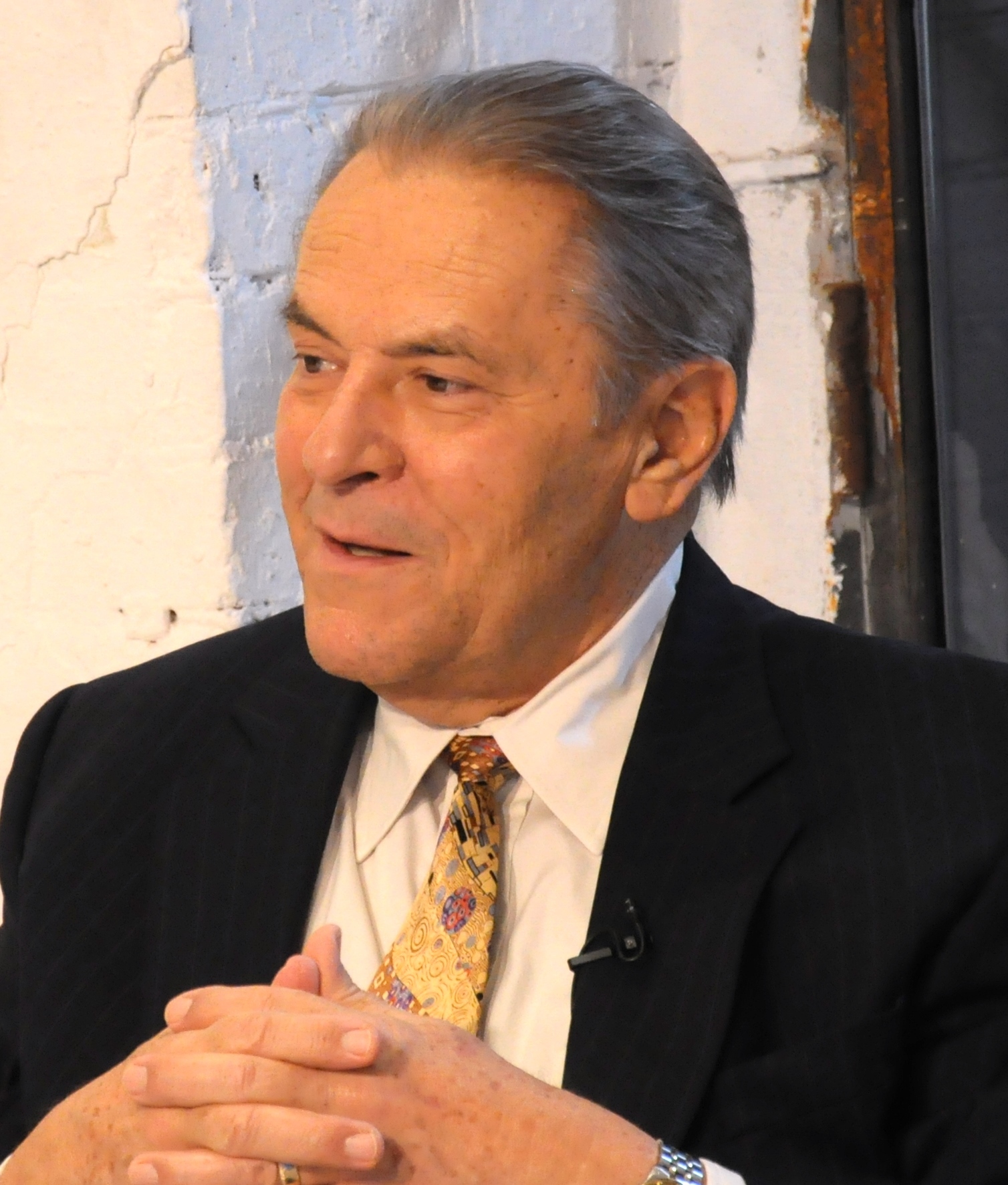
Stanislav Grof (born July 1, 1931) is a Czech-born American psychiatrist. Grof is one of the principal developers of transpersonal psychology and research into the use of non-ordinary states of consciousness for purposes of psychological healing, deep self-exploration, and obtaining growth and insights into the human psyche.
Stanislav Grof was born July 1, 1931 in Prague, Czechoslovak Republic. Grof received his M.D. from Charles University in Prague in 1957 and then completed his Ph.D. in medicine at the Czechoslovak Academy of Sciences in 1965, training as a Freudian psychoanalyst at this time.[citation needed]
Czechoslovakia was the centre of psychedelic research behind the Iron Curtain during the Soviet empire in the 1950s and 1960s. Grof’s early research in the clinical uses of psychedelic substances was conducted at the Psychiatric Research Institute in Prague, where he was principal investigator of a program that systematically explored the heuristic and therapeutic potential of LSD and other psychedelic substances.
In 1967, he received a scholarship from the Foundations Fund for Research in Psychiatry in New Haven, Connecticut, and was invited by Joel Elkes to be a Clinical and Research Fellow at Henry Phipps Clinic, a part of Johns Hopkins University School of Medicine in Baltimore, United States. In 1969, he went on to become Chief of Psychiatric Research for the Spring Grove Experiment at the Research Unit of Spring Grove State Hospital (later part of the Maryland Psychiatric Research Center where he worked with Walter Pahnke. In 1969, Grof also became Assistant Professor of Psychiatry at the Johns Hopkins University.[citation needed]
In 1973 he was invited to the Esalen Institute in Big Sur, California, and lived there until 1987 as a Scholar-in-Residence, developing his ideas and conducting month-long workshops.[citation needed] In 1977, Grof was the founding president of the International Transpersonal Association, serving as president for several subsequent decades. He went on to become distinguished adjunct faculty member of the Department of Philosophy, Cosmology, and Consciousness at the California Institute of Integral Studies, a position he remained in until 2018.[citation needed]
In May 2020, he launched, with his wife Brigitte Grof, a new training in working with holotropic states of consciousness, the international Grof Legacy Training.
Grof's early studies were of LSD and its effects on the psyche—the field of psychedelic therapy. Building on his observations while conducting LSD research and on Otto Rank's theory of birth trauma, Grof constructed a theoretical framework regarding prenatal and perinatal psychology and transpersonal psychology. In Grof's view, LSD sessions reveal the psychopathology of an individual to reflect their experience of the stages of birth. He describes four stages: (1) embryonic peace and transpersonal connection, (2) inundation with bodily matter during fetal growth, (3) the stress of the prenatal period, and (4) the release of birth. Various neuroses are mapped to traumas at particular stages, e.g., ennui could be caused by Caesarean section, resulting in an individual feeling like they have little reason to exert effort. Suicidal ideation is explained by the deep memory of prenatal suffering being terminated by release from the womb (transposed to an escape from life itself). Chemical addiction could stem from the use of anesthesia during birth. Religious belief (e.g., identification with the crucifixion of Jesus) is also linked to birth, with reincarnation explaining transpersonal experiences.
Grof called a developed form of his theory an "expanded cartography of the human psyche". Following the suppression of legal LSD use in the early 1970s, Grof pursued this therapeutic direction without drugs, by codeveloping with his wife, Christina Grof, a combination of deep and rapid breathing, evocative music, focused bodywork, and mandala drawing. Originally termed "Holotropic Breathwork", he now uses the trademark Grof Breathwork to describe this technique.[citation needed]
Hub AI
Stanislav Grof AI simulator
(@Stanislav Grof_simulator)
Stanislav Grof
Stanislav Grof (born July 1, 1931) is a Czech-born American psychiatrist. Grof is one of the principal developers of transpersonal psychology and research into the use of non-ordinary states of consciousness for purposes of psychological healing, deep self-exploration, and obtaining growth and insights into the human psyche.
Stanislav Grof was born July 1, 1931 in Prague, Czechoslovak Republic. Grof received his M.D. from Charles University in Prague in 1957 and then completed his Ph.D. in medicine at the Czechoslovak Academy of Sciences in 1965, training as a Freudian psychoanalyst at this time.[citation needed]
Czechoslovakia was the centre of psychedelic research behind the Iron Curtain during the Soviet empire in the 1950s and 1960s. Grof’s early research in the clinical uses of psychedelic substances was conducted at the Psychiatric Research Institute in Prague, where he was principal investigator of a program that systematically explored the heuristic and therapeutic potential of LSD and other psychedelic substances.
In 1967, he received a scholarship from the Foundations Fund for Research in Psychiatry in New Haven, Connecticut, and was invited by Joel Elkes to be a Clinical and Research Fellow at Henry Phipps Clinic, a part of Johns Hopkins University School of Medicine in Baltimore, United States. In 1969, he went on to become Chief of Psychiatric Research for the Spring Grove Experiment at the Research Unit of Spring Grove State Hospital (later part of the Maryland Psychiatric Research Center where he worked with Walter Pahnke. In 1969, Grof also became Assistant Professor of Psychiatry at the Johns Hopkins University.[citation needed]
In 1973 he was invited to the Esalen Institute in Big Sur, California, and lived there until 1987 as a Scholar-in-Residence, developing his ideas and conducting month-long workshops.[citation needed] In 1977, Grof was the founding president of the International Transpersonal Association, serving as president for several subsequent decades. He went on to become distinguished adjunct faculty member of the Department of Philosophy, Cosmology, and Consciousness at the California Institute of Integral Studies, a position he remained in until 2018.[citation needed]
In May 2020, he launched, with his wife Brigitte Grof, a new training in working with holotropic states of consciousness, the international Grof Legacy Training.
Grof's early studies were of LSD and its effects on the psyche—the field of psychedelic therapy. Building on his observations while conducting LSD research and on Otto Rank's theory of birth trauma, Grof constructed a theoretical framework regarding prenatal and perinatal psychology and transpersonal psychology. In Grof's view, LSD sessions reveal the psychopathology of an individual to reflect their experience of the stages of birth. He describes four stages: (1) embryonic peace and transpersonal connection, (2) inundation with bodily matter during fetal growth, (3) the stress of the prenatal period, and (4) the release of birth. Various neuroses are mapped to traumas at particular stages, e.g., ennui could be caused by Caesarean section, resulting in an individual feeling like they have little reason to exert effort. Suicidal ideation is explained by the deep memory of prenatal suffering being terminated by release from the womb (transposed to an escape from life itself). Chemical addiction could stem from the use of anesthesia during birth. Religious belief (e.g., identification with the crucifixion of Jesus) is also linked to birth, with reincarnation explaining transpersonal experiences.
Grof called a developed form of his theory an "expanded cartography of the human psyche". Following the suppression of legal LSD use in the early 1970s, Grof pursued this therapeutic direction without drugs, by codeveloping with his wife, Christina Grof, a combination of deep and rapid breathing, evocative music, focused bodywork, and mandala drawing. Originally termed "Holotropic Breathwork", he now uses the trademark Grof Breathwork to describe this technique.[citation needed]
Recent media