



Community hub
Recent from talks
Knowledge base stats:
Talk channels stats:
Members stats:
Starch analysis
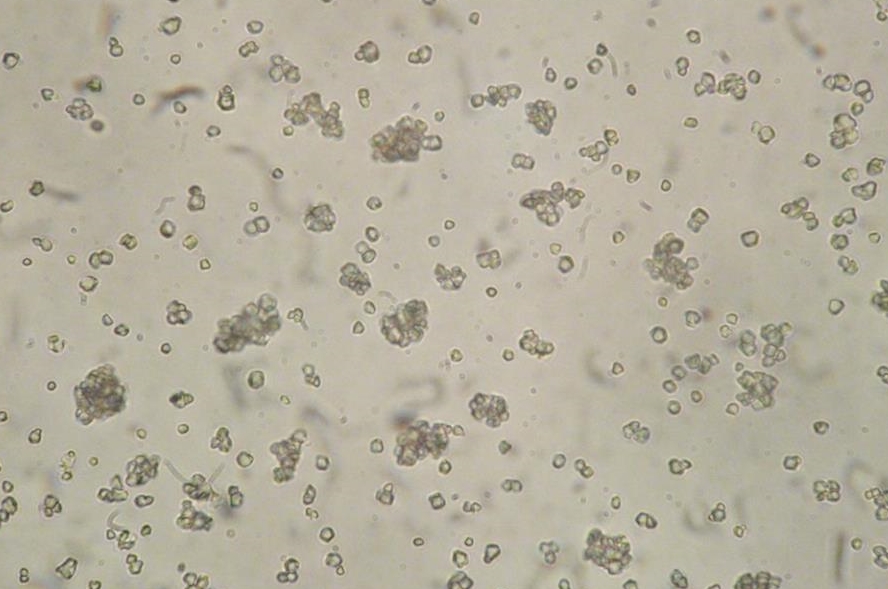
Starch analysis or starch grain analysis is a technique that is useful in archaeological research in determining plant taxa on a microscopic level. It can also be used in day-to-day life by specialists within the pharmaceutical and food industries in order to determine taxa origins and food quality. Specifically in regards to archaeology though, the identification of starch grains, through this context is done by comparison identification, in which several attributes of the grains are compared to other known samples in order to determine the type. This comparison technique, when done microscopically allows for the specific taxa identification of starch grains found on specific artifacts, such as ground stone tools, within soils, through dental calculus, or found in reference to ceramic vessels. Starch grain analysis can be helpful as a supplement to other forms of study to understanding tool use, agricultural activities, as well as other plant based subsistence strategies, and to reconstruct plant based diets throughout time.
First, starch is stored as a source of energy and found in most autotrophic plants, meaning plants that are able to create their own food through photosynthesis. There are a few exceptions to this however, within the families Asteraceae, Campanulaceae, and some others in which starch is not used as a source of energy that is reserved. This presents one downfall to the studying of plant taxa through starch grain analysis. Moving on, the ability for long-term storage of starch grains for an energy source utilized by plants, makes starch grains a valuable source of study within an archaeological context. Starch is stored in the amyloplasts, a specialized organelle found within plant cells, as starch grains. The starch grain is specifically important for study due to the fact that it is commonly found in most plants, its long-lasting nature, as well as the diverse forms and structures that they can take based on which taxa they belong to.
Staining solutions are one way to make comparative analysis of starch granules more accessible, depending on what type of stain is specifically used. For example, as stated by Kovárník and Benes, Lugol's solution stains the grains a dark blue color, in order to distinguish the starch grain from other common structures that can appear similar in size and shape. In addition to this technique, the use of CongoRed dye marks the damage, making it easier to study, compare, and to analyze differences in the damage of particular taxa. Specifically, the intensity of the red color depends on how damaged the grain is. Lastly, Trypan blue is another way to stain grain damage within starch grains, only staining the damaged grains, not the undamaged. Specifically, it can be important to incorporate the staining process into an analysis due to the fact that there are several other structures found naturally that have similar characteristics to starch when compared under a microscope.
There are several ways to go about extracting the starch granules from stone tools. One technique as explained by Kovárnik and Benes described as the most common, is through pipetting the surface of the objects on the most common areas in which starch grains are found, for example fissures, or others divetts on the artifact. The water droplets from the pipetting technique are then collected onto slides to be utilized in comparative analysis. This is a common technique for the use of understanding specifically how stone tools were used, and what types of plants were being exploited during the time being studied.
Another common approach is to dislodge the starch grains through sonication, which is a laboratory technique that uses sound waves to "agitate particles" in order to convert an electrical signal into a vibration which in turn breaks down a substance. In terms of starch grain analysis, the starch grains are released by use of an ultrasonic bath and the distilled water containing the sample particles is then centrifuged. This is the process in which the specimens are spun and separated by density as a result of centripetal force, or due to the fictitious centrifugal force that is felt by the specimens due to their reference frame. Utilizing this force allows for the separation of solutions of different densities. Thus the least dense component, consisting of the starch grain particles is separated and a microscopic slide can be prepared.
Starch grain analysis through dental calculus can provide a plethora of information when it come to diet reconstruction of past societies. Specifically, dental calculus is a layering found on the teeth that is formed from plaque, "after mineralization."
In a study conducted by Tao et al., the research group followed the methods laid out by Piperno and Dillehay in 2008 and Li et al. in 2010. In these specific examples, they ground the dental calculus by use of mortar and pestle, and centrifuged the mixture containing the dental calculus as well as small amounts of Calgon in order to break the particles into a dispersed state. Once the extracts were dissolved in hydrochloride and rinsed with acetone, the residues were extracted and comparative analysis could begin. This is just one way in which to go about extracting starch grain residues from dental calculus, with another example being the use of sonification as described above.
There are several structures that are observed when doing comparative analysis to determine the plant taxa in which the starch grain belongs. First, starting on a slightly larger scale, the granule types such as simple, compound, or semi-compound, sizes, and shapes are observed. Next there is the hilum, which is the area in which protein layers are deposited. Hilums differ in their positioning on the starch granule and this positioning can differ between taxa. In addition to the hilum, "lamellas" are observed which are the different growth layers in which are only sometimes visible microscopically. The fissures can also be observed, however these are only common in some starch grains, not all. In total, starch grain analysis through the use of a computer database is the primary way in which starch grains are differentiated. This is helpful in terms of a supplemental approach to understanding plant exploitation of past societies.
Hub AI
Starch analysis AI simulator
(@Starch analysis_simulator)
Starch analysis
Starch analysis or starch grain analysis is a technique that is useful in archaeological research in determining plant taxa on a microscopic level. It can also be used in day-to-day life by specialists within the pharmaceutical and food industries in order to determine taxa origins and food quality. Specifically in regards to archaeology though, the identification of starch grains, through this context is done by comparison identification, in which several attributes of the grains are compared to other known samples in order to determine the type. This comparison technique, when done microscopically allows for the specific taxa identification of starch grains found on specific artifacts, such as ground stone tools, within soils, through dental calculus, or found in reference to ceramic vessels. Starch grain analysis can be helpful as a supplement to other forms of study to understanding tool use, agricultural activities, as well as other plant based subsistence strategies, and to reconstruct plant based diets throughout time.
First, starch is stored as a source of energy and found in most autotrophic plants, meaning plants that are able to create their own food through photosynthesis. There are a few exceptions to this however, within the families Asteraceae, Campanulaceae, and some others in which starch is not used as a source of energy that is reserved. This presents one downfall to the studying of plant taxa through starch grain analysis. Moving on, the ability for long-term storage of starch grains for an energy source utilized by plants, makes starch grains a valuable source of study within an archaeological context. Starch is stored in the amyloplasts, a specialized organelle found within plant cells, as starch grains. The starch grain is specifically important for study due to the fact that it is commonly found in most plants, its long-lasting nature, as well as the diverse forms and structures that they can take based on which taxa they belong to.
Staining solutions are one way to make comparative analysis of starch granules more accessible, depending on what type of stain is specifically used. For example, as stated by Kovárník and Benes, Lugol's solution stains the grains a dark blue color, in order to distinguish the starch grain from other common structures that can appear similar in size and shape. In addition to this technique, the use of CongoRed dye marks the damage, making it easier to study, compare, and to analyze differences in the damage of particular taxa. Specifically, the intensity of the red color depends on how damaged the grain is. Lastly, Trypan blue is another way to stain grain damage within starch grains, only staining the damaged grains, not the undamaged. Specifically, it can be important to incorporate the staining process into an analysis due to the fact that there are several other structures found naturally that have similar characteristics to starch when compared under a microscope.
There are several ways to go about extracting the starch granules from stone tools. One technique as explained by Kovárnik and Benes described as the most common, is through pipetting the surface of the objects on the most common areas in which starch grains are found, for example fissures, or others divetts on the artifact. The water droplets from the pipetting technique are then collected onto slides to be utilized in comparative analysis. This is a common technique for the use of understanding specifically how stone tools were used, and what types of plants were being exploited during the time being studied.
Another common approach is to dislodge the starch grains through sonication, which is a laboratory technique that uses sound waves to "agitate particles" in order to convert an electrical signal into a vibration which in turn breaks down a substance. In terms of starch grain analysis, the starch grains are released by use of an ultrasonic bath and the distilled water containing the sample particles is then centrifuged. This is the process in which the specimens are spun and separated by density as a result of centripetal force, or due to the fictitious centrifugal force that is felt by the specimens due to their reference frame. Utilizing this force allows for the separation of solutions of different densities. Thus the least dense component, consisting of the starch grain particles is separated and a microscopic slide can be prepared.
Starch grain analysis through dental calculus can provide a plethora of information when it come to diet reconstruction of past societies. Specifically, dental calculus is a layering found on the teeth that is formed from plaque, "after mineralization."
In a study conducted by Tao et al., the research group followed the methods laid out by Piperno and Dillehay in 2008 and Li et al. in 2010. In these specific examples, they ground the dental calculus by use of mortar and pestle, and centrifuged the mixture containing the dental calculus as well as small amounts of Calgon in order to break the particles into a dispersed state. Once the extracts were dissolved in hydrochloride and rinsed with acetone, the residues were extracted and comparative analysis could begin. This is just one way in which to go about extracting starch grain residues from dental calculus, with another example being the use of sonification as described above.
There are several structures that are observed when doing comparative analysis to determine the plant taxa in which the starch grain belongs. First, starting on a slightly larger scale, the granule types such as simple, compound, or semi-compound, sizes, and shapes are observed. Next there is the hilum, which is the area in which protein layers are deposited. Hilums differ in their positioning on the starch granule and this positioning can differ between taxa. In addition to the hilum, "lamellas" are observed which are the different growth layers in which are only sometimes visible microscopically. The fissures can also be observed, however these are only common in some starch grains, not all. In total, starch grain analysis through the use of a computer database is the primary way in which starch grains are differentiated. This is helpful in terms of a supplemental approach to understanding plant exploitation of past societies.