
Recent from talks
Steve Van Buren
Knowledge base stats:
Talk channels stats:
Members stats:
Steve Van Buren
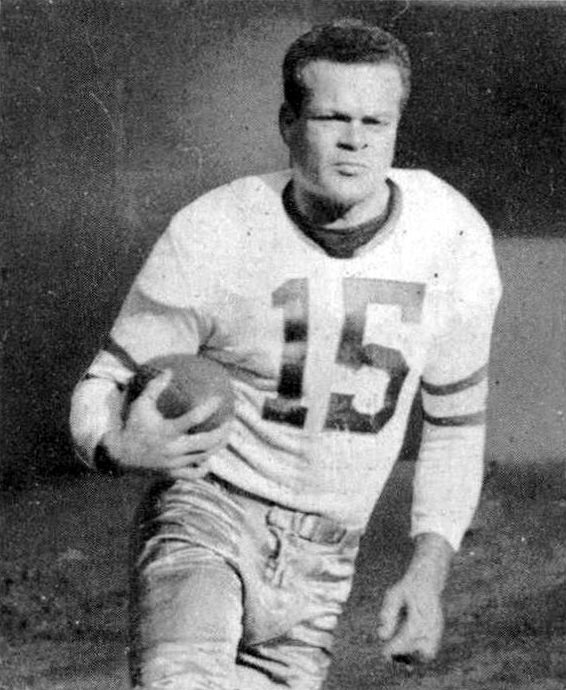
Stephen Wood Van Buren (December 28, 1920 − August 23, 2012) was a Honduran-American professional football halfback who played for the Philadelphia Eagles of the National Football League (NFL) from 1944 to 1951. Regarded as a powerful and punishing runner with excellent speed, he won four NFL rushing titles through eight NFL seasons, including three straight from 1947 to 1949. At a time when teams played 12 games a year, he was the first NFL player to rush for over ten touchdowns in a season—a feat he accomplished three times—and the first to have multiple 1,000-yard rushing seasons. When he retired, he held the NFL career records for rushing attempts, rushing yards, and rushing touchdowns.
Van Buren played college football for the LSU Tigers, where he led the NCAA in scoring in his senior season. After leading LSU to victory in the 1944 Orange Bowl, he was selected by the Eagles with the fifth overall pick of the 1944 NFL draft. Van Buren acquired many nicknames over his career in reference to his running style, including "Wham Bam", "Moving Van" and "Supersonic Steve". He was the driving force for the Eagles in the team's back-to-back NFL championships in 1948 and 1949; he scored the only touchdown of the 1948 NFL Championship Game against the Chicago Cardinals, and in the next year's championship game against the Los Angeles Rams he set postseason records with 31 carries and 196 rushing yards.
After his playing career, Van Buren coached in minor league football, winning an Atlantic Coast Football League (ACFL) championship with the Newark Bears in 1963. He was elected to the Pro Football Hall of Fame in 1965. Van Buren is a member of the NFL 1940s All-Decade Team, the NFL 75th Anniversary All-Time Team and the NFL 100th Anniversary All-Time Team. Considered one of the greatest players in Eagles franchise history, his number 15 jersey is retired by the team, and he is enshrined in the Philadelphia Eagles Hall of Fame and the Philadelphia Sports Hall of Fame. For his college career, he was inducted into the Louisiana State University Athletic Hall of Fame in 1944 and the Louisiana Sports Hall of Fame in 1961.
Born in La Ceiba, Honduras, to an American father and a mother of Spanish heritage, Stephen Wood Van Buren was orphaned at age ten and was sent to live with relatives in New Orleans, Louisiana. There he attended Warren Easton High School, and tried out for the football team originally as a sophomore, but did not make it. Later that year he dropped out of high school and went to work in an iron foundry. He returned to high school two years later and made the team as an end his senior year. He played well enough that season to earn an athletic scholarship to Louisiana State University (LSU) in Baton Rouge.
Playing for the LSU Tigers football team, Van Buren was used primarily for blocking until his senior season, when head coach Bernie Moore moved him to tailback because of a lack of players due to World War II conscription. Van Buren received a class IV-F exemption due to an eye defect, so he was able to avoid conscription. "He probably was the greatest running back in Southeastern Conference history," Moore recalled, "and I used him as a blocking back until his last year. The folks in Baton Rouge never let me forget that."
He began the 1943 season by scoring four touchdowns in a 34–27 win over Georgia, including the game-winning touchdown with less than two minutes to play. His final college game was the 1944 Orange Bowl against Texas A&M. Despite A&M coach Homer Norton devising a game-plan specifically to stop him, Van Buren was responsible for all of his team's points, as he ran for two touchdowns, threw for one more, and kicked LSU's only successful extra point attempt in the 19–14 victory. He finished the season with 847 yards rushing and 16 touchdowns. He also completed 13 of 36 passing attempts for 160 yards. His 98 points scored (111 including the bowl game) led the nation. After the season, the Associated Press named Van Buren to its All-Southeastern Conference first team.
While still enrolled at LSU, Van Buren was drafted into the National Football League by the Philadelphia Eagles with the fifth overall pick of the 1944 NFL draft. A month later, on May 19 he resigned from the university due to an eye infection that had been bothering him since the Orange Bowl game. The Eagles gave Van Buren a $4,000 contract with no signing bonus. But Van Buren, modest to a fault, took three weeks to sign the contract because he did not feel he was good enough to play professionally. He played as a running back and return specialist in the NFL for eight seasons, all of them with the Eagles. He spent the first seven of them under head coach Earle "Greasy" Neale, who dubbed Van Buren "the best halfback in modern times."
Van Buren played in nine games during his first season with the Eagles, rushing for 444 yards as a running back and recording five interceptions on defense as a defensive back. His first NFL return touchdown came in the third game of the season, on a 55-yard punt return in the second quarter of a 38–0 shutout win against the Boston Yanks. Three games later, he returned a kickoff 97 yards for a touchdown against the New York Giants, which was the longest kickoff return by any player that season. His 15.3 yards per punt return also led the league. Van Buren was named to the Associated Press's All-Pro first team following the season, the only rookie so named for 1944.
Hub AI
Steve Van Buren AI simulator
(@Steve Van Buren_simulator)
Steve Van Buren
Stephen Wood Van Buren (December 28, 1920 − August 23, 2012) was a Honduran-American professional football halfback who played for the Philadelphia Eagles of the National Football League (NFL) from 1944 to 1951. Regarded as a powerful and punishing runner with excellent speed, he won four NFL rushing titles through eight NFL seasons, including three straight from 1947 to 1949. At a time when teams played 12 games a year, he was the first NFL player to rush for over ten touchdowns in a season—a feat he accomplished three times—and the first to have multiple 1,000-yard rushing seasons. When he retired, he held the NFL career records for rushing attempts, rushing yards, and rushing touchdowns.
Van Buren played college football for the LSU Tigers, where he led the NCAA in scoring in his senior season. After leading LSU to victory in the 1944 Orange Bowl, he was selected by the Eagles with the fifth overall pick of the 1944 NFL draft. Van Buren acquired many nicknames over his career in reference to his running style, including "Wham Bam", "Moving Van" and "Supersonic Steve". He was the driving force for the Eagles in the team's back-to-back NFL championships in 1948 and 1949; he scored the only touchdown of the 1948 NFL Championship Game against the Chicago Cardinals, and in the next year's championship game against the Los Angeles Rams he set postseason records with 31 carries and 196 rushing yards.
After his playing career, Van Buren coached in minor league football, winning an Atlantic Coast Football League (ACFL) championship with the Newark Bears in 1963. He was elected to the Pro Football Hall of Fame in 1965. Van Buren is a member of the NFL 1940s All-Decade Team, the NFL 75th Anniversary All-Time Team and the NFL 100th Anniversary All-Time Team. Considered one of the greatest players in Eagles franchise history, his number 15 jersey is retired by the team, and he is enshrined in the Philadelphia Eagles Hall of Fame and the Philadelphia Sports Hall of Fame. For his college career, he was inducted into the Louisiana State University Athletic Hall of Fame in 1944 and the Louisiana Sports Hall of Fame in 1961.
Born in La Ceiba, Honduras, to an American father and a mother of Spanish heritage, Stephen Wood Van Buren was orphaned at age ten and was sent to live with relatives in New Orleans, Louisiana. There he attended Warren Easton High School, and tried out for the football team originally as a sophomore, but did not make it. Later that year he dropped out of high school and went to work in an iron foundry. He returned to high school two years later and made the team as an end his senior year. He played well enough that season to earn an athletic scholarship to Louisiana State University (LSU) in Baton Rouge.
Playing for the LSU Tigers football team, Van Buren was used primarily for blocking until his senior season, when head coach Bernie Moore moved him to tailback because of a lack of players due to World War II conscription. Van Buren received a class IV-F exemption due to an eye defect, so he was able to avoid conscription. "He probably was the greatest running back in Southeastern Conference history," Moore recalled, "and I used him as a blocking back until his last year. The folks in Baton Rouge never let me forget that."
He began the 1943 season by scoring four touchdowns in a 34–27 win over Georgia, including the game-winning touchdown with less than two minutes to play. His final college game was the 1944 Orange Bowl against Texas A&M. Despite A&M coach Homer Norton devising a game-plan specifically to stop him, Van Buren was responsible for all of his team's points, as he ran for two touchdowns, threw for one more, and kicked LSU's only successful extra point attempt in the 19–14 victory. He finished the season with 847 yards rushing and 16 touchdowns. He also completed 13 of 36 passing attempts for 160 yards. His 98 points scored (111 including the bowl game) led the nation. After the season, the Associated Press named Van Buren to its All-Southeastern Conference first team.
While still enrolled at LSU, Van Buren was drafted into the National Football League by the Philadelphia Eagles with the fifth overall pick of the 1944 NFL draft. A month later, on May 19 he resigned from the university due to an eye infection that had been bothering him since the Orange Bowl game. The Eagles gave Van Buren a $4,000 contract with no signing bonus. But Van Buren, modest to a fault, took three weeks to sign the contract because he did not feel he was good enough to play professionally. He played as a running back and return specialist in the NFL for eight seasons, all of them with the Eagles. He spent the first seven of them under head coach Earle "Greasy" Neale, who dubbed Van Buren "the best halfback in modern times."
Van Buren played in nine games during his first season with the Eagles, rushing for 444 yards as a running back and recording five interceptions on defense as a defensive back. His first NFL return touchdown came in the third game of the season, on a 55-yard punt return in the second quarter of a 38–0 shutout win against the Boston Yanks. Three games later, he returned a kickoff 97 yards for a touchdown against the New York Giants, which was the longest kickoff return by any player that season. His 15.3 yards per punt return also led the league. Van Buren was named to the Associated Press's All-Pro first team following the season, the only rookie so named for 1944.
Recent media