
Recent from talks
Stratocumulus cloud
Knowledge base stats:
Talk channels stats:
Members stats:
Stratocumulus cloud
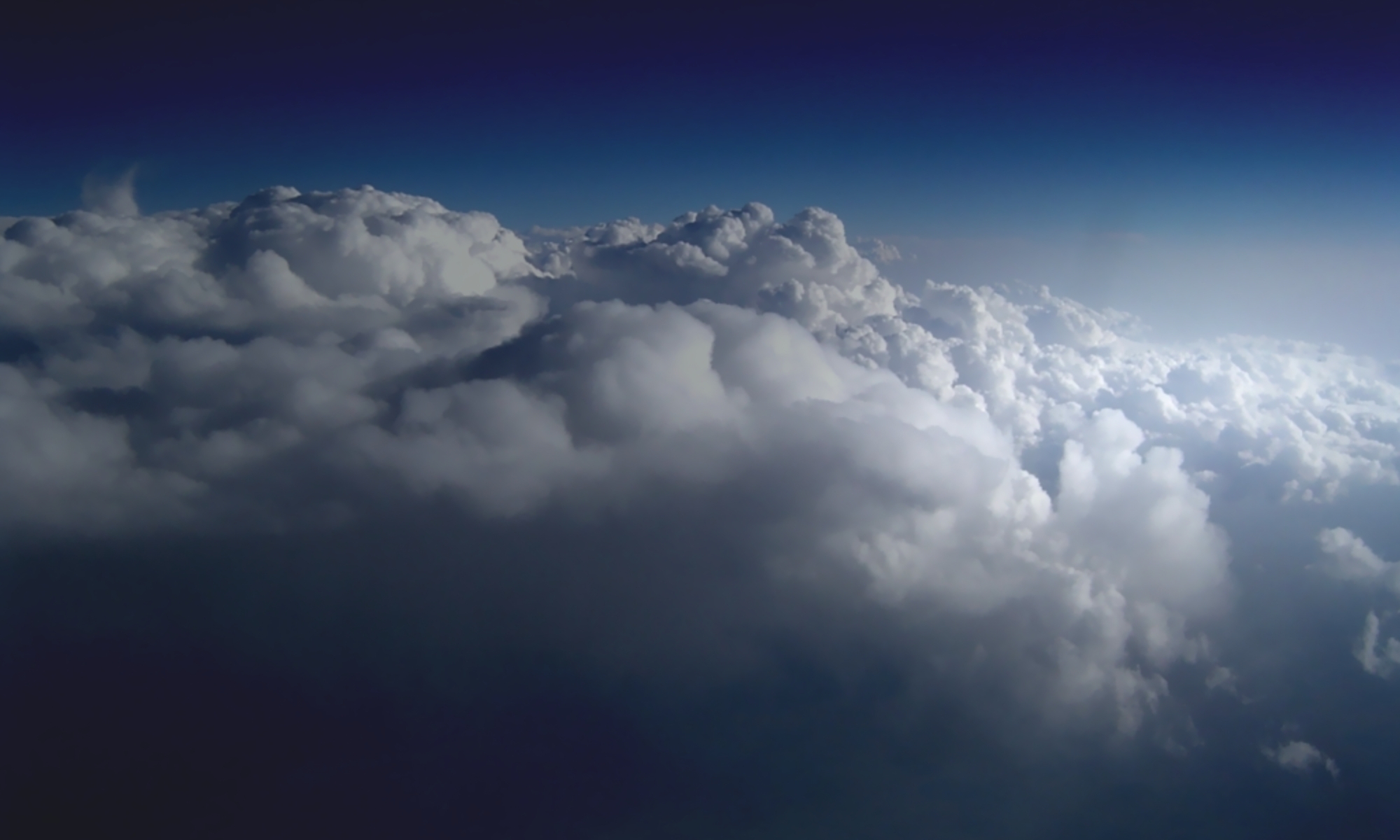
A stratocumulus cloud Kämtz 1840], occasionally called a cumulostratus, belongs to a genus-type of clouds characterized by large dark, rounded masses, usually in groups, lines, or waves, the individual elements being larger than those in altocumulus, and the whole being at a lower height, usually below 2,000 metres (6,600 ft). Weak convective currents create shallow cloud layers (see also: sea of clouds) because of drier, stable air above preventing continued vertical development. Historically, in English, this type of cloud has been referred to as a twain cloud for being a combination of two types of clouds.

Stratocumulus clouds are rounded clumps or patches of white to dark gray clouds that normally form in groups. The individual cloud elements, which cover more than 5 degrees of arc each, can connect with each other and are sometimes arranged in a regular pattern.
Vast areas of subtropical and polar oceans are covered with massive sheets of stratocumulus. These may organize into distinctive patterns which are currently under active study. In subtropics, they cover the edges of the horse latitude climatological highs, and reduce the amount of solar energy absorbed in the ocean. When these drift over land the summer heat or winter cold is reduced. 'Dull weather' is a common expression incorporated with overcast stratocumulus days, which usually occur either in a warm sector between a warm and cold front in a depression, or in an area of high pressure, in the latter case, sometimes persisting over a specific area for several days. If the air over land is moist and hot enough, stratocumulus may develop to various cumulus clouds, or, more commonly, the sheet of stratocumulus may become thick enough to produce some light rain. On drier areas they quickly dissipate over land, resembling cumulus humilis. This often occurs in late morning in areas under anticyclonic weather, the stratocumulus breaking up under the sun's heat and often reforming again by evening as the heat of the sun decreases again.
Most often, stratocumulus produce no precipitation, and when they do, it is generally only light rain or snow. However, these clouds are often seen at either the front or tail end of worse weather, so they may indicate storms to come, in the form of thunderheads or gusty winds. They are also often seen underneath the cirrostratus and altostratus sheets that often precede a warm front, as these higher clouds decrease the sun's heat and therefore convection, causing any cumulus clouds to spread out into stratocumulus clouds.
Stratocumulus clouds are similar in appearance to altocumulus and can be mistaken for such. A simple test to distinguish these is to compare the size of individual masses or rolls: when pointing one's hand in the direction of the cloud, if the cloud is about the size of the thumb, it is altocumulus; if it is the size of one's fist, it is stratocumulus. This often does not apply when stratocumulus is of a broken, fractus form, when it may appear as small as altocumulus.
Stratocumulus clouds are the main type of cloud that can produce crepuscular rays. Thin stratocumulus clouds are also often the cause of corona effects around the Moon at night. All stratocumulus subtypes are coded CL5 except when formed from free convective mother clouds (CL4) or when formed separately from co-existing (CL8).
Stratocumulus clouds usually form from the rising and breakup of a stratus cloud. They can also form from altostratus and nimbostratus clouds, either as evaporating precipitation condenses into a cloud or as the nimbostratus cloud itself thins and breaks up. If a cumulus cloud becomes flattened (for example, by wind shear or temperature inversion), it too can become a stratocumulus cloud.
Stratocumulus Stratiformis are extensive flat but slightly lumpy sheets that show only minimal convective activity.
Hub AI
Stratocumulus cloud AI simulator
(@Stratocumulus cloud_simulator)
Stratocumulus cloud
A stratocumulus cloud Kämtz 1840], occasionally called a cumulostratus, belongs to a genus-type of clouds characterized by large dark, rounded masses, usually in groups, lines, or waves, the individual elements being larger than those in altocumulus, and the whole being at a lower height, usually below 2,000 metres (6,600 ft). Weak convective currents create shallow cloud layers (see also: sea of clouds) because of drier, stable air above preventing continued vertical development. Historically, in English, this type of cloud has been referred to as a twain cloud for being a combination of two types of clouds.
Stratocumulus clouds are rounded clumps or patches of white to dark gray clouds that normally form in groups. The individual cloud elements, which cover more than 5 degrees of arc each, can connect with each other and are sometimes arranged in a regular pattern.
Vast areas of subtropical and polar oceans are covered with massive sheets of stratocumulus. These may organize into distinctive patterns which are currently under active study. In subtropics, they cover the edges of the horse latitude climatological highs, and reduce the amount of solar energy absorbed in the ocean. When these drift over land the summer heat or winter cold is reduced. 'Dull weather' is a common expression incorporated with overcast stratocumulus days, which usually occur either in a warm sector between a warm and cold front in a depression, or in an area of high pressure, in the latter case, sometimes persisting over a specific area for several days. If the air over land is moist and hot enough, stratocumulus may develop to various cumulus clouds, or, more commonly, the sheet of stratocumulus may become thick enough to produce some light rain. On drier areas they quickly dissipate over land, resembling cumulus humilis. This often occurs in late morning in areas under anticyclonic weather, the stratocumulus breaking up under the sun's heat and often reforming again by evening as the heat of the sun decreases again.
Most often, stratocumulus produce no precipitation, and when they do, it is generally only light rain or snow. However, these clouds are often seen at either the front or tail end of worse weather, so they may indicate storms to come, in the form of thunderheads or gusty winds. They are also often seen underneath the cirrostratus and altostratus sheets that often precede a warm front, as these higher clouds decrease the sun's heat and therefore convection, causing any cumulus clouds to spread out into stratocumulus clouds.
Stratocumulus clouds are similar in appearance to altocumulus and can be mistaken for such. A simple test to distinguish these is to compare the size of individual masses or rolls: when pointing one's hand in the direction of the cloud, if the cloud is about the size of the thumb, it is altocumulus; if it is the size of one's fist, it is stratocumulus. This often does not apply when stratocumulus is of a broken, fractus form, when it may appear as small as altocumulus.
Stratocumulus clouds are the main type of cloud that can produce crepuscular rays. Thin stratocumulus clouds are also often the cause of corona effects around the Moon at night. All stratocumulus subtypes are coded CL5 except when formed from free convective mother clouds (CL4) or when formed separately from co-existing (CL8).
Stratocumulus clouds usually form from the rising and breakup of a stratus cloud. They can also form from altostratus and nimbostratus clouds, either as evaporating precipitation condenses into a cloud or as the nimbostratus cloud itself thins and breaks up. If a cumulus cloud becomes flattened (for example, by wind shear or temperature inversion), it too can become a stratocumulus cloud.
Stratocumulus Stratiformis are extensive flat but slightly lumpy sheets that show only minimal convective activity.
Recent media