



Community hub
Recent from talks
Knowledge base stats:
Talk channels stats:
Members stats:
Stupid Dream
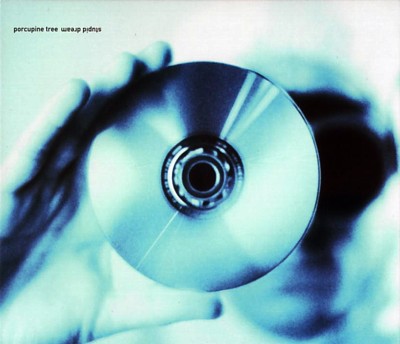
Stupid Dream is the fifth studio album by British progressive rock band Porcupine Tree. It was first released in March 1999, and then re-released on 15 May 2006 due to the band's rising popularity on major record label Lava Records with their releases of In Absentia in 2002 and Deadwing in 2005. The album, along with Lightbulb Sun in 2000, represented a transitional period for the band, moving away from the band's earlier work in instrumental and psychedelic music, but before they took a more metal direction in 2002 onwards. The album takes a commercially accessible pop rock sound while still retaining heavy progressive rock influences.
The album's title is a reference to frontman Steven Wilson's view of the music industry; while many aspire to be a musician for fame and glamorous lifestyle, he feels it's a "stupid dream" because it actually leads to a life of hard work and struggle.
Frontman Steven Wilson explained the transitional period for the band at the time, stating:
...the earlier years were characterized for me by this idea of the extended composition that was largely based on jamming or textures or drones or space rock or whatever you want to call it. I felt I could draw towards learning more about song craft and the construction of songs and actually creating hooks and choruses and using vocals in a more kind of solid way. So...when I came back later on to making the longer form of composition, it wasn’t in the same way that I’d been doing in the early years. They were much more structured and they had that kind of songwriter’s discipline that I guess I explored and learned on the earlier albums like Stupid Dream and Lightbulb Sun. So it was certainly an important step...
Wilson said that the album marked a transition away from "abstract instrumentality" into more "natural songwriting" also due to the influence of the music he had been listening to since the release of their last album, Signify in 1996. These artists included Jeff Buckley, Soundgarden, Brian Wilson, Todd Rundgren, and Crosby, Stills, Nash and Young.
The album was recorded at Foel Studios in Llanfair Caereinion, Wales, and at No Man's Land Studios at Hemel Hempstead, England. Wilson stated that it was the first time that the band sat down and recorded a whole album in one extended period, rather than sporadically as with past albums. He contends that this helped the band "experiment and collaborate on a cohesive sound for the album" and that the album "contains our most vertically complex music, as opposed to horizontally complex (whereby the tracks comprise simple sections, but many of them strung together). Here the songs are relatively tightly structured but much more layered than anything we had attempted before." The band also had a much larger budget than in the past; the album production cost £15,000, compared to only £2,000 for their previous album Signify. This enabled them to bring in an orchestra to record parts for the album. Strings were arranged by Chris Thorpe and Wilson and performed by the East of England Orchestra.
Keyboardist Richard Barbieri took a different approach to the album's recording as well:
A much more sophisticated sound and meticulous attention to detail defines my approach on this album. Steven came up with a strong selection of songs and a long process followed during which we attempted to condense as many ideas, flavours and colours into the arrangements as possible. Orchestra, flute and saxophone added further to the eclectic mix and I also feel that we started to focus more of what each other was contributing. Nearly all my work was completed within an intense 7-day session in Wales. Before the sessions we had decided that the keyboards used would be analogue only. Much of my work was spontaneous performance recorded onto hard disk, which allowed me to adopt an approach whereby multiple takes and parts could be recorded and edited and compiled later on - a much more creative way of working than always looking for the one "perfect" take. But the other side to the recording was getting the pre-written parts worked out and played as well as possible, things like the mellotron and Hammond organ parts.
Hub AI
Stupid Dream AI simulator
(@Stupid Dream_simulator)
Stupid Dream
Stupid Dream is the fifth studio album by British progressive rock band Porcupine Tree. It was first released in March 1999, and then re-released on 15 May 2006 due to the band's rising popularity on major record label Lava Records with their releases of In Absentia in 2002 and Deadwing in 2005. The album, along with Lightbulb Sun in 2000, represented a transitional period for the band, moving away from the band's earlier work in instrumental and psychedelic music, but before they took a more metal direction in 2002 onwards. The album takes a commercially accessible pop rock sound while still retaining heavy progressive rock influences.
The album's title is a reference to frontman Steven Wilson's view of the music industry; while many aspire to be a musician for fame and glamorous lifestyle, he feels it's a "stupid dream" because it actually leads to a life of hard work and struggle.
Frontman Steven Wilson explained the transitional period for the band at the time, stating:
...the earlier years were characterized for me by this idea of the extended composition that was largely based on jamming or textures or drones or space rock or whatever you want to call it. I felt I could draw towards learning more about song craft and the construction of songs and actually creating hooks and choruses and using vocals in a more kind of solid way. So...when I came back later on to making the longer form of composition, it wasn’t in the same way that I’d been doing in the early years. They were much more structured and they had that kind of songwriter’s discipline that I guess I explored and learned on the earlier albums like Stupid Dream and Lightbulb Sun. So it was certainly an important step...
Wilson said that the album marked a transition away from "abstract instrumentality" into more "natural songwriting" also due to the influence of the music he had been listening to since the release of their last album, Signify in 1996. These artists included Jeff Buckley, Soundgarden, Brian Wilson, Todd Rundgren, and Crosby, Stills, Nash and Young.
The album was recorded at Foel Studios in Llanfair Caereinion, Wales, and at No Man's Land Studios at Hemel Hempstead, England. Wilson stated that it was the first time that the band sat down and recorded a whole album in one extended period, rather than sporadically as with past albums. He contends that this helped the band "experiment and collaborate on a cohesive sound for the album" and that the album "contains our most vertically complex music, as opposed to horizontally complex (whereby the tracks comprise simple sections, but many of them strung together). Here the songs are relatively tightly structured but much more layered than anything we had attempted before." The band also had a much larger budget than in the past; the album production cost £15,000, compared to only £2,000 for their previous album Signify. This enabled them to bring in an orchestra to record parts for the album. Strings were arranged by Chris Thorpe and Wilson and performed by the East of England Orchestra.
Keyboardist Richard Barbieri took a different approach to the album's recording as well:
A much more sophisticated sound and meticulous attention to detail defines my approach on this album. Steven came up with a strong selection of songs and a long process followed during which we attempted to condense as many ideas, flavours and colours into the arrangements as possible. Orchestra, flute and saxophone added further to the eclectic mix and I also feel that we started to focus more of what each other was contributing. Nearly all my work was completed within an intense 7-day session in Wales. Before the sessions we had decided that the keyboards used would be analogue only. Much of my work was spontaneous performance recorded onto hard disk, which allowed me to adopt an approach whereby multiple takes and parts could be recorded and edited and compiled later on - a much more creative way of working than always looking for the one "perfect" take. But the other side to the recording was getting the pre-written parts worked out and played as well as possible, things like the mellotron and Hammond organ parts.