Hubbry Logo
Sullivan WalkerSullivan WalkerMain
Open search
Sullivan Walker
Community hub
Sullivan Walker
logo
8 pages, 0 posts
0 subscribers
Be the first to start a discussion here.
Sullivan Walker
Sullivan Walker
from Wikipedia

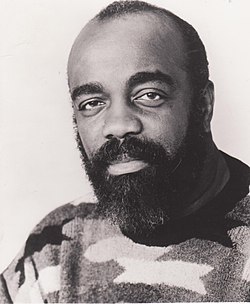
Sullivan Walker (November 20, 1946 – February 20, 2012) was a Trinidad and Tobago actor who played numerous small and recurring roles on television shows from 1980 until 2005. Walker migrated to New York from Trinidad and Tobago in 1969 and became an actor, writer, director and teacher.

Key Information

Early life

[edit]

Walker was born in Laventille, Trinidad and Tobago, on November 20, 1946.[1] He was raised in Broadway in the city of San Fernando.[1] He initially began a career as a teacher at St. Paul's Anglican School in San Fernando.[1]

Professional work

[edit]

Walker acted in television shows, on The Cosby Show from 1988 to 1991 portraying Cliff Huxtable's physician friend, Dr. James Harmon.[2] He guest-starred in episodes of The Pretender (1999), The Sentinel (1997), and Law & Order: Special Victims Unit (2004). He also played a bit part in several movies, including Crocodile Dundee (1986). His most significant role was in the 1994–95 show Earth 2, where he appeared in nearly every episode as Yale, a cybernetic advisor to Devon Adair (Debrah Farentino) and tutor to her son, Uly. His final role was in the 2005 movie Get Rich or Die Tryin'.

Outside of film and television Walker was also a Broadway actor, acting in August Wilson's Two Trains Running.[2] Toward the end of his life, he endeavored to found a school/workshops for Caribbean actors in New York to succeed in the American film and television markets.[2]

Death

[edit]

Walker died of a heart attack on February 20, 2012, in his home in Los Angeles, California, three months after his 65th birthday. Walker is survived by his wife, Carol Mark-Walker, and his daughter, Keela Walker. His remains were cremated.

Filmography

[edit]
Year Title Role Notes
1980 The Exterminator Drug Pusher
1986 Crocodile Dundee Tall Man
1988-1991 The Cosby Show Dr. James Harmon 4 episodes
1989 Runaway K.C. TV movie
1989 Misplaced
1993 Where I Live James St. Martin 21 episodes
1993 The Firm Barry Abanks
1993 The Fresh Prince of Bel-Air Reverend Boyd Episode: "'Twas the Night Before Christening"
1994-1995 Earth 2 Yale 21 episodes
1996 Lush Life Hal Gardner 7 episodes
1996 Living Single Dr. Booker Burghardt Mountebank Episode: "Doctor in the House"
1997 On the Edge of Innocence George Beaumont TV movie
1997 The Sentinel Watson Episode: "Pennies from Heaven"
1999 The Pretender Mutumbo Episode: "Donoterase: Part 2"
2000 The Jamie Foxx Show Homeless Man Episode: "Musical Chairs "
2004 Law & Order: Special Victims Unit Martin Bosa Episode: "Ritual"
2005 Get Rich or Die Tryin' Grandpa

References

[edit]
[edit]
Revisions and contributorsEdit on WikipediaRead on Wikipedia
from Grokipedia
Sullivan Walker (November 20, 1946 – February 20, 2012) was a Trinidadian-American actor, director, playwright, and educator renowned for portraying diverse characters in American television and film while championing Caribbean culture through his stage works and advocacy. Born in Success Village, Laventille, Trinidad and Tobago, Walker began his career as a teacher at St. Paul’s Anglican School in San Fernando before pursuing acting with the San Fernando Drama Guild, where he performed in productions such as Shakespeare's Romeo and Juliet and Edward Albee's The Zoo Story. He immigrated to New York City in 1969, settling in Brooklyn, and debuted professionally in the United States with a role in A Season in the Congo at the Harlem School of Arts, earning $75 per week. Over the next three decades, from 1980 to 2012, he amassed credits in over 50 television episodes and films, including recurring roles as Dr. James Harmon on The Cosby Show (1988–1991) and Yale on Earth 2 (1994–1995), as well as guest appearances on Law & Order: Special Victims Unit (2004) and The Fresh Prince of Bel-Air (1993). His filmography featured supporting parts in notable movies such as Crocodile Dundee (1986), The Firm (1993), and Get Rich or Die Tryin' (2005). Beyond acting, Walker was a prolific playwright and director focused on Caribbean themes, authoring and staging plays like Caribbean Woman (which he produced in Trinidad in June 2011), The Journey, and Boy Days, which highlighted nuances of Caribbean language, social life, and culture to bridge audiences. He appeared on Broadway in August Wilson's Two Trains Running and the national tour of Broadway's Athol Fugard's Master Harold... and the Boys, and he conducted workshops titled "How to Make It in Movies, Television and Theater with a Caribbean Accent" to mentor aspiring performers. As an educator and visionary, Walker advocated for a professional acting academy in Trinidad and Tobago to elevate local arts, and he supported Caribbean theater initiatives during periods of limited acting opportunities in New York by working as a writer and director. He was married to Carol Mark-Walker for six years until his death of a heart attack at his home in Los Angeles, California, and is survived by his wife and daughter Keela Walker. His legacy endures through posthumous publications and stagings of his works, aimed at preserving Caribbean narratives for global audiences.

Early life

Childhood and education in Trinidad

Sullivan Walker was born on November 20, 1946, in Success Village, a neighborhood in Laventille, an urban area of Port of Spain, Trinidad and Tobago. Laventille, during Walker's early years, was characterized by working-class communities amid the socio-economic challenges of British colonial rule, which persisted until Trinidad and Tobago's independence in 1962. Walker's upbringing involved a move from Laventille to Broadway in San Fernando, where he spent much of his childhood in the hills with his grandparents, Adam and Clementina Deacon, shaping his early exposure to rural and community life in southern Trinidad. This family environment, rooted in post-colonial transitions, emphasized values like education as a pathway to opportunity in a nation navigating economic and social shifts following independence. At age nine, Walker made his initial foray into performance with a role in a local comedy skit, hinting at emerging interests amid his formative years. Walker pursued formal education that led to a teaching career, reflecting the era's focus on public service and intellectual development in Trinidad's evolving society. He trained as an educator and took up his initial professional role in the 1960s at St. Paul’s Anglican School in San Fernando, where he taught and contributed to local youth development. This position marked the beginning of his adult engagement with education in a community still influenced by colonial legacies and emerging national identity.

Early performing interests and migration to New York

During the 1960s, Sullivan Walker developed his early interest in performing through involvement in local amateur theater in Trinidad. He joined the San Fernando Drama Guild, an amateur troupe, where he performed in productions such as Shakespeare's Romeo and Juliet and Edward Albee's The Zoo Story under the direction of James Lee Wah, who had spotted his talent. These experiences provided Walker with foundational stage training and exposure to dramatic works, fostering his passion for acting amid a vibrant local arts scene. A pivotal moment came when Walker placed third in Trinidad's "Scouting for Talent" competition in the 1960s, performing a monologue that earned him a prize trip to New York City. Hosted by impresario Holly Betaudier in Port of Spain, the contest highlighted his emerging skills and offered a glimpse of international opportunities, though he initially felt disappointed with the placement. This achievement, combined with his growing dissatisfaction with limited prospects in Trinidad on a schoolteacher's salary, motivated his decision to relocate. In August 1969, at age 22, Walker migrated from Trinidad to New York, settling in Brooklyn to pursue greater opportunities in the arts and further his education in performance. Born in 1946 in Success Village, Laventille, and raised partly in San Fernando, he sought to "be someone" by using the world as his classroom, driven by the talent contest win and a vision for professional growth. Upon arrival, Walker faced significant challenges adapting to life in New York, including financial hardships and the competitive acting landscape. He balanced pursuits in acting by taking teaching positions while working odd jobs like in a mailroom to make ends meet. These early years involved rejections and efforts to secure a union card, all while navigating cultural adjustments and building connections in the industry.

Acting career

Stage and theater work

Sullivan Walker's stage career gained momentum after his migration to New York in 1969, providing access to diverse theater opportunities in the city's vibrant scene. During the 1980s and 1990s, Walker was actively involved in Caribbean-themed productions in New York theaters, emphasizing cultural narratives from the region. A notable example is his performance in the 1985 off-Broadway production of Two Can Play by Jamaican playwright Trevor Rhone, presented by the Negro Ensemble Company at Theatre Four, where he portrayed Jim Thomas, a character navigating immigration and family dynamics in a Jamaican context. He also took on the lead role of Sam in the national tour of Athol Fugard's Master Harold... and the Boys, a dramatic exploration of apartheid-era South Africa that resonated with themes of racial tension relevant to Walker's own experiences as a Trinidadian performer. These roles highlighted his commitment to portraying complex characters from marginalized communities on stage. Walker's Broadway debut came in the 1992 production of August Wilson's Two Trains Running at the Walter Kerr Theatre, where he played the poignant role of Hambone, a street vendor whose unyielding pursuit of a long-overdue debt underscores the play's themes of dignity and economic struggle in 1960s Pittsburgh.

Television roles

Sullivan Walker's transition to television occurred in the late 1980s, building on his extensive stage background that had developed his commanding presence and dramatic timing for the small screen. While performing in a production of A Doll's House in Atlanta in 1986, he received an offer to play Cliff Huxtable's best friend on The Cosby Show, but contractual commitments prevented him from accepting; the casting team later contacted him again for opportunities that marked his entry into episodic television. Walker's first notable television role was the recurring part of Dr. James Harmon on The Cosby Show from 1988 to 1991, where he appeared in four episodes as Cliff Huxtable's trusted physician friend, often providing medical advice and comic relief in family-centric storylines. This role highlighted his ability to portray warm, authoritative figures, drawing from his Trinidadian roots to infuse the character with authentic Caribbean flair. In 1993, he made a guest appearance as Reverend Boyd on The Fresh Prince of Bel-Air in the episode "'Twas the Night Before Christening," where his character officiated a family christening amid humorous holiday chaos. That same year, Walker landed a major recurring role as James St. Martin on Where I Live, appearing in 21 episodes of the sitcom. In 1994–1995, he had a recurring role as Yale, the cybernetic advisor and former convict, on Earth 2, appearing in 21 episodes of the science fiction series. As Uly's tutor and Devon Adair's key confidant, Yale's arc involved navigating moral dilemmas in a colony ship bound for a new planet, offering strategic guidance during crises like environmental threats and internal conflicts. In 1996, Walker appeared in 7 episodes as Hal Gardner on the sitcom Lush Life. Throughout the 1990s and early 2000s, Walker continued with guest spots that showcased his versatility in supporting roles. He portrayed Watson in a 1997 episode of The Sentinel, assisting in a case involving tribal artifacts and police intrigue. In 1999, he appeared as Mutumbo on The Pretender, contributing to a single-episode storyline about deception and identity in a psychological thriller context. His television work extended to a 2000 guest role as a Homeless Man on The Jamie Foxx Show in the episode "Musical Chairs," adding depth to a comedic plot about workplace rivalries. Finally, in 2004, Walker played Martin Bosa on Law & Order: Special Victims Unit in the episode "Ritual," depicting a figure entangled in a ritualistic crime investigation that explored cultural and criminal intersections. These appearances underscored his range across genres, from sitcoms to procedurals.

Film roles

Sullivan Walker's film career began with small supporting roles in the 1980s, building on his New York theater background. His early gritty urban role was as the Drug Pusher in The Exterminator (1980). His breakout film appearance came in 1986 as the Tall Man in Crocodile Dundee, a comedy-adventure where he portrayed a minor antagonist figure in a key urban confrontation scene, contributing to the film's cultural clash narrative between Australian outback life and New York City. This role highlighted his physical presence and ability to embody authoritative yet understated characters, paving the way for more prominent supporting parts in Hollywood productions. By the early 1990s, Walker's film roles evolved toward more nuanced authority figures in thrillers and dramas. In The Firm (1993), he played Barry Abanks, the charter boat captain who aids the protagonist Mitch McDeere (Tom Cruise) by providing crucial information about a suspicious firm-related incident during an investigation into corruption and murder. Abanks' interaction with McDeere underscores themes of trust and escape in the legal thriller, showcasing Walker's skill in delivering grounded, pivotal support without overshadowing the lead. Walker's later film work continued this progression into mentorship-oriented roles within action-dramas. His portrayal of Grandpa in Get Rich or Die Tryin' (2005), the semi-autobiographical story of rapper 50 Cent, depicted a wise elder who raises and guides the young protagonist Marcus through a life of crime and redemption in urban America. This character serves as a moral anchor, offering paternal advice amid the film's exploration of poverty, violence, and aspiration. Overall, Walker's filmography reflects a shift from peripheral characters in comedies and action flicks to empathetic authority figures in dramatic narratives, spanning action, thriller, and coming-of-age genres until his final roles around 2005.

Other contributions

Writing and directing

Sullivan Walker was a prolific playwright whose works centered on Caribbean identity, migration, and cultural heritage, often drawing from his Trinidadian roots and personal experiences. His plays, including Two Soldiers at a Crossroads, Requiem for a Pan Mastah, Mother and Daughter, Survival, Eight O'Clock Caribbean Time, Caribbean Woman, Boy Days, and De Take-Over in Grenada, explored themes of Trinidadian diaspora and folklore adaptations, with many premiering in New York during the 1990s through his leadership of the Caribbean Experience Theatre. As director of the Caribbean Experience Theatre, which he founded in Manhattan in the 1970s, Walker helmed numerous community theater productions in New York from the 1980s to the 2000s, focusing on amplifying Caribbean voices in American stages. His directorial efforts emphasized collaborative script development, such as adapting Trinidadian folklore and autobiographical elements into stage works like A Tribute to the Caribbean Woman, a one-man show honoring women's roles in Caribbean society. Walker's writings extended beyond theater to poetry, with his 2013 collection Caribbean Woman—a dedication to his grandmother, mother, and daughter—serving as the basis for a play he wrote, directed, and produced in Trinidad in 2011. These works have been archived in Caribbean arts collections and referenced in theater journals for their role in preserving and promoting Trinidadian narratives in the diaspora.

Teaching and workshops

Following his migration to New York in 1969, Sullivan Walker returned to teaching by establishing workshops tailored for Caribbean immigrant performers seeking success in American theater, film, and television. In the 1970s, he founded the Caribbean Experience Theatre in Manhattan, which served as a hub for these educational initiatives, including sessions held at Space 24 on East 24th Street. These workshops emphasized practical skills for navigating the industry while preserving cultural authenticity, such as retaining accents as a strength rather than a barrier—a lesson drawn from Walker's own experiences as a Trinidadian immigrant. A signature program, titled "How to Make It in Movies, Theatre and Television—Even With an Accent!," provided hands-on training in acting techniques, audition preparation, and professional development, specifically addressing the challenges faced by Caribbean artists in a competitive U.S. market. Walker extended these efforts beyond New York, conducting similar workshops in California to mentor emerging talents and foster opportunities for underrepresented performers from the Caribbean diaspora. His approach integrated Trinidadian and broader Caribbean history into the curriculum, using storytelling and cultural narratives to build confidence and highlight authentic representation in performance arts. Walker's mentorship extended to young Trinidadian and Caribbean artists through personalized guidance, where he shared insights from his career to help them overcome systemic barriers in the entertainment industry. He actively supported aspiring performers by offering assistance for studies and career advancement in the United States, often drawing on his migration journey to illustrate resilience and cultural pride. Toward the end of his life, Walker sought to establish the School for Caribbean Arts and Culture in New York as a dedicated space for ongoing workshops and training in dance, theater, and literature to empower immigrant communities. His pedagogical efforts left a lasting impact on alumni, many of whom transitioned into professional roles in theater and film, crediting Walker's emphasis on cultural integration and practical mentorship for their breakthroughs in representing Caribbean narratives on global stages.

Personal life and death

Family and later years

Walker married Carol Mark-Walker, a retired middle school teacher, around 2006 after reconnecting at a chance meeting at Tony’s Health Food near Flatbush and Nostrand Avenues in Brooklyn following an earlier acquaintance. The couple shared a close partnership. Walker is survived by his daughter, Keela Walker, whose presence influenced his emphasis on family stability amid his relocations. After settling in Brooklyn, New York, upon his 1969 migration from Trinidad, the family later relocated to Los Angeles, California, in the mid-2000s to better accommodate their lifestyle while preserving cultural roots through annual returns to Trinidad for Carnival. In the 2000s, Walker's incurable optimism shaped his approach to family dynamics and community involvement, fostering a supportive home environment and participation in local workshops that aligned with his values of cultural preservation. Post-1995, he prioritized balancing professional demands with family time, often selecting opportunities that allowed proximity to Carol and Keela during transitions between coasts.

Death

Sullivan Walker died on February 20, 2012, at the age of 65, from a massive heart attack at his home in Los Angeles, California, though one source reports New York City. He was survived by his wife, Carol Mark-Walker, and their daughter, Keela Walker. Following his death, Walker's body was cremated, with his remains repatriated to Trinidad and Tobago for funeral services held on March 2, 2012, at the San Fernando Creative Arts Centre, featuring tributes through poetry, drama, music, and dance. Upon the announcement of his death, immediate tributes poured in from the theater and film communities, with figures like former Trinidadian minister and actor Ralph Maraj calling him a "remarkable person" from humble beginnings, and artistic director Albert Laveau praising his lifelong support for local theater.

Legacy

Posthumous recognition

Following Walker's death, memorial events were held in both the New York and Trinidad theater communities. In Trinidad, his funeral service took place on March 2, 2012, at the San Fernando Creative Arts Centre, featuring tributes through poetry, drama, music, and dance that reflected his artistic legacy. His daughter, Keela Walker, delivered a eulogy emphasizing his early struggles and achievements, while his widow, Carol Mark Walker, spoke of his dedication to producing the play Caribbean Woman despite limited support. Colleagues including former senator Joan Yuille-Williams praised his commitment to developing young artists, and Dawad Phillip, special adviser in the Ministry of Arts and Multiculturalism, described him as a beacon of Trinidad and Tobago's culture. In New York, where Walker had lived since 1969, his body was initially flown to Brooklyn before transport to Trinidad, and a tribute appeared in the Amsterdam News during Caribbean Heritage Month in June 2012, honoring him as a distinguished Trinidadian-American actor, director, and educator. Obituaries in Caribbean and U.S. media highlighted Walker's trailblazing role as a Trinidadian performer who bridged local theater with Hollywood, often noting his one-man plays addressing Caribbean themes and his contributions to representing Indo- and Afro-Caribbean narratives. Publications such as the Trinidad Express and Trinidad Guardian emphasized his impact on local theater practitioners, while the New York Daily News portrayed him as an optimistic playwright whose work survived through family efforts. These accounts positioned him as a pioneer for Trinidadian artists in international entertainment. Posthumous revivals of Walker's work occurred in the 2010s, including a two-day staging of his play Caribbean Woman in Trinidad shortly after his death, which received positive reviews. In 2013, his widow announced plans to preserve and distribute his Caribbean-themed plays—such as The Journey, Boy Days, and Mother and Daughter—along with an unfinished play and a children's book, through print, DVD, and potential live productions, starting with a dedicated Facebook page. These efforts aimed to extend his legacy of workshops and writings focused on Caribbean accents and stories in film, television, and theater.

Cultural impact

Sullivan Walker's pioneering efforts significantly enhanced the visibility of Trinidadian and Caribbean performers in U.S. theater and television, particularly through his founding of the Caribbean Experience Theater in Brooklyn during the 1970s, which showcased diverse Caribbean talent and drew substantial audiences by the 1980s. His one-man plays, such as Boy Days and Caribbean Woman, blended music, dance, and storytelling to authentically capture Caribbean immigrant life, resonating with diaspora communities while introducing these narratives to broader American audiences. By establishing workshops like "How to Make It in Television, Theaters and Commercials – Even if You Have an Accent," Walker provided practical guidance to aspiring Caribbean actors navigating accent-related barriers in the industry, fostering greater inclusion. Walker's contributions extended to more authentic portrayals of immigrant experiences in mainstream media, exemplified by his recurring role as Dr. James Harmon on The Cosby Show from 1988 to 1991, which highlighted professional Caribbean-American figures and helped elevate Caribbean representation on network television. Similarly, his performance as Yale in Earth 2 (1994–1995) incorporated subtle elements of cultural displacement, drawing from his own Trinidadian background to infuse roles with genuine immigrant perspectives. These portrayals challenged stereotypes by emphasizing resilience and cultural specificity, influencing how Black immigrant stories were depicted in American entertainment. Through his writings and workshops, Walker inspired subsequent generations of performers to explore cultural identity, as seen in his poetry-based play Caribbean Woman (2011), which celebrated the strength of Caribbean women and was staged posthumously in Trinidad to acclaim. His legacy in bridging Trinidadian folklore and social traditions with mainstream American storytelling is evident in works like The Journey and Mother and Daughter, which wove patois, family dynamics, and communal rituals into accessible narratives, preserved through his wife Carol Walker's efforts to publish and perform them. Media discussions, including obituaries and tributes, have highlighted his role in post-colonial theater by addressing diaspora themes of migration and identity, positioning him as a bridge between Caribbean heritage and U.S. cultural production.

References

Add your contribution
Related Hubs
User Avatar
No comments yet.