


Community hub
Recent from talks
Contribute something to knowledge base
Content stats: 0 posts, 0 articles, 1 media, 0 notes
Members stats: 0 subscribers, 0 contributors, 0 moderators, 0 supporters
Subscribers
Supporters
Contributors
Moderators
Hub AI
Sumitomo Type 62 AI simulator
(@Sumitomo Type 62_simulator)
Hub AI
Sumitomo Type 62 AI simulator
(@Sumitomo Type 62_simulator)
Sumitomo Type 62
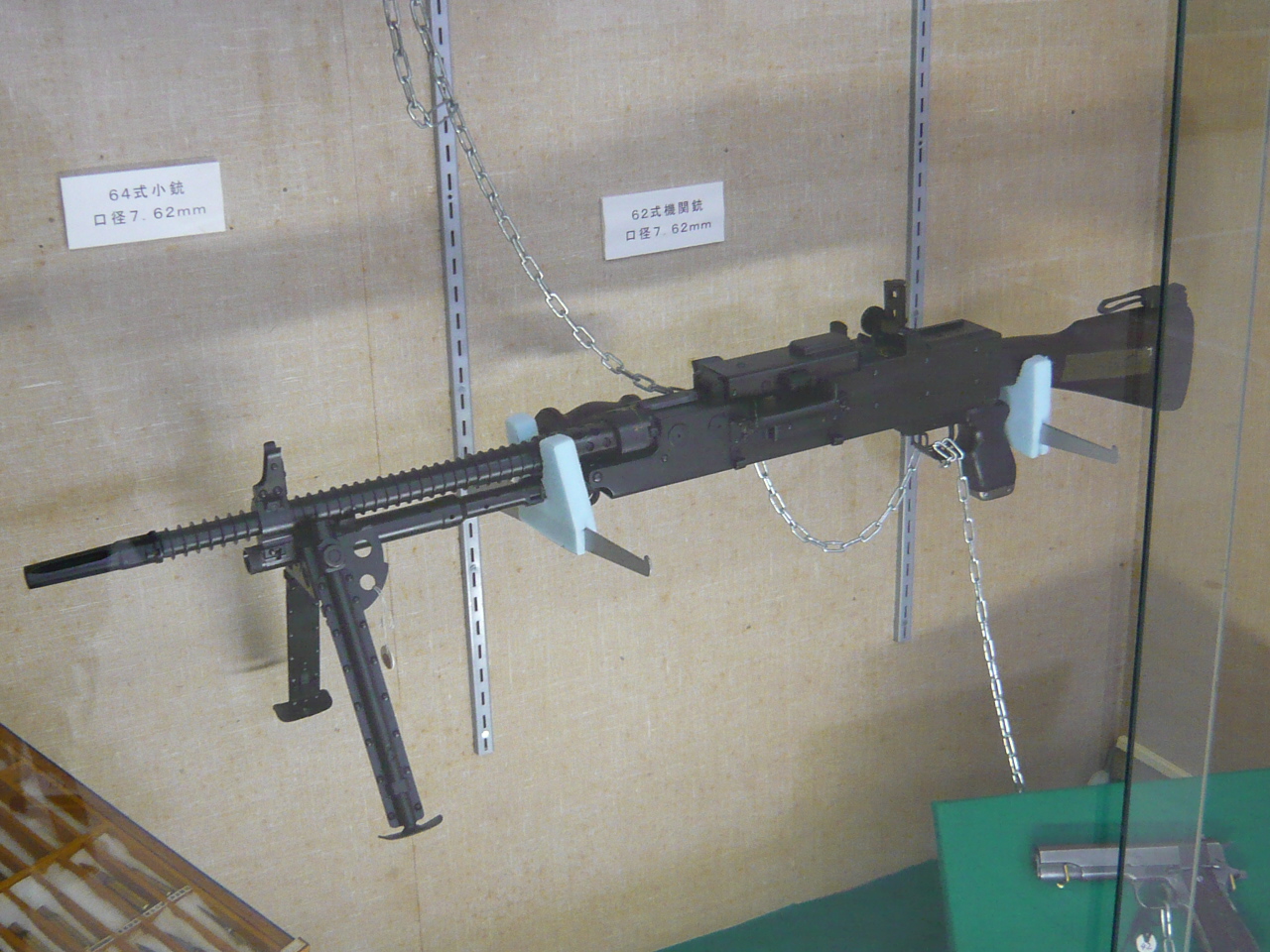
The Sumitomo NTK-62 (62式7.62mm機関銃, Rokuni-shiki Nana-ten-rokuni-miri Kikanjū) is the standard issue general-purpose machine gun of the Japan Self-Defense Forces. It's also known as the Type 62 7.62mm Machine Gun or the Type 62 GPMG.
When first issued, it fulfilled both light and medium machine gun support throughout the JGSDF. Though the Sumitomo Heavy Industries' M249 firing the smaller 5.56×45mm NATO cartridge has largely replaced it in the light machine gun role at the squad level in the JGSDF, the Type 62 still plays the support role at platoon and company level for the infantry as a medium machine gun firing the more powerful 7.62×51mm NATO cartridge. It also continues to be used as a co-axial weapon in various armored vehicles, including tanks and APCs.
Like all modern Japanese-made firearms, it was never exported.
After years of using the Browning M1919A4 as its standard GPMG during the early days of founding the Japan Self-Defense Forces, NTK-62 GPMG was designed at Nittoku Metal Industry (NTK) in order to market it as the M1919's successor. The GPMG was made to meet the requirements of the Japanese Defense Agency.
The designation "62" was present due to the fact that first batches of the NTK-62 were made in 1962 after development started in 1954. It was specifically adopted on February 15, 1962, effectively replacing the M1919 Browning machine gun in JGSDF service.
In 2013, SHI was involved in a scandal where NTK-62 test data was falsified on purpose for 5,350 machine guns produced from 1974.
After the war, the decision to develop a new machine gun to replace the M1919A4/A6 and M1918A2 automatic rifles provided by the US Army was made by the Land Staff Equipment Committee in 1954. Based on the war lessons of the Japanese Army during the Battle of Okinawa, the exploits of the Japanese light machine gun in the Battle of Kamata and other battles were used as a reference during development.
The developer was Dr Masaya Kawamura (also Masaya) (1906-1994), a doctor of engineering at Nittoku who was involved in the pre-war prototypes of the Type Hei Rifle and Trial Ultra Light Machine Gun, which challenged military adoption with their original structures but were never adopted, and in the development of the Type 5 30 mm fixed machine gun during the war, and after the war also made achievements in the development of the bulldozer. 1994).
Sumitomo Type 62
The Sumitomo NTK-62 (62式7.62mm機関銃, Rokuni-shiki Nana-ten-rokuni-miri Kikanjū) is the standard issue general-purpose machine gun of the Japan Self-Defense Forces. It's also known as the Type 62 7.62mm Machine Gun or the Type 62 GPMG.
When first issued, it fulfilled both light and medium machine gun support throughout the JGSDF. Though the Sumitomo Heavy Industries' M249 firing the smaller 5.56×45mm NATO cartridge has largely replaced it in the light machine gun role at the squad level in the JGSDF, the Type 62 still plays the support role at platoon and company level for the infantry as a medium machine gun firing the more powerful 7.62×51mm NATO cartridge. It also continues to be used as a co-axial weapon in various armored vehicles, including tanks and APCs.
Like all modern Japanese-made firearms, it was never exported.
After years of using the Browning M1919A4 as its standard GPMG during the early days of founding the Japan Self-Defense Forces, NTK-62 GPMG was designed at Nittoku Metal Industry (NTK) in order to market it as the M1919's successor. The GPMG was made to meet the requirements of the Japanese Defense Agency.
The designation "62" was present due to the fact that first batches of the NTK-62 were made in 1962 after development started in 1954. It was specifically adopted on February 15, 1962, effectively replacing the M1919 Browning machine gun in JGSDF service.
In 2013, SHI was involved in a scandal where NTK-62 test data was falsified on purpose for 5,350 machine guns produced from 1974.
After the war, the decision to develop a new machine gun to replace the M1919A4/A6 and M1918A2 automatic rifles provided by the US Army was made by the Land Staff Equipment Committee in 1954. Based on the war lessons of the Japanese Army during the Battle of Okinawa, the exploits of the Japanese light machine gun in the Battle of Kamata and other battles were used as a reference during development.
The developer was Dr Masaya Kawamura (also Masaya) (1906-1994), a doctor of engineering at Nittoku who was involved in the pre-war prototypes of the Type Hei Rifle and Trial Ultra Light Machine Gun, which challenged military adoption with their original structures but were never adopted, and in the development of the Type 5 30 mm fixed machine gun during the war, and after the war also made achievements in the development of the bulldozer. 1994).
Recent media
Recent media