



Community hub
Recent from talks
Knowledge base stats:
Talk channels stats:
Members stats:
Summer of Love
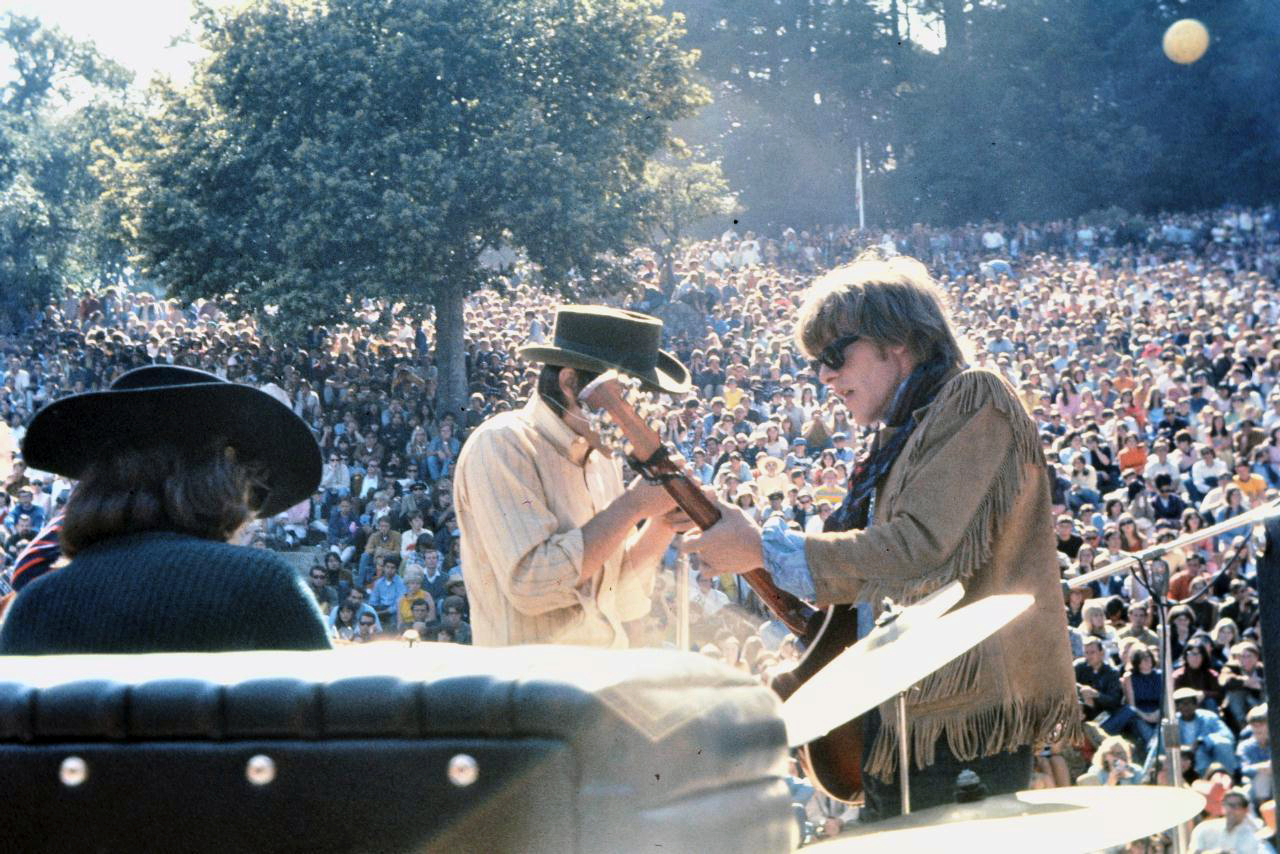
The Summer of Love was a major social phenomenon that occurred in San Francisco during the summer of 1967. As many as 100,000 people, mostly young people, hippies, beatniks, and 1960s counterculture figures, converged in San Francisco's Haight-Ashbury district and Golden Gate Park.
More broadly, the Summer of Love encompassed hippie culture, spiritual awakening, hallucinogenic drugs, anti-war sentiment, and free love throughout the West Coast of the United States, and as far away as New York City. An episode of the PBS documentary series American Experience referred to the Summer of Love as "the largest migration of young people in the history of America".
Hippies, sometimes called flower children, were an eclectic group. Many opposed the Vietnam War, were suspicious of government, and rejected consumerist values. In the United States, counterculture groups rejected suburbia and the American way and instead opted for a communal lifestyle. Some hippies were active in political organization, whereas others were passive and more concerned with art (music, painting, poetry in particular) or spiritual and meditative practices. Many hippies took interest in ancient Indian religions, such as Hinduism and Buddhism.
Inspired by Jack Kerouac's On the Road (1957) and the Beat Generation of authors of the 1950s, who had flourished in the North Beach area of San Francisco, those who gathered in Haight-Ashbury during 1967 allegedly rejected the conformist and materialist values of modern life and adhered to the psychedelic movement; there was an emphasis on sharing and community. The Diggers established a Free Store, and Haight Ashbury Free Clinics was founded on June 7, 1967, where medical treatment was provided.
The prelude to the Summer of Love was a celebration known as the Human Be-In at Golden Gate Park on January 14, 1967, which was produced and organized by artist Michael Bowen.
It was at this event that Timothy Leary voiced his phrase, "turn on, tune in, drop out". This phrase helped shape the entire hippie counterculture, as it voiced the key ideas of 1960s rebellion. These ideas included experimenting with psychedelics, communal living, political decentralization, and dropping out of society. The term "dropping out" became popular among many high school and college students, many of whom would abandon their conventional education for a summer or more of hippie culture.
The event was announced by the Haight-Ashbury's hippie newspaper, the San Francisco Oracle:
A new concept of celebration beneath the human underground must emerge, become conscious, and be shared, so a revolution can be formed with a renaissance of compassion, awareness, and love, and the revelation of unity for all mankind.
Hub AI
Summer of Love AI simulator
(@Summer of Love_simulator)
Summer of Love
The Summer of Love was a major social phenomenon that occurred in San Francisco during the summer of 1967. As many as 100,000 people, mostly young people, hippies, beatniks, and 1960s counterculture figures, converged in San Francisco's Haight-Ashbury district and Golden Gate Park.
More broadly, the Summer of Love encompassed hippie culture, spiritual awakening, hallucinogenic drugs, anti-war sentiment, and free love throughout the West Coast of the United States, and as far away as New York City. An episode of the PBS documentary series American Experience referred to the Summer of Love as "the largest migration of young people in the history of America".
Hippies, sometimes called flower children, were an eclectic group. Many opposed the Vietnam War, were suspicious of government, and rejected consumerist values. In the United States, counterculture groups rejected suburbia and the American way and instead opted for a communal lifestyle. Some hippies were active in political organization, whereas others were passive and more concerned with art (music, painting, poetry in particular) or spiritual and meditative practices. Many hippies took interest in ancient Indian religions, such as Hinduism and Buddhism.
Inspired by Jack Kerouac's On the Road (1957) and the Beat Generation of authors of the 1950s, who had flourished in the North Beach area of San Francisco, those who gathered in Haight-Ashbury during 1967 allegedly rejected the conformist and materialist values of modern life and adhered to the psychedelic movement; there was an emphasis on sharing and community. The Diggers established a Free Store, and Haight Ashbury Free Clinics was founded on June 7, 1967, where medical treatment was provided.
The prelude to the Summer of Love was a celebration known as the Human Be-In at Golden Gate Park on January 14, 1967, which was produced and organized by artist Michael Bowen.
It was at this event that Timothy Leary voiced his phrase, "turn on, tune in, drop out". This phrase helped shape the entire hippie counterculture, as it voiced the key ideas of 1960s rebellion. These ideas included experimenting with psychedelics, communal living, political decentralization, and dropping out of society. The term "dropping out" became popular among many high school and college students, many of whom would abandon their conventional education for a summer or more of hippie culture.
The event was announced by the Haight-Ashbury's hippie newspaper, the San Francisco Oracle:
A new concept of celebration beneath the human underground must emerge, become conscious, and be shared, so a revolution can be formed with a renaissance of compassion, awareness, and love, and the revelation of unity for all mankind.