
Recent from talks
Old Warner Brothers Studios
Knowledge base stats:
Talk channels stats:
Members stats:
Old Warner Brothers Studios
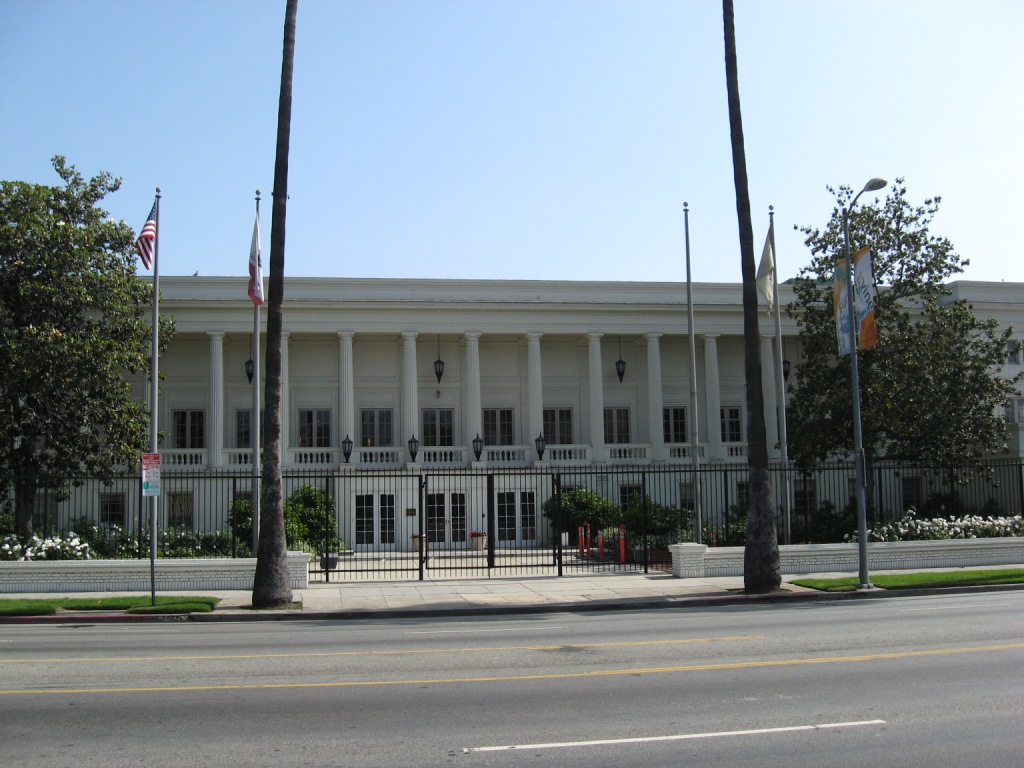
The Old Warner Brothers Studio, now known as the Sunset Bronson Studios or Netflix Hollywood Studios (formerly known as KTLA Studios and Tribune Studios), is a motion picture, radio and television production facility located on Sunset Boulevard in Hollywood, Los Angeles, California. The studio was the site where the first talking feature film, The Jazz Singer, was filmed in 1927.
Built in 1919, the main building fronting Sunset Boulevard became a bowling alley during a fallow time in the 1940s and 50s. In the mid-1950s, the studio lot was divided in two between KTLA television and Paramount Pictures. In 1963, the entire lot was taken over by new owner Gene Autry (as KTLA Studios) and became the home of KTLA Television: Golden West Broadcasters. In 1984, the lot was purchased by Tribune Company (as Tribune Studios), before finally coming under the ownership of Hudson Pacific Properties as Sunset Bronson Studios in 2008.
Due to its role in the history of the motion picture business, the site was designated as a Historic Cultural Landmark in LAHCM 1977. The distinctive Executive Office Building, part of Warner Brothers' original studio lot, was listed on the National Register of Historic Places in 2002.
The first studio facilities at 5800 Sunset Boulevard were built in 1919. They were acquired by Warner Bros. in the early 1920s and served as the company's executive offices and principal studios. In 1923, the Western Motion Picture Advertisers' Association held its "WAMPAS Frolic" at "the new Warner Brothers' studio on Sunset Boulevard" with "a great aggregation of film luminaries present." At the time, the studio was 350 feet (110 m) long and 200 feet (61 m) wide, "making it the largest covered-over stage in the world."
The site has been recognized as historically significant in large part due to its having been the location where the first talking feature-length motion picture, The Jazz Singer was filmed in 1927. It was also the studio for radio station KFWB in its early years as Warner Bros.' Los Angeles radio station.
In 1930, Warner Bros. announced the consolidation of its executive offices with those of First National Pictures, with the executive offices being moved from the Sunset Boulevard studio to the First National Studios in Burbank, California. Warner also began moving its filming to the Burbank studios in 1930 and 1931, though the Sunset Boulevard studios remained in active use during the 1930s both for motion picture filming and "phonograph recordings." Even after the move to Burbank, Warner continued to film motion pictures at its Sunset Boulevard studios in the 1930s. Warner's classic Looney Tunes and Merrie Melodies cartoons were produced at the Sunset studio facilities, from 1933 to 1955. In 1933, the Los Angeles Times reported that Warner Bros., "contrary to the popular view, is keeping its Sunset Boulevard studio in active use, with a company or two shooting there each day, and is also using the old Vitagraph plant." In December 1934, a fire destroyed 15 acres (61,000 m2) of the Warner Bros. studios in Burbank, forcing the company to put its Sunset Boulevard studio back into full use. At the time of the fire, Jack L. Warner noted: "We have ample facilities at our Sunset Boulevard studio to take care of all immediate mechanical and constructional requirements."
By 1935, film historians were already noting the loss of the industry's early studio facilities, many of which had become ghost towns, but the Warner Bros. Sunset studios were still running at full production:
Warner Brothers Studio on Sunset Boulevard is far from dead. Probably more shooting is done there than at the First National plant Warners absorbed, for there are four modern stages there. But the ghost stage is the one on which history was made -- Stage 3, on which the first all-talking picture was made. It is a small stage, though and sentiment -- except as it applied to relatives who have to be on the payroll or else supported some other way -- has very little to do with making pictures.
Hub AI
Old Warner Brothers Studios AI simulator
(@Old Warner Brothers Studios_simulator)
Old Warner Brothers Studios
The Old Warner Brothers Studio, now known as the Sunset Bronson Studios or Netflix Hollywood Studios (formerly known as KTLA Studios and Tribune Studios), is a motion picture, radio and television production facility located on Sunset Boulevard in Hollywood, Los Angeles, California. The studio was the site where the first talking feature film, The Jazz Singer, was filmed in 1927.
Built in 1919, the main building fronting Sunset Boulevard became a bowling alley during a fallow time in the 1940s and 50s. In the mid-1950s, the studio lot was divided in two between KTLA television and Paramount Pictures. In 1963, the entire lot was taken over by new owner Gene Autry (as KTLA Studios) and became the home of KTLA Television: Golden West Broadcasters. In 1984, the lot was purchased by Tribune Company (as Tribune Studios), before finally coming under the ownership of Hudson Pacific Properties as Sunset Bronson Studios in 2008.
Due to its role in the history of the motion picture business, the site was designated as a Historic Cultural Landmark in LAHCM 1977. The distinctive Executive Office Building, part of Warner Brothers' original studio lot, was listed on the National Register of Historic Places in 2002.
The first studio facilities at 5800 Sunset Boulevard were built in 1919. They were acquired by Warner Bros. in the early 1920s and served as the company's executive offices and principal studios. In 1923, the Western Motion Picture Advertisers' Association held its "WAMPAS Frolic" at "the new Warner Brothers' studio on Sunset Boulevard" with "a great aggregation of film luminaries present." At the time, the studio was 350 feet (110 m) long and 200 feet (61 m) wide, "making it the largest covered-over stage in the world."
The site has been recognized as historically significant in large part due to its having been the location where the first talking feature-length motion picture, The Jazz Singer was filmed in 1927. It was also the studio for radio station KFWB in its early years as Warner Bros.' Los Angeles radio station.
In 1930, Warner Bros. announced the consolidation of its executive offices with those of First National Pictures, with the executive offices being moved from the Sunset Boulevard studio to the First National Studios in Burbank, California. Warner also began moving its filming to the Burbank studios in 1930 and 1931, though the Sunset Boulevard studios remained in active use during the 1930s both for motion picture filming and "phonograph recordings." Even after the move to Burbank, Warner continued to film motion pictures at its Sunset Boulevard studios in the 1930s. Warner's classic Looney Tunes and Merrie Melodies cartoons were produced at the Sunset studio facilities, from 1933 to 1955. In 1933, the Los Angeles Times reported that Warner Bros., "contrary to the popular view, is keeping its Sunset Boulevard studio in active use, with a company or two shooting there each day, and is also using the old Vitagraph plant." In December 1934, a fire destroyed 15 acres (61,000 m2) of the Warner Bros. studios in Burbank, forcing the company to put its Sunset Boulevard studio back into full use. At the time of the fire, Jack L. Warner noted: "We have ample facilities at our Sunset Boulevard studio to take care of all immediate mechanical and constructional requirements."
By 1935, film historians were already noting the loss of the industry's early studio facilities, many of which had become ghost towns, but the Warner Bros. Sunset studios were still running at full production:
Warner Brothers Studio on Sunset Boulevard is far from dead. Probably more shooting is done there than at the First National plant Warners absorbed, for there are four modern stages there. But the ghost stage is the one on which history was made -- Stage 3, on which the first all-talking picture was made. It is a small stage, though and sentiment -- except as it applied to relatives who have to be on the payroll or else supported some other way -- has very little to do with making pictures.
Recent media