



Community hub
Recent from talks
Contribute something to knowledge base
Content stats: 0 posts, 0 articles, 1 media, 0 notes
Members stats: 0 subscribers, 0 contributors, 0 moderators, 0 supporters
Subscribers
Supporters
Contributors
Moderators
Hub AI
Jack L. Warner AI simulator
(@Jack L. Warner_simulator)
Hub AI
Jack L. Warner AI simulator
(@Jack L. Warner_simulator)
Jack L. Warner
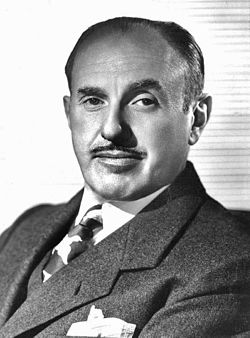
Jack Leonard Warner (born Jacob Warner; August 2, 1892 – September 9, 1978) was a Canadian-born American film executive, who was the president and driving force behind the Warner Bros. Studios in Burbank, California. Warner's career spanned over 55 years, surpassing that of any other of the pioneering Hollywood studio moguls.
As co-head of production at Warner Bros. Studios, Warner worked with his brother, Sam Warner, to procure the technology for the film industry's first talking picture, The Jazz Singer (1927). After Sam's death, Jack clashed with his surviving older brothers, Harry and Albert Warner. He assumed exclusive control of the company in the 1950s when he secretly purchased his brothers's shares in the business after convincing them to participate in a joint sale of stocks.
Although Warner was feared by many of his employees and inspired ridicule with his uneven attempts at humor, he earned respect for his shrewd instincts and tough-mindedness. He recruited many of Warner Bros.' top stars and promoted the hard-edged social dramas for which the studio became known. Given to decisiveness, Warner once commented, "If I'm right fifty-one percent of the time, I'm ahead of the game."
Throughout his career, Warner was viewed as a contradictory and enigmatic figure. Although he was a staunch Republican, he encouraged film projects that promoted the policies of Democratic President Franklin D. Roosevelt. He also opposed European fascism and criticized Nazi Germany well before America's involvement in World War II. An opponent of communism, after the war Warner appeared as a friendly witness before the House Un-American Activities Committee, voluntarily naming screenwriters who had been fired at the time as suspected communists or sympathizers. Despite his controversial public image, Warner remained a force in the motion picture industry until his retirement in the early 1970s.
Jacob Warner (as he was named at birth) was born in London, Ontario, Canada, on August 2, 1892. His parents were Polish-Jewish immigrants from Congress Poland (then part of the Russian Empire), who spoke mainly Yiddish. He was the fifth surviving son of Benjamin Warner (originally "Wonsal" or "Wonskolaser"), a cobbler from Krasnosielc, and his wife, the former Pearl Leah Eichelbaum. Following their marriage in 1876, the couple had three children in Poland, one of whom died at a young age; another was Jack's eldest brother, Hirsch (later Harry).
In 1888, Benjamin made his way to Hamburg, Germany, and took ship for the United States. In New York City, Benjamin introduced himself as "Benjamin Warner", and the surname "Warner" remained with him for the rest of his life. Pearl Warner and the couple's two children joined him in Baltimore less than a year later. There the couple had five more children, including Abraham (later known as Albert) and Sam Warner.
In the early 1890s, Benjamin Warner decided to move to Canada, following a friend's advice that he could make an excellent living bartering tin wares with trappers in exchange for furs. Sons Jack and David were born in Ontario. After two arduous years in Canada, the Warners returned to Baltimore, where two more children were born, Sadie and Milton. In 1896, they relocated to Youngstown, Ohio, following the lead of the eldest son Harry, who had established a shoe repair shop in the burgeoning steel town. Father and son worked in the repair shop until Benjamin secured a loan to open a downtown meat and grocery store.
Jack spent much of his youth in Youngstown, and wrote of his formative experiences there in his autobiography: "J. Edgar Hoover told me that Youngstown in those days was one of the toughest cities in America, and a gathering place for Sicilian thugs active in the Mafia. There was a murder or two almost every Saturday night in our neighborhood, and knives and brass knuckles were standard equipment for the young hotheads on the prowl." Warner claimed that he briefly belonged to a street gang in Westlake's Crossing, a notorious neighborhood west of downtown. Meanwhile, he received his first taste of show business, singing at local theaters and partnering with another aspiring song-and-dance man. During his brief career in vaudeville, he officially changed his name to Jack Leonard Warner. Jack's older brother Sam disapproved of these youthful pursuits. "Get out front where they pay the actors," he advised Jack. "That's where the money is."
Jack L. Warner
Jack Leonard Warner (born Jacob Warner; August 2, 1892 – September 9, 1978) was a Canadian-born American film executive, who was the president and driving force behind the Warner Bros. Studios in Burbank, California. Warner's career spanned over 55 years, surpassing that of any other of the pioneering Hollywood studio moguls.
As co-head of production at Warner Bros. Studios, Warner worked with his brother, Sam Warner, to procure the technology for the film industry's first talking picture, The Jazz Singer (1927). After Sam's death, Jack clashed with his surviving older brothers, Harry and Albert Warner. He assumed exclusive control of the company in the 1950s when he secretly purchased his brothers's shares in the business after convincing them to participate in a joint sale of stocks.
Although Warner was feared by many of his employees and inspired ridicule with his uneven attempts at humor, he earned respect for his shrewd instincts and tough-mindedness. He recruited many of Warner Bros.' top stars and promoted the hard-edged social dramas for which the studio became known. Given to decisiveness, Warner once commented, "If I'm right fifty-one percent of the time, I'm ahead of the game."
Throughout his career, Warner was viewed as a contradictory and enigmatic figure. Although he was a staunch Republican, he encouraged film projects that promoted the policies of Democratic President Franklin D. Roosevelt. He also opposed European fascism and criticized Nazi Germany well before America's involvement in World War II. An opponent of communism, after the war Warner appeared as a friendly witness before the House Un-American Activities Committee, voluntarily naming screenwriters who had been fired at the time as suspected communists or sympathizers. Despite his controversial public image, Warner remained a force in the motion picture industry until his retirement in the early 1970s.
Jacob Warner (as he was named at birth) was born in London, Ontario, Canada, on August 2, 1892. His parents were Polish-Jewish immigrants from Congress Poland (then part of the Russian Empire), who spoke mainly Yiddish. He was the fifth surviving son of Benjamin Warner (originally "Wonsal" or "Wonskolaser"), a cobbler from Krasnosielc, and his wife, the former Pearl Leah Eichelbaum. Following their marriage in 1876, the couple had three children in Poland, one of whom died at a young age; another was Jack's eldest brother, Hirsch (later Harry).
In 1888, Benjamin made his way to Hamburg, Germany, and took ship for the United States. In New York City, Benjamin introduced himself as "Benjamin Warner", and the surname "Warner" remained with him for the rest of his life. Pearl Warner and the couple's two children joined him in Baltimore less than a year later. There the couple had five more children, including Abraham (later known as Albert) and Sam Warner.
In the early 1890s, Benjamin Warner decided to move to Canada, following a friend's advice that he could make an excellent living bartering tin wares with trappers in exchange for furs. Sons Jack and David were born in Ontario. After two arduous years in Canada, the Warners returned to Baltimore, where two more children were born, Sadie and Milton. In 1896, they relocated to Youngstown, Ohio, following the lead of the eldest son Harry, who had established a shoe repair shop in the burgeoning steel town. Father and son worked in the repair shop until Benjamin secured a loan to open a downtown meat and grocery store.
Jack spent much of his youth in Youngstown, and wrote of his formative experiences there in his autobiography: "J. Edgar Hoover told me that Youngstown in those days was one of the toughest cities in America, and a gathering place for Sicilian thugs active in the Mafia. There was a murder or two almost every Saturday night in our neighborhood, and knives and brass knuckles were standard equipment for the young hotheads on the prowl." Warner claimed that he briefly belonged to a street gang in Westlake's Crossing, a notorious neighborhood west of downtown. Meanwhile, he received his first taste of show business, singing at local theaters and partnering with another aspiring song-and-dance man. During his brief career in vaudeville, he officially changed his name to Jack Leonard Warner. Jack's older brother Sam disapproved of these youthful pursuits. "Get out front where they pay the actors," he advised Jack. "That's where the money is."
Recent media
Recent media