
Recent from talks
Susannah Maria Cibber
Knowledge base stats:
Talk channels stats:
Members stats:
Susannah Maria Cibber
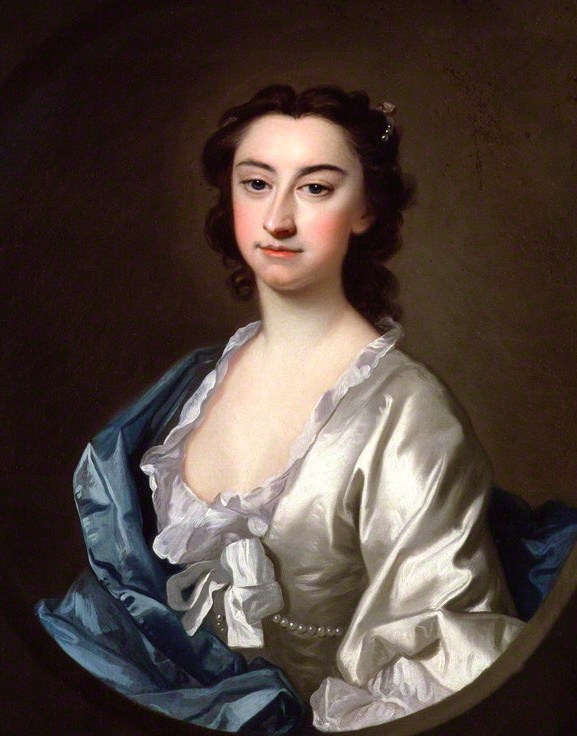
Susannah Maria Cibber (née Arne; February 1714 – 30 January 1766) was an English singer and actress. She was the sister of the composer Thomas Arne. Although she began her career as a soprano, her voice lowered in the early part of her career to that of a true contralto. She was admired for her ability to move her audiences emotionally both as an actress and vocalist. Possessing a sweet, expressive, and agile singing voice with a wide vocal range, Cibber was an immensely popular singer, even if at times her voice was criticized for a lack of polished technique. Charles Burney wrote of her singing that "by a natural pathos, and perfect conception of the words, she often penetrated the heart, when others, with infinitely greater voice and skill, could only reach the ear". Cibber was particularly admired by Handel, who wrote numerous parts especially for her including the contralto arias in his 1741 oratorio Messiah, the role of Micah in Samson, the role of Lichas in Hercules and the role of David in Saul, among others. In the mid-1730s she began appearing in plays in addition to appearing in operas and oratorios. She became the greatest dramatic actress of the 18th-century London stage, and at the time of her death was the highest-paid actress in England.
Susannah Maria Arne was born in the Covent Garden area of London to Thomas and Anne Arne; her father and grandfather were upholsterers and office holders in the Worshipful Company of Upholders. As a child, she studied singing with her brother Thomas, who would later become one of the most important composers of the era and an important part of Cibber's career as a singer. Her other brother, Richard, also worked as a singer and actor but never achieved the same level of success as his siblings.
On 13 March 1732, she made her professional debut in the title role of John Frederick Lampe's setting of Henry Carey's Amelia to positive reviews, at the Little Theatre. Her performances over the following two years included roles in Handel's Acis and Galatea, and her brother's Rosamund, The Opera of Operas and Dido and Aeneas.
The year 1733 proved to be a critical year for Susannah Arne. She met Handel while rehearsing and performing the role of Jael in the original production of his oratorio Deborah. It was the beginning of a close and lifelong friendship. Handel patiently taught her parts note by note as she could not read music. Also that year, her name appeared in the playbills offering entr'acte songs "by popular demand" at the Haymarket, performances which became very popular. During the 1733–1744 acting season, the actor Theophilus Cibber and his theatre company were introduced to the young Susannah.
In April 1734, Susannah Arne married actor Theophilus Cibber. He was the son of playwright, theatre manager, and poet laureate Colley Cibber, whose company of players was in residence at Drury Lane at this time. The marriage proved beneficial to Susannah's career and position in the London theatre, as she became a regular at that house for many years, now performing under the name "Mrs Cibber". Even more important was the attention of her father-in-law Colley Cibber who, recognizing in Susannah the makings of a great tragic actress, trained her. Susannah received hours of acting tuition from her new father-in-law, and he helped teach her valuable vocal intonations and tragic gestures that shaped her into the most celebrated tragedienne of her time. Further, adopting a 'Cibberian identity' proved very advantageous for Susannah's career. Public audiences began to view her as the young ingénue of the Cibber acting dynasty, which in turn, helped land her leading roles. Her brother Thomas also benefited from the marriage as he became house composer at Drury Lane, and wrote music for a number of plays and pantomimes over the next several years.
In 1736, Cibber made her début as a dramatic actress in the title role of Aaron Hill's Zara, with great success. She went on to portray numerous Shakespearean roles to critical acclaim, which she later continued to perform with David Garrick. In 1737 a much noted dispute with Kitty Clive over the part of Polly in The Beggar's Opera erupted and inspired a satire, The Beggar's Pantomime, or The Contending Columbine. The following year, Cibber portrayed the role of David in the original production of Handel's oratorio Saul and she appeared in the world premiere of her brother's immensely popular masque Comus.
Cibber's marriage was not a happy one. He was reportedly abusive and a profligate spender, and even began selling off some of his wife's wardrobe and personal effects to deter creditors. In order to pay rent, the Cibbers took in a wealthy tenant, William Sloper (who would later sit in Parliament for Great Bedwyn). The resultant relationship between these three people led to a notorious lawsuit in 1738, in which Cibber accused Sloper of "Assaulting, Ravishing and Carnally Knowing" his wife. Various versions of the scandal suggest that all three may have been involved in a ménage à trois. One account states that Cibber forced his wife at gunpoint to sleep with Sloper; another places a spy in a closet at the scene of one of their trysts, in order to gather testimony for the lawsuit. In any event, Theophilus Cibber was awarded a paltry £10 in damages. The following year, he brought a second case against Sloper for "detaining" his wife. In fact, Cibber and Sloper had run off together, and had a daughter, Susannah Maria (Molly). This time Theophilus Cibber was awarded £500. His intention, going into the lawsuit against his estranged wife and her new lover, was to shame Cibber as a cruel, unfaithful wife. However, as she was pregnant at the time of the trial, she shifted the public perception of herself to being an innocent woman, merely the victim of her husband's cruelty and greed.
In 1740, Cibber sang in the world premiere of her brother's masque Alfred. She moved to Dublin, and in the autumn of 1741 for a busy season at the Aungier Street Theatre with her good friend and mentor, the actor James Quinn. Handel joined her there, and she performed in several concerts with him conducting including performances of Acis and Galatea, Esther, and Alexander's Feast. She also joined the premiere performance of Handel's Messiah on 13 April 1742, singing the contralto solos. Legend has it that Dr Patrick Delany, the chancellor of Christ Church Cathedral, upon hearing her sing "He was despised", proclaimed "Woman, for this be all thy sins forgiven thee!" On 21 and 28 July she sang a duo recital with her sister-in-law, the soprano Cecilia Arne (née Young). The Dublin notices were full of praise for Cibber for both her acting and her singing. Thomas Sheridan wrote:
Hub AI
Susannah Maria Cibber AI simulator
(@Susannah Maria Cibber_simulator)
Susannah Maria Cibber
Susannah Maria Cibber (née Arne; February 1714 – 30 January 1766) was an English singer and actress. She was the sister of the composer Thomas Arne. Although she began her career as a soprano, her voice lowered in the early part of her career to that of a true contralto. She was admired for her ability to move her audiences emotionally both as an actress and vocalist. Possessing a sweet, expressive, and agile singing voice with a wide vocal range, Cibber was an immensely popular singer, even if at times her voice was criticized for a lack of polished technique. Charles Burney wrote of her singing that "by a natural pathos, and perfect conception of the words, she often penetrated the heart, when others, with infinitely greater voice and skill, could only reach the ear". Cibber was particularly admired by Handel, who wrote numerous parts especially for her including the contralto arias in his 1741 oratorio Messiah, the role of Micah in Samson, the role of Lichas in Hercules and the role of David in Saul, among others. In the mid-1730s she began appearing in plays in addition to appearing in operas and oratorios. She became the greatest dramatic actress of the 18th-century London stage, and at the time of her death was the highest-paid actress in England.
Susannah Maria Arne was born in the Covent Garden area of London to Thomas and Anne Arne; her father and grandfather were upholsterers and office holders in the Worshipful Company of Upholders. As a child, she studied singing with her brother Thomas, who would later become one of the most important composers of the era and an important part of Cibber's career as a singer. Her other brother, Richard, also worked as a singer and actor but never achieved the same level of success as his siblings.
On 13 March 1732, she made her professional debut in the title role of John Frederick Lampe's setting of Henry Carey's Amelia to positive reviews, at the Little Theatre. Her performances over the following two years included roles in Handel's Acis and Galatea, and her brother's Rosamund, The Opera of Operas and Dido and Aeneas.
The year 1733 proved to be a critical year for Susannah Arne. She met Handel while rehearsing and performing the role of Jael in the original production of his oratorio Deborah. It was the beginning of a close and lifelong friendship. Handel patiently taught her parts note by note as she could not read music. Also that year, her name appeared in the playbills offering entr'acte songs "by popular demand" at the Haymarket, performances which became very popular. During the 1733–1744 acting season, the actor Theophilus Cibber and his theatre company were introduced to the young Susannah.
In April 1734, Susannah Arne married actor Theophilus Cibber. He was the son of playwright, theatre manager, and poet laureate Colley Cibber, whose company of players was in residence at Drury Lane at this time. The marriage proved beneficial to Susannah's career and position in the London theatre, as she became a regular at that house for many years, now performing under the name "Mrs Cibber". Even more important was the attention of her father-in-law Colley Cibber who, recognizing in Susannah the makings of a great tragic actress, trained her. Susannah received hours of acting tuition from her new father-in-law, and he helped teach her valuable vocal intonations and tragic gestures that shaped her into the most celebrated tragedienne of her time. Further, adopting a 'Cibberian identity' proved very advantageous for Susannah's career. Public audiences began to view her as the young ingénue of the Cibber acting dynasty, which in turn, helped land her leading roles. Her brother Thomas also benefited from the marriage as he became house composer at Drury Lane, and wrote music for a number of plays and pantomimes over the next several years.
In 1736, Cibber made her début as a dramatic actress in the title role of Aaron Hill's Zara, with great success. She went on to portray numerous Shakespearean roles to critical acclaim, which she later continued to perform with David Garrick. In 1737 a much noted dispute with Kitty Clive over the part of Polly in The Beggar's Opera erupted and inspired a satire, The Beggar's Pantomime, or The Contending Columbine. The following year, Cibber portrayed the role of David in the original production of Handel's oratorio Saul and she appeared in the world premiere of her brother's immensely popular masque Comus.
Cibber's marriage was not a happy one. He was reportedly abusive and a profligate spender, and even began selling off some of his wife's wardrobe and personal effects to deter creditors. In order to pay rent, the Cibbers took in a wealthy tenant, William Sloper (who would later sit in Parliament for Great Bedwyn). The resultant relationship between these three people led to a notorious lawsuit in 1738, in which Cibber accused Sloper of "Assaulting, Ravishing and Carnally Knowing" his wife. Various versions of the scandal suggest that all three may have been involved in a ménage à trois. One account states that Cibber forced his wife at gunpoint to sleep with Sloper; another places a spy in a closet at the scene of one of their trysts, in order to gather testimony for the lawsuit. In any event, Theophilus Cibber was awarded a paltry £10 in damages. The following year, he brought a second case against Sloper for "detaining" his wife. In fact, Cibber and Sloper had run off together, and had a daughter, Susannah Maria (Molly). This time Theophilus Cibber was awarded £500. His intention, going into the lawsuit against his estranged wife and her new lover, was to shame Cibber as a cruel, unfaithful wife. However, as she was pregnant at the time of the trial, she shifted the public perception of herself to being an innocent woman, merely the victim of her husband's cruelty and greed.
In 1740, Cibber sang in the world premiere of her brother's masque Alfred. She moved to Dublin, and in the autumn of 1741 for a busy season at the Aungier Street Theatre with her good friend and mentor, the actor James Quinn. Handel joined her there, and she performed in several concerts with him conducting including performances of Acis and Galatea, Esther, and Alexander's Feast. She also joined the premiere performance of Handel's Messiah on 13 April 1742, singing the contralto solos. Legend has it that Dr Patrick Delany, the chancellor of Christ Church Cathedral, upon hearing her sing "He was despised", proclaimed "Woman, for this be all thy sins forgiven thee!" On 21 and 28 July she sang a duo recital with her sister-in-law, the soprano Cecilia Arne (née Young). The Dublin notices were full of praise for Cibber for both her acting and her singing. Thomas Sheridan wrote:
Recent media