
Recent from talks
Synod of Dort
Knowledge base stats:
Talk channels stats:
Members stats:
Synod of Dort
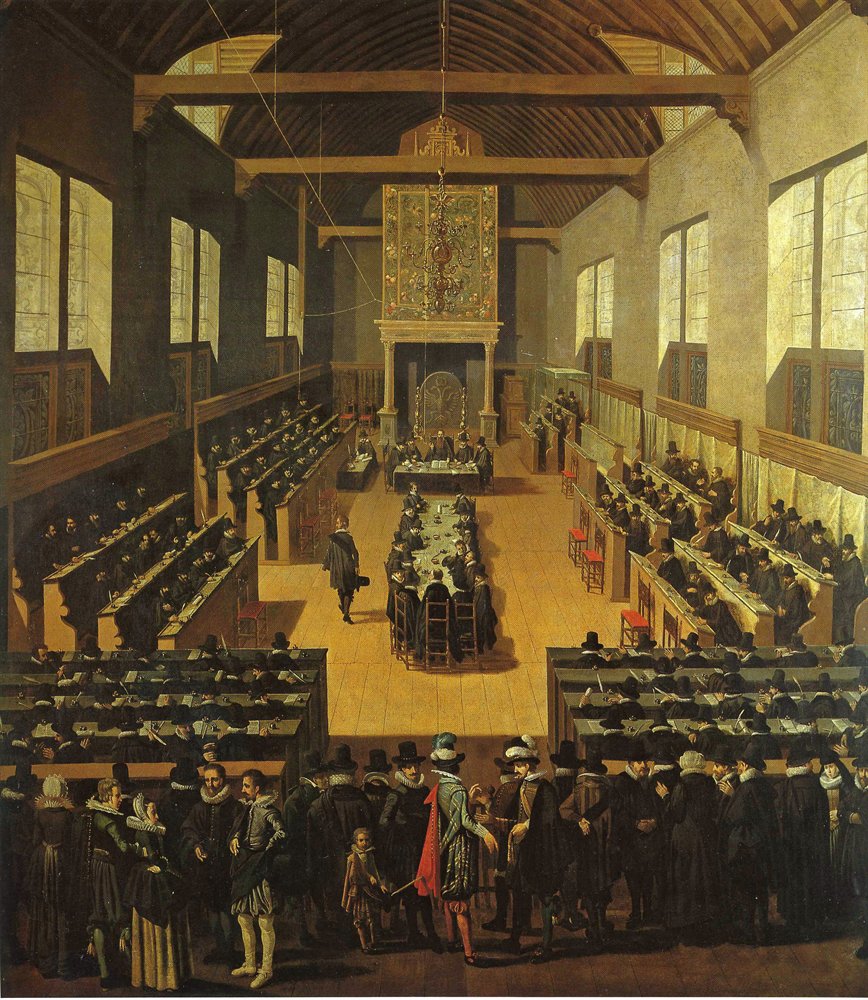
The Synod of Dort (also known as the Synod of Dordt or the Synod of Dordrecht) was a European transnational Synod held in Dordrecht in 1618–1619, by the Dutch Reformed Church, to settle a divisive controversy caused by the rise of Arminianism. The first meeting was on 13 November 1618 and the final meeting, the 154th, was on 9 May 1619. Voting representatives from eight foreign Reformed churches were also invited. Dort was a contemporary Dutch term for the town of Dordrecht (and it remains the local colloquial pronunciation).
In 2014, the first entire critical edition of the Acts and Documents of the Synod was published.
There had been previous provincial synods of Dort, and a National Synod in 1578. For that reason the 1618 meeting is sometimes called the Second Synod of Dort.
The acts of the Synod were tied to political intrigues that arose during the Twelve Years' Truce, a pause in the Dutch war with Spain. After the death of Jacobus Arminius his followers presented objections to the Belgic Confession and the teaching of John Calvin, Theodore Beza, and their followers. These objections were published in a document called The Remonstrance of 1610, and the Arminians were therefore also known as Remonstrants. They taught conditional election on the basis of foreseen faith, unlimited atonement, resistible grace, and the possibility of lapse from grace. The opposing Calvinists or Gomarists, led by Franciscus Gomarus of the University of Leiden, became known as the Contra-Remonstrants.
The Arminians were accused of propagating false doctrine and perceived as ready to compromise with the Spanish, whereas the Dutch Calvinists were not, so Arminianism was considered by some to be not only theologically unsound but also political treason; in 1617–1618 there was a pamphlet war and Francis van Aarssens expressed the view that the Arminians were working for Philip IV of Spain. Planning for a National Synod was begun by Adriaan Pauw in March 1618. Before that, there had been a debate as to whether the synod should be national, as the Contra-Remonstrants wished, or provincial for Holland, as the Remonstrants argued. This decision was worked out in 1617, with outside input from the English ambassador Dudley Carleton.
The purpose of the Synod was to settle the controversy over Arminianism. It was subsequently alleged, but never proven, that the outcome had already been decided. According to Frederick Calder, "condemnation [of the Remonstrant doctrines] was determined before the national synod met." On the other hand, beyond the condemnation of the Arminians, the theological formulations of the Canons of the Synod by no means gave support to all the Gomarists wanted. In fact, Johannes Bogerman, president of the synod, himself a Supralapsarian, argued for the inclusion of the Infralapsarian position in the Canons. The more extreme views of Dutch Calvinists were moderated in the detailed debates.
The Synod had 27 members representing Reformed groups from continental Europe, as well as from the British Isles. Represented at the Synod were the Church of Scotland, the Swiss Reformed churches of Basel, Bern, Geneva, Schaffhausen and Zürich, and the German churches of Bremen, Hesse-Kassel, Nassau and the Palatinate. Among these groups were also Anglican delegates from the Church of England.
Simon Episcopius (1583–1643) was spokesman of the 14 Remonstrants who were summoned before the Synod in 1618. At the opening of the synod, Episcopius asked to speak.
Hub AI
Synod of Dort AI simulator
(@Synod of Dort_simulator)
Synod of Dort
The Synod of Dort (also known as the Synod of Dordt or the Synod of Dordrecht) was a European transnational Synod held in Dordrecht in 1618–1619, by the Dutch Reformed Church, to settle a divisive controversy caused by the rise of Arminianism. The first meeting was on 13 November 1618 and the final meeting, the 154th, was on 9 May 1619. Voting representatives from eight foreign Reformed churches were also invited. Dort was a contemporary Dutch term for the town of Dordrecht (and it remains the local colloquial pronunciation).
In 2014, the first entire critical edition of the Acts and Documents of the Synod was published.
There had been previous provincial synods of Dort, and a National Synod in 1578. For that reason the 1618 meeting is sometimes called the Second Synod of Dort.
The acts of the Synod were tied to political intrigues that arose during the Twelve Years' Truce, a pause in the Dutch war with Spain. After the death of Jacobus Arminius his followers presented objections to the Belgic Confession and the teaching of John Calvin, Theodore Beza, and their followers. These objections were published in a document called The Remonstrance of 1610, and the Arminians were therefore also known as Remonstrants. They taught conditional election on the basis of foreseen faith, unlimited atonement, resistible grace, and the possibility of lapse from grace. The opposing Calvinists or Gomarists, led by Franciscus Gomarus of the University of Leiden, became known as the Contra-Remonstrants.
The Arminians were accused of propagating false doctrine and perceived as ready to compromise with the Spanish, whereas the Dutch Calvinists were not, so Arminianism was considered by some to be not only theologically unsound but also political treason; in 1617–1618 there was a pamphlet war and Francis van Aarssens expressed the view that the Arminians were working for Philip IV of Spain. Planning for a National Synod was begun by Adriaan Pauw in March 1618. Before that, there had been a debate as to whether the synod should be national, as the Contra-Remonstrants wished, or provincial for Holland, as the Remonstrants argued. This decision was worked out in 1617, with outside input from the English ambassador Dudley Carleton.
The purpose of the Synod was to settle the controversy over Arminianism. It was subsequently alleged, but never proven, that the outcome had already been decided. According to Frederick Calder, "condemnation [of the Remonstrant doctrines] was determined before the national synod met." On the other hand, beyond the condemnation of the Arminians, the theological formulations of the Canons of the Synod by no means gave support to all the Gomarists wanted. In fact, Johannes Bogerman, president of the synod, himself a Supralapsarian, argued for the inclusion of the Infralapsarian position in the Canons. The more extreme views of Dutch Calvinists were moderated in the detailed debates.
The Synod had 27 members representing Reformed groups from continental Europe, as well as from the British Isles. Represented at the Synod were the Church of Scotland, the Swiss Reformed churches of Basel, Bern, Geneva, Schaffhausen and Zürich, and the German churches of Bremen, Hesse-Kassel, Nassau and the Palatinate. Among these groups were also Anglican delegates from the Church of England.
Simon Episcopius (1583–1643) was spokesman of the 14 Remonstrants who were summoned before the Synod in 1618. At the opening of the synod, Episcopius asked to speak.
Recent media