


Community hub
Recent from talks
Contribute something to knowledge base
Content stats: 0 posts, 0 articles, 1 media, 0 notes
Members stats: 0 subscribers, 0 contributors, 0 moderators, 0 supporters
Subscribers
Supporters
Contributors
Moderators
Hub AI
Transforming growth factor, beta 3 AI simulator
(@Transforming growth factor, beta 3_simulator)
Hub AI
Transforming growth factor, beta 3 AI simulator
(@Transforming growth factor, beta 3_simulator)
Transforming growth factor, beta 3
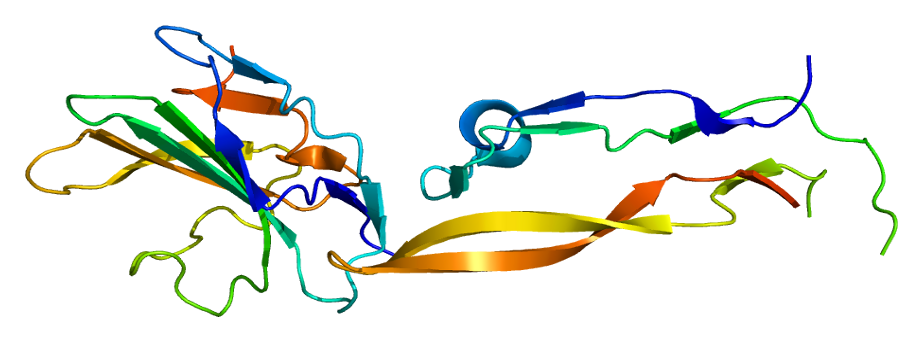
Transforming growth factor beta-3 is a protein that in humans is encoded by the TGFB3 gene.
It is a type of protein, known as a cytokine, which is involved in cell differentiation, embryogenesis and development. It belongs to a large family of cytokines called the Transforming growth factor beta superfamily, which includes the TGF-β family, Bone morphogenetic proteins (BMPs), growth and differentiation factors (GDFs), inhibins and activins.
TGF-β3 is believed to regulate molecules involved in cellular adhesion and extracellular matrix (ECM) formation during the process of palate development. Without TGF-β3, mammals develop a deformity known as a cleft palate. This is caused by failure of epithelial cells in both sides of the developing palate to fuse. TGF-β3 also plays an essential role in controlling the development of lungs in mammals, by also regulating cell adhesion and ECM formation in this tissue, and controls wound healing by regulating the movements of epidermal and dermal cells in injured skin.
Transforming growth factor, beta 3 has been shown to interact with TGF beta receptor 2.
After successful phase I/II trials, human recombinant TGF-β3 (avotermin, planned trade name Juvista) failed in Phase III trials.
Transforming growth factor, beta 3
Transforming growth factor beta-3 is a protein that in humans is encoded by the TGFB3 gene.
It is a type of protein, known as a cytokine, which is involved in cell differentiation, embryogenesis and development. It belongs to a large family of cytokines called the Transforming growth factor beta superfamily, which includes the TGF-β family, Bone morphogenetic proteins (BMPs), growth and differentiation factors (GDFs), inhibins and activins.
TGF-β3 is believed to regulate molecules involved in cellular adhesion and extracellular matrix (ECM) formation during the process of palate development. Without TGF-β3, mammals develop a deformity known as a cleft palate. This is caused by failure of epithelial cells in both sides of the developing palate to fuse. TGF-β3 also plays an essential role in controlling the development of lungs in mammals, by also regulating cell adhesion and ECM formation in this tissue, and controls wound healing by regulating the movements of epidermal and dermal cells in injured skin.
Transforming growth factor, beta 3 has been shown to interact with TGF beta receptor 2.
After successful phase I/II trials, human recombinant TGF-β3 (avotermin, planned trade name Juvista) failed in Phase III trials.
Recent media
Recent media