


Community hub
Recent from talks
Contribute something to knowledge base
Content stats: 0 posts, 0 articles, 1 media, 0 notes
Members stats: 0 subscribers, 0 contributors, 0 moderators, 0 supporters
Subscribers
Supporters
Contributors
Moderators
Hub AI
Tactical nuclear weapon AI simulator
(@Tactical nuclear weapon_simulator)
Hub AI
Tactical nuclear weapon AI simulator
(@Tactical nuclear weapon_simulator)
Tactical nuclear weapon
A tactical nuclear weapon (TNW) or non-strategic nuclear weapon (NSNW) is a nuclear weapon that is designed to be used on a battlefield in military situations, mostly with friendly forces in proximity and perhaps even on contested friendly territory. Generally smaller in explosive power, they are defined in contrast to strategic nuclear weapons, which are designed mostly to be targeted at the enemy interior far away from the war front against military bases, cities, towns, arms industries, and other hardened or larger-area targets to damage the enemy's ability to wage war. No tactical nuclear weapons have ever been used in combat.
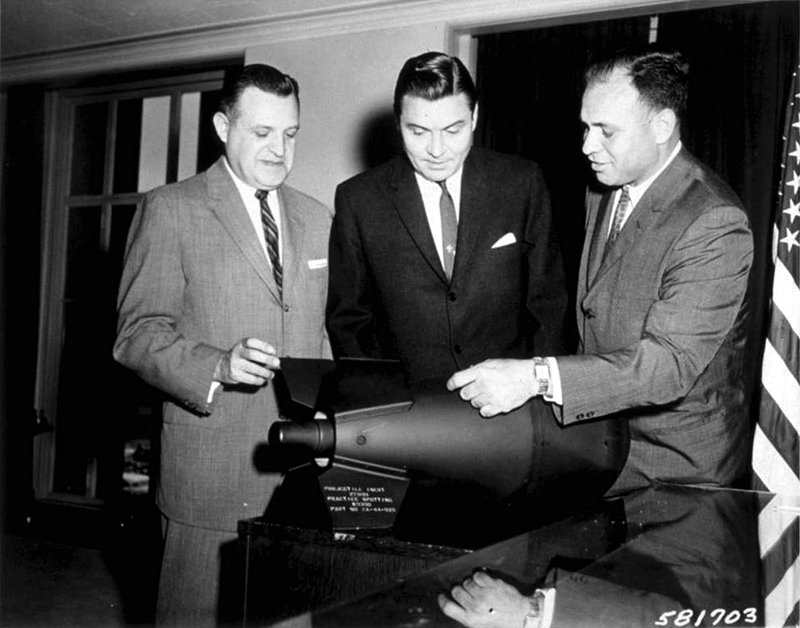
Tactical nuclear weapons include gravity bombs, short-range missiles, artillery shells, land mines, depth charges, and torpedoes which are equipped with nuclear warheads. Also in this category are nuclear armed ground-based or shipborne surface-to-air missiles (SAMs) and air-to-air missiles. Small, two-man portable or truck-portable tactical weapons (sometimes misleadingly referred to as suitcase nukes), such as the Special Atomic Demolition Munition and the Davy Crockett recoilless rifle (recoilless smoothbore gun) have been developed, but the difficulty of combining sufficient yield with portability could limit their military utility. In wartime, such explosives could be used for demolishing "chokepoints" to enemy offensives, such as at tunnels, narrow mountain passes, and long viaducts.
There is no exact definition of the "tactical" category in terms of range or yield of the nuclear weapon. The yield of tactical nuclear weapons is generally lower than that of strategic nuclear weapons, but larger ones are still very powerful, and some variable-yield warheads serve in both roles. For example, the W89 200 kiloton warhead was intended to arm both the tactical Sea Lance anti-submarine rocket-propelled depth charge and the strategic bomber-launched SRAM II stand off missile. Modern tactical nuclear warheads have yields up to the tens of kilotons, or potentially hundreds, several times that of the weapons used in the atomic bombings of Hiroshima and Nagasaki. Specifically on the Korean Peninsula, with a nuclear North Korea facing off against a NPT-compliant South Korea, there have been calls to request a return of US-owned and -operated, short range, low yield nuclear weapons (called "tactical" by the US military) to provide a local strategic deterrent to the North's growing domestically-produced nuclear arsenal and delivery systems.
Some tactical nuclear weapons have specific features meant to enhance their battlefield characteristics, such as variable yield, which allow their explosive power to be varied over a wide range for different situations, or enhanced radiation weapons (the so-called "neutron bombs"), which are meant to maximize ionizing radiation exposure and to minimize blast effects.
Strategic missiles and bombers are assigned preplanned targets including enemy airfields, radars, and surface-to-air defenses, not only counterforce strikes on hardened or wide area bomber, submarine, and missile bases. The strategic mission is to eliminate the enemy nation's national defenses to enable following bombers and missiles to threaten the enemy nation's strategic forces, command, and economy more realistically, rather than targeting mobile military assets in nearly real time by using tactical weapons that are optimized for time-sensitive strike missions that are often close to friendly forces.
Tactical nuclear weapons were a large part of the peak nuclear weapons stockpile levels during the Cold War.
The risk that use of tactical nuclear weapons could unexpectedly lead to a rapid escalation of a war to full use of strategic weapons has led to proposals being made within NATO and other organizations to place limitations on—and make more transparent—the stockpiling and use of tactical weapons. As the Cold War came to an end in 1991, the US and USSR withdrew most of their tactical nuclear weapons from deployment and disposed of them.[citation needed] The thousands of tactical warheads wielded by both sides in the late-1980s declined to an estimated 230 American and 1,000 to 2,000 Russian Federation warheads in 2021, although estimates for Russia vary widely.
The yield varies for a tactical nuclear weapon from a fraction of a kiloton to approximately 50 kilotons. In comparison, a strategic nuclear weapon has a yield from 100 kilotons to over a megaton, with much larger warheads available.
Tactical nuclear weapon
A tactical nuclear weapon (TNW) or non-strategic nuclear weapon (NSNW) is a nuclear weapon that is designed to be used on a battlefield in military situations, mostly with friendly forces in proximity and perhaps even on contested friendly territory. Generally smaller in explosive power, they are defined in contrast to strategic nuclear weapons, which are designed mostly to be targeted at the enemy interior far away from the war front against military bases, cities, towns, arms industries, and other hardened or larger-area targets to damage the enemy's ability to wage war. No tactical nuclear weapons have ever been used in combat.
Tactical nuclear weapons include gravity bombs, short-range missiles, artillery shells, land mines, depth charges, and torpedoes which are equipped with nuclear warheads. Also in this category are nuclear armed ground-based or shipborne surface-to-air missiles (SAMs) and air-to-air missiles. Small, two-man portable or truck-portable tactical weapons (sometimes misleadingly referred to as suitcase nukes), such as the Special Atomic Demolition Munition and the Davy Crockett recoilless rifle (recoilless smoothbore gun) have been developed, but the difficulty of combining sufficient yield with portability could limit their military utility. In wartime, such explosives could be used for demolishing "chokepoints" to enemy offensives, such as at tunnels, narrow mountain passes, and long viaducts.
There is no exact definition of the "tactical" category in terms of range or yield of the nuclear weapon. The yield of tactical nuclear weapons is generally lower than that of strategic nuclear weapons, but larger ones are still very powerful, and some variable-yield warheads serve in both roles. For example, the W89 200 kiloton warhead was intended to arm both the tactical Sea Lance anti-submarine rocket-propelled depth charge and the strategic bomber-launched SRAM II stand off missile. Modern tactical nuclear warheads have yields up to the tens of kilotons, or potentially hundreds, several times that of the weapons used in the atomic bombings of Hiroshima and Nagasaki. Specifically on the Korean Peninsula, with a nuclear North Korea facing off against a NPT-compliant South Korea, there have been calls to request a return of US-owned and -operated, short range, low yield nuclear weapons (called "tactical" by the US military) to provide a local strategic deterrent to the North's growing domestically-produced nuclear arsenal and delivery systems.
Some tactical nuclear weapons have specific features meant to enhance their battlefield characteristics, such as variable yield, which allow their explosive power to be varied over a wide range for different situations, or enhanced radiation weapons (the so-called "neutron bombs"), which are meant to maximize ionizing radiation exposure and to minimize blast effects.
Strategic missiles and bombers are assigned preplanned targets including enemy airfields, radars, and surface-to-air defenses, not only counterforce strikes on hardened or wide area bomber, submarine, and missile bases. The strategic mission is to eliminate the enemy nation's national defenses to enable following bombers and missiles to threaten the enemy nation's strategic forces, command, and economy more realistically, rather than targeting mobile military assets in nearly real time by using tactical weapons that are optimized for time-sensitive strike missions that are often close to friendly forces.
Tactical nuclear weapons were a large part of the peak nuclear weapons stockpile levels during the Cold War.
The risk that use of tactical nuclear weapons could unexpectedly lead to a rapid escalation of a war to full use of strategic weapons has led to proposals being made within NATO and other organizations to place limitations on—and make more transparent—the stockpiling and use of tactical weapons. As the Cold War came to an end in 1991, the US and USSR withdrew most of their tactical nuclear weapons from deployment and disposed of them.[citation needed] The thousands of tactical warheads wielded by both sides in the late-1980s declined to an estimated 230 American and 1,000 to 2,000 Russian Federation warheads in 2021, although estimates for Russia vary widely.
The yield varies for a tactical nuclear weapon from a fraction of a kiloton to approximately 50 kilotons. In comparison, a strategic nuclear weapon has a yield from 100 kilotons to over a megaton, with much larger warheads available.
Recent media
Recent media