
Recent from talks
Tagaung Kingdom
Knowledge base stats:
Talk channels stats:
Members stats:
Tagaung Kingdom
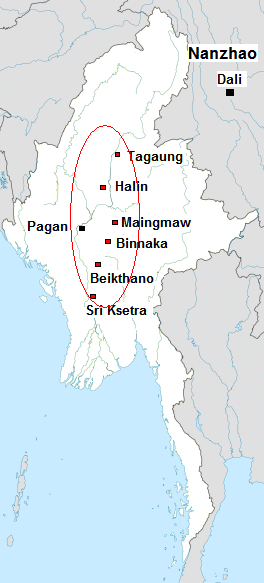
Tagaung Kingdom (Burmese: တကောင်း နေပြည်တော်, pronounced [dəɡáʊɰ̃ nèpjìdɔ̀]) was a Pyu city-state that existed in the first millennium CE. In 1832, the hitherto semi-legendary state was officially proclaimed the first kingdom of Burmese monarchy by Hmannan Yazawin, the Royal Chronicle of the Konbaung dynasty. Hmannan adds that the "kingdom" was founded by Abhiyaza of the Sakya clan of the Buddha in 850 BCE, and that through Abiyaza, Burmese monarchs traced their lineage to the Buddha and the first Buddhist (mythical) king of the world Maha Sammata. Hmannan also introduces another Sakya prince Dazayaza who founded the second Tagaung dynasty c. 600 CE. The narrative superseded then prevailing pre-Buddhist origin story in which the monarchy was founded by a descendant of a solar spirit and a dragon princess.
Archaeological evidence indicates that Neolithic and Bronze Age cultures existed at Tagaung, and a city-state founded by the Pyu emerged in the early centuries CE. The chronicles, which likely represent the social memory of the times, repeatedly mention multiple competing groups and migrations that Tagaung and the entire Pyu realm experienced in the first millennium CE. The city-state became part of the Pagan Empire in the mid-1050s.
Tagaung came to be featured prominently in an effort by the early Konbaung kings to link the origins of Burmese monarchy to the Buddha, and ultimately the first king of the world in Buddhist mythology, Maha Sammata. Hmannan states that Prince Abhiyaza (Abhiraja) (အဘိရာဇာ) of Kingdom of Kosala (ကောသလ) of the Sakya clan (သကျ သာကီဝင် မင်းမျိုး)—the clan of the Buddha and Maha Sammata—and his followers left their homeland, following a military defeat against their neighbouring Kingdom of Panchala (ပဉ္စာလရာဇ်). They settled and founded a kingdom at Tagaung in present-day northern Burma at the upper banks of the Irrawaddy River in 850 BCE.
Hmannan does not claim that Abhiyaza had arrived in an empty land, only that he was the first king. He had two sons, and died after a 25-year reign at Tagaung. The elder son Kanyaza Gyi (ကံရာဇာကြီး) lost the throne to his younger brother Kanyaza Nge (ကံရာဇာငယ်). Kanyaza Gyi ventured south, and founded his own kingdom at Arakan in 825 BCE. Kanyaza Nge succeeded his father, and was followed by a dynasty of 31 kings. Circa 600 BCE, Taruk marauders from Gandhara (ဂန္ဓာလရာဇ်) sacked the city. (The invaders were from Yunnan. Taruk refers to the Mongo Tartar in modern Burmese but in Old Burmese, it referred to anyone from the northeast. Gandhara was the classical name of Yunnan adopted by the Buddhist kingdoms there.) The 33rd king of Abhiyaza line, King Binnaka Yaza (ဘိန္နကရာဇာ) was killed.
Hmannan continues that the fall of Tagaung led to tripartite division of the population. One group moved down and settled at Thunapayanta which was then inhabited by Pyus, Kanyans and Thets. Another group went southeast, and founded what would later be known as the 19 districts of Kyaukse. They became known as the Binnaka line. (Thunapayanta was located near present-day Pagan (Bagan), and the primary Pyu city-state in Kyaukse was Maingmaw.) A third group led by Naga Hsein (နာဂဆိန်), the queen of Binnaka Yaza, remained at Tagaung.
The queen then met Dazayaza (Dhajaraja), of royal Sakya lineage who had recently settled in Mauriya (somewhere in Upper Burma). She married him. Dazayaza and Naga Hsein built a new capital at Old Pagan, close to Tagaung. A dynasty of 16 kings followed. Some time after 483 BCE, invaders from the east sacked the kingdom during the reign of Thado Maha Yaza, the 17th and last king.
But the Sakya lineage had not died out, Hmannan continues. In 503 BCE, the queen of the last king of Tagaung, Thado Maha Yaza gave birth to twin blind sons, Maha Thanbawa and Sula Thanbawa. The king was ashamed, and ordered them killed. The queen hid her sons, and raised them in secret. Nineteen years later, in 484 BCE, the king found out that the brothers were still alive, and again ordered them killed. The queen managed to put the sons on a raft down the Irrawaddy. Adrift in the river, the brothers miraculously gained sight with the help of the ogress.
In 483 BCE, the brothers founded another kingdom much farther down the Irrawaddy at Sri Ksetra, near modern Pyay (Prome). Maha Thanbawa was the first king and ruled for six years. He was followed by Sula Thanbawa, ruling for 35 years. He was followed by King Duttabaung, son of Maha Thanbawa. Duttabaung ruled for 70 years. In all, Sri Ksetra lasted nearly six centuries.
Hub AI
Tagaung Kingdom AI simulator
(@Tagaung Kingdom_simulator)
Tagaung Kingdom
Tagaung Kingdom (Burmese: တကောင်း နေပြည်တော်, pronounced [dəɡáʊɰ̃ nèpjìdɔ̀]) was a Pyu city-state that existed in the first millennium CE. In 1832, the hitherto semi-legendary state was officially proclaimed the first kingdom of Burmese monarchy by Hmannan Yazawin, the Royal Chronicle of the Konbaung dynasty. Hmannan adds that the "kingdom" was founded by Abhiyaza of the Sakya clan of the Buddha in 850 BCE, and that through Abiyaza, Burmese monarchs traced their lineage to the Buddha and the first Buddhist (mythical) king of the world Maha Sammata. Hmannan also introduces another Sakya prince Dazayaza who founded the second Tagaung dynasty c. 600 CE. The narrative superseded then prevailing pre-Buddhist origin story in which the monarchy was founded by a descendant of a solar spirit and a dragon princess.
Archaeological evidence indicates that Neolithic and Bronze Age cultures existed at Tagaung, and a city-state founded by the Pyu emerged in the early centuries CE. The chronicles, which likely represent the social memory of the times, repeatedly mention multiple competing groups and migrations that Tagaung and the entire Pyu realm experienced in the first millennium CE. The city-state became part of the Pagan Empire in the mid-1050s.
Tagaung came to be featured prominently in an effort by the early Konbaung kings to link the origins of Burmese monarchy to the Buddha, and ultimately the first king of the world in Buddhist mythology, Maha Sammata. Hmannan states that Prince Abhiyaza (Abhiraja) (အဘိရာဇာ) of Kingdom of Kosala (ကောသလ) of the Sakya clan (သကျ သာကီဝင် မင်းမျိုး)—the clan of the Buddha and Maha Sammata—and his followers left their homeland, following a military defeat against their neighbouring Kingdom of Panchala (ပဉ္စာလရာဇ်). They settled and founded a kingdom at Tagaung in present-day northern Burma at the upper banks of the Irrawaddy River in 850 BCE.
Hmannan does not claim that Abhiyaza had arrived in an empty land, only that he was the first king. He had two sons, and died after a 25-year reign at Tagaung. The elder son Kanyaza Gyi (ကံရာဇာကြီး) lost the throne to his younger brother Kanyaza Nge (ကံရာဇာငယ်). Kanyaza Gyi ventured south, and founded his own kingdom at Arakan in 825 BCE. Kanyaza Nge succeeded his father, and was followed by a dynasty of 31 kings. Circa 600 BCE, Taruk marauders from Gandhara (ဂန္ဓာလရာဇ်) sacked the city. (The invaders were from Yunnan. Taruk refers to the Mongo Tartar in modern Burmese but in Old Burmese, it referred to anyone from the northeast. Gandhara was the classical name of Yunnan adopted by the Buddhist kingdoms there.) The 33rd king of Abhiyaza line, King Binnaka Yaza (ဘိန္နကရာဇာ) was killed.
Hmannan continues that the fall of Tagaung led to tripartite division of the population. One group moved down and settled at Thunapayanta which was then inhabited by Pyus, Kanyans and Thets. Another group went southeast, and founded what would later be known as the 19 districts of Kyaukse. They became known as the Binnaka line. (Thunapayanta was located near present-day Pagan (Bagan), and the primary Pyu city-state in Kyaukse was Maingmaw.) A third group led by Naga Hsein (နာဂဆိန်), the queen of Binnaka Yaza, remained at Tagaung.
The queen then met Dazayaza (Dhajaraja), of royal Sakya lineage who had recently settled in Mauriya (somewhere in Upper Burma). She married him. Dazayaza and Naga Hsein built a new capital at Old Pagan, close to Tagaung. A dynasty of 16 kings followed. Some time after 483 BCE, invaders from the east sacked the kingdom during the reign of Thado Maha Yaza, the 17th and last king.
But the Sakya lineage had not died out, Hmannan continues. In 503 BCE, the queen of the last king of Tagaung, Thado Maha Yaza gave birth to twin blind sons, Maha Thanbawa and Sula Thanbawa. The king was ashamed, and ordered them killed. The queen hid her sons, and raised them in secret. Nineteen years later, in 484 BCE, the king found out that the brothers were still alive, and again ordered them killed. The queen managed to put the sons on a raft down the Irrawaddy. Adrift in the river, the brothers miraculously gained sight with the help of the ogress.
In 483 BCE, the brothers founded another kingdom much farther down the Irrawaddy at Sri Ksetra, near modern Pyay (Prome). Maha Thanbawa was the first king and ruled for six years. He was followed by Sula Thanbawa, ruling for 35 years. He was followed by King Duttabaung, son of Maha Thanbawa. Duttabaung ruled for 70 years. In all, Sri Ksetra lasted nearly six centuries.
Recent media