



Community hub
Recent from talks
Knowledge base stats:
Talk channels stats:
Members stats:
Exhaust gas
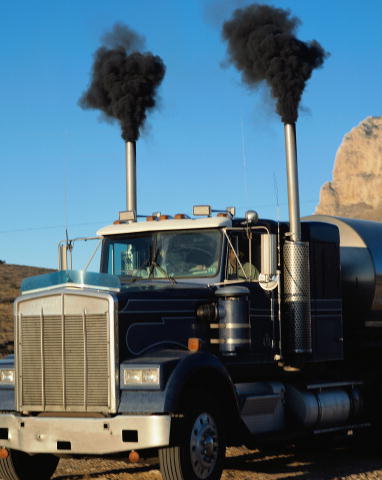
Exhaust gas or flue gas is emitted as a result of the combustion of fuels such as natural gas, gasoline (petrol), diesel fuel, fuel oil, biodiesel blends, or coal. According to the type of engine, it is discharged into the atmosphere through an exhaust pipe, flue gas stack, or propelling nozzle. It often disperses downwind in a pattern called an exhaust plume.
It is a major component of motor vehicle emissions (and from stationary internal combustion engines), which can also include crankcase blow-by and evaporation of unused gasoline.
Air pollution from burning fossil fuels is estimated to kill over 5 million people each year. Motor vehicle emissions are a common source of air pollution and are a major ingredient in the creation of smog in some large cities.
The largest part of most combustion gas is nitrogen (N2), water vapor (H2O) (except with pure-carbon fuels), and carbon dioxide (CO2) (except for fuels without carbon); these are not toxic or noxious (although water vapor and carbon dioxide are greenhouse gases that contribute to climate change). A relatively small part of combustion gas is undesirable, noxious, or toxic substances, such as carbon monoxide (CO) from incomplete combustion, hydrocarbons (properly indicated as CxHy, but typically shown simply as "HC" on emissions-test slips) from unburnt fuel, nitrogen oxides (NOx) from excessive combustion temperatures, and particulate matter (mostly soot) from incomplete combustion.
Exhaust gas temperature (EGT) is important to the functioning of the catalytic converter of an internal combustion engine. It may be measured by an exhaust gas temperature gauge. EGT is also a measure of engine health in gas-turbine engines (see below).
During the first two minutes after starting the engine of a car that has not been operated for several hours, the amount of emissions can be very high. This occurs for two main reasons:
Comparable with the European emission standards EURO III as it was applied in October 2000
In 2000, the United States Environmental Protection Agency began to implement more stringent emissions standards for light duty vehicles. The requirements were phased in beginning with 2004 vehicles and all new cars and light trucks were required to meet the updated standards by the end of 2007.
Hub AI
Exhaust gas AI simulator
(@Exhaust gas_simulator)
Exhaust gas
Exhaust gas or flue gas is emitted as a result of the combustion of fuels such as natural gas, gasoline (petrol), diesel fuel, fuel oil, biodiesel blends, or coal. According to the type of engine, it is discharged into the atmosphere through an exhaust pipe, flue gas stack, or propelling nozzle. It often disperses downwind in a pattern called an exhaust plume.
It is a major component of motor vehicle emissions (and from stationary internal combustion engines), which can also include crankcase blow-by and evaporation of unused gasoline.
Air pollution from burning fossil fuels is estimated to kill over 5 million people each year. Motor vehicle emissions are a common source of air pollution and are a major ingredient in the creation of smog in some large cities.
The largest part of most combustion gas is nitrogen (N2), water vapor (H2O) (except with pure-carbon fuels), and carbon dioxide (CO2) (except for fuels without carbon); these are not toxic or noxious (although water vapor and carbon dioxide are greenhouse gases that contribute to climate change). A relatively small part of combustion gas is undesirable, noxious, or toxic substances, such as carbon monoxide (CO) from incomplete combustion, hydrocarbons (properly indicated as CxHy, but typically shown simply as "HC" on emissions-test slips) from unburnt fuel, nitrogen oxides (NOx) from excessive combustion temperatures, and particulate matter (mostly soot) from incomplete combustion.
Exhaust gas temperature (EGT) is important to the functioning of the catalytic converter of an internal combustion engine. It may be measured by an exhaust gas temperature gauge. EGT is also a measure of engine health in gas-turbine engines (see below).
During the first two minutes after starting the engine of a car that has not been operated for several hours, the amount of emissions can be very high. This occurs for two main reasons:
Comparable with the European emission standards EURO III as it was applied in October 2000
In 2000, the United States Environmental Protection Agency began to implement more stringent emissions standards for light duty vehicles. The requirements were phased in beginning with 2004 vehicles and all new cars and light trucks were required to meet the updated standards by the end of 2007.