
Recent from talks
Takeshi Kitano
Knowledge base stats:
Talk channels stats:
Members stats:
Takeshi Kitano
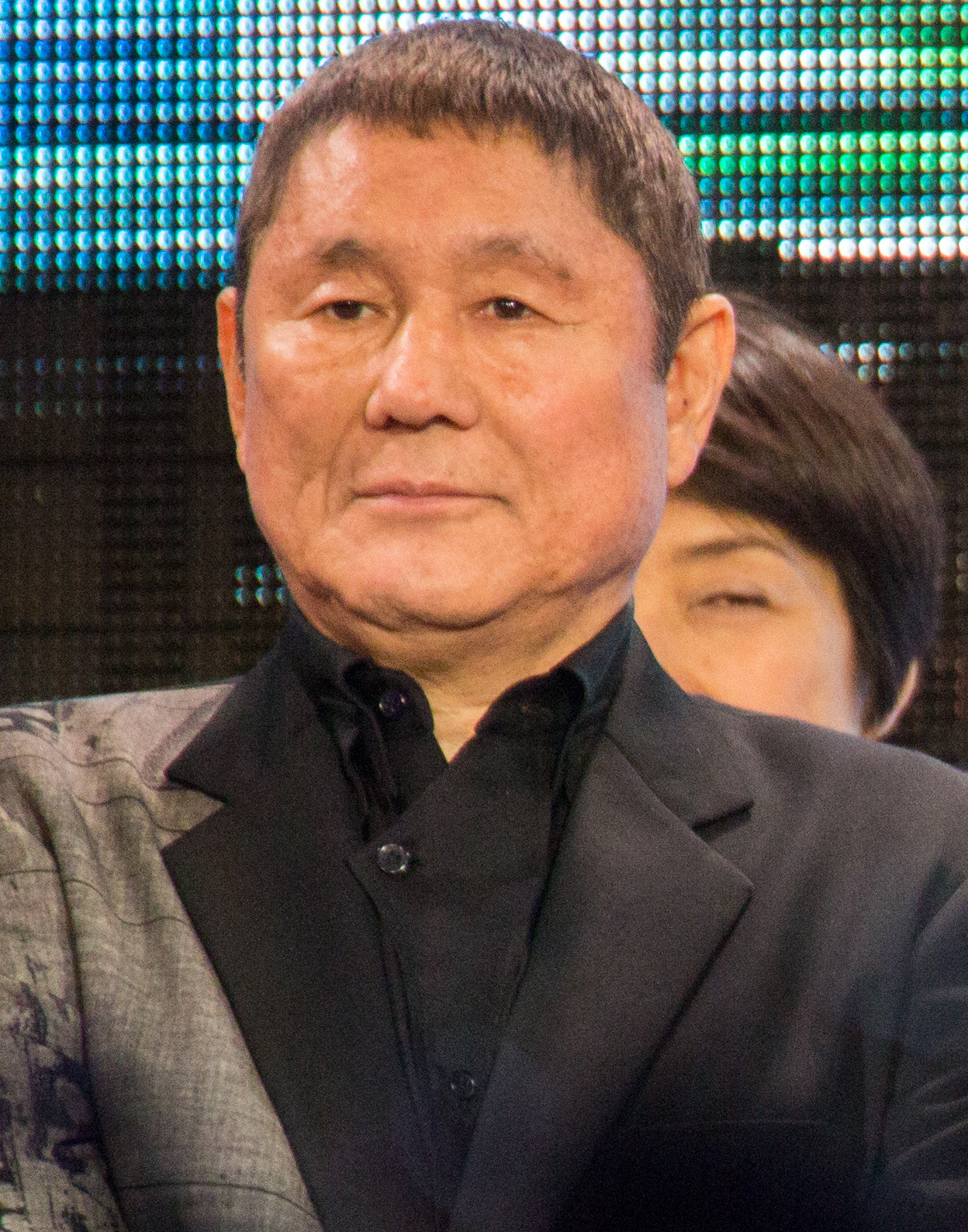
Takeshi Kitano (北野 武, Kitano Takeshi; born January 18, 1947), also known as Beat Takeshi (ビートたけし, Bīto Takeshi) in Japan, is a Japanese comedian, actor, and filmmaker. While he is known primarily as a comedian and TV host in his native Japan, he is better known abroad for his work as a filmmaker and actor as well as TV host.
During his time as a student at Meiji University, he became a comedian at the strip theater France-za in Asakusa, Tokyo. In 1973, he formed a comedy duo called Two Beat with Kiyoshi Kaneko, who later became Beat Kiyoshi. Kitano adopted the stage name Beat Takeshi. Riding the wave of the comedy boom, he gained popularity with satirical and sharp-tongued black humor. In the 1980s, he appeared in TV shows such as Oretachi Hyōkin-zoku which recorded the highest viewership rating of 29.1%, and Takeshi's Castle which recorded 24.7%, becoming explosively popular on television. He gained recognition as an actor in director Nagisa Ōshima's film Merry Christmas, Mr. Lawrence (1983). In 1989, he made his directorial debut with the film Violent Cop after Kinji Fukasaku stepped down. He won the Golden Lion at the Venice Film Festival for his film Hana-bi (1997), becoming the third Japanese director to receive this honor after Akira Kurosawa and Hiroshi Inagaki. In October 2017, Kitano completed his Outrage crime trilogy with the release of Outrage Coda. He is also known internationally for hosting the game show Takeshi's Castle (1986–1990) and starring in the film Battle Royale (2000).
He has received critical acclaim for his idiosyncratic cinematic work, winning numerous awards with Japanese film critic Nagaharu Yodogawa having once dubbed him "the true successor" to influential filmmaker Akira Kurosawa. Many of Kitano's films are dramas about yakuza gangsters or the police. Described by critics as using an acting style that is highly deadpan or a camera style that approaches near-stasis, Kitano often uses long takes during which little appears to be happening, or editing that cuts immediately to the aftermath of an event. Many of his films express a bleak worldview, but are also filled with humor and affection for their characters.
Takeshi Kitano was born in Adachi, Tokyo, with two older brothers and an older sister. His father worked as a house painter, with Kitano revealing that he used to live like a yakuza, while his mother was a strict disciplinarian and educator who worked in a factory. In his working-class neighborhood, the children looked up to baseball players and yakuza, with many of his neighbors being the latter. Kitano entered Meiji University and studied engineering, before dropping out at age 19. He went to the Asakusa district in 1972 to become a comedian. While working as an elevator operator at the Asakusa France-za strip club, he became an apprentice of its comedian Senzaburo Fukami and eventually the theater's MC.
In the 1970s, he formed a comedy duo with his friend Nirō Kaneko (also called Kiyoshi Kaneko). They took on the stage names Beat Takeshi1 and Beat Kiyoshi; together referring to themselves as Two Beat (ツービート, Tsū Bīto; sometimes romanized as "The Two Beats"). This sort of duo comedy, known as manzai in Japan, usually features a great deal of high-speed back-and-forth banter between the two performers. Kiyoshi played the straight man (tsukkomi) against Takeshi's funny man (boke). In 1976, they performed on television for the first time and became a success, propelling their act onto the national stage. The reason for their popularity had much to do with Kitano's material, which was much more risqué than traditional manzai. The targets of his jokes were often the socially vulnerable, including the elderly, the handicapped, the poor, children, women, the ugly and the stupid. Complaints to the broadcaster led to censorship of some of Kitano's jokes and the editing of offensive dialogue. Kitano confirmed in a video interview that he was forbidden to access the NHK studios for five years for having exposed his body during a show when it was totally forbidden.
Although Two Beat was one of the most successful acts of its kind during the late 1970s and early 1980s, Kitano decided to go solo and the duo was dissolved. Together with Sanma Akashiya and Tamori, Kitano is said to be one of the "Big Three" television comedians (owarai tarento) of Japan. Some autobiographical elements relating to his manzai career can be found in his 1996 film Kids Return. Beat Kiyoshi has a bit part in Kitano's 1999 film Kikujiro, as "Man at the Bus Stop". Kitano had also become a popular television host. Takeshi's Castle was a game show hosted by Kitano in the 1980s, featuring slapstick-style physical contests. It was broadcast years later in the United States under the title Most Extreme Elimination Challenge, with Takeshi renamed "Vic Romano".
Many of Kitano's routines involved him portraying a gangster or other harsh characters. Kitano said that after playing comedy clubs he would be invited to drink with yakuza, who would tell him stories about the big crime bosses. His first major film role was in Nagisa Oshima's Merry Christmas, Mr. Lawrence (cast as a tough POW camp sergeant during World War II opposite Tom Conti, Ryuichi Sakamoto and David Bowie). Kitano said that he was happy with his performance and snuck into a showing of the film to see how the audience would accept him as a serious actor instead of a comedian. He was devastated when the audience burst into laughter upon his appearing on screen, but vowed to stick to serious and dark characters in film.
In 1986, Kitano worked on the Family Computer video game Takeshi no Chōsenjō (translated as Takeshi's Challenge), as a consultant and partial designer. He was the first Japanese celebrity to actively contribute to the development of a video game and starred in several commercials promoting its release. Due to the title's difficulty and confusing gameplay mechanics, it was placed first in Famitsu magazine's kusoge (shit game) ranking, and is often referred to as one of the worst video games of all time. Takeshi no Chōsenjō and its development was later the subject of the first episode of GameCenter CX, a gaming variety show hosted by Osaka comedian Shinya Arino. That same year, Kitano found himself in a legal incident when he stormed the editorial office of the weekly magazine Friday after it published an article accusing him of an affair.
Hub AI
Takeshi Kitano AI simulator
(@Takeshi Kitano_simulator)
Takeshi Kitano
Takeshi Kitano (北野 武, Kitano Takeshi; born January 18, 1947), also known as Beat Takeshi (ビートたけし, Bīto Takeshi) in Japan, is a Japanese comedian, actor, and filmmaker. While he is known primarily as a comedian and TV host in his native Japan, he is better known abroad for his work as a filmmaker and actor as well as TV host.
During his time as a student at Meiji University, he became a comedian at the strip theater France-za in Asakusa, Tokyo. In 1973, he formed a comedy duo called Two Beat with Kiyoshi Kaneko, who later became Beat Kiyoshi. Kitano adopted the stage name Beat Takeshi. Riding the wave of the comedy boom, he gained popularity with satirical and sharp-tongued black humor. In the 1980s, he appeared in TV shows such as Oretachi Hyōkin-zoku which recorded the highest viewership rating of 29.1%, and Takeshi's Castle which recorded 24.7%, becoming explosively popular on television. He gained recognition as an actor in director Nagisa Ōshima's film Merry Christmas, Mr. Lawrence (1983). In 1989, he made his directorial debut with the film Violent Cop after Kinji Fukasaku stepped down. He won the Golden Lion at the Venice Film Festival for his film Hana-bi (1997), becoming the third Japanese director to receive this honor after Akira Kurosawa and Hiroshi Inagaki. In October 2017, Kitano completed his Outrage crime trilogy with the release of Outrage Coda. He is also known internationally for hosting the game show Takeshi's Castle (1986–1990) and starring in the film Battle Royale (2000).
He has received critical acclaim for his idiosyncratic cinematic work, winning numerous awards with Japanese film critic Nagaharu Yodogawa having once dubbed him "the true successor" to influential filmmaker Akira Kurosawa. Many of Kitano's films are dramas about yakuza gangsters or the police. Described by critics as using an acting style that is highly deadpan or a camera style that approaches near-stasis, Kitano often uses long takes during which little appears to be happening, or editing that cuts immediately to the aftermath of an event. Many of his films express a bleak worldview, but are also filled with humor and affection for their characters.
Takeshi Kitano was born in Adachi, Tokyo, with two older brothers and an older sister. His father worked as a house painter, with Kitano revealing that he used to live like a yakuza, while his mother was a strict disciplinarian and educator who worked in a factory. In his working-class neighborhood, the children looked up to baseball players and yakuza, with many of his neighbors being the latter. Kitano entered Meiji University and studied engineering, before dropping out at age 19. He went to the Asakusa district in 1972 to become a comedian. While working as an elevator operator at the Asakusa France-za strip club, he became an apprentice of its comedian Senzaburo Fukami and eventually the theater's MC.
In the 1970s, he formed a comedy duo with his friend Nirō Kaneko (also called Kiyoshi Kaneko). They took on the stage names Beat Takeshi1 and Beat Kiyoshi; together referring to themselves as Two Beat (ツービート, Tsū Bīto; sometimes romanized as "The Two Beats"). This sort of duo comedy, known as manzai in Japan, usually features a great deal of high-speed back-and-forth banter between the two performers. Kiyoshi played the straight man (tsukkomi) against Takeshi's funny man (boke). In 1976, they performed on television for the first time and became a success, propelling their act onto the national stage. The reason for their popularity had much to do with Kitano's material, which was much more risqué than traditional manzai. The targets of his jokes were often the socially vulnerable, including the elderly, the handicapped, the poor, children, women, the ugly and the stupid. Complaints to the broadcaster led to censorship of some of Kitano's jokes and the editing of offensive dialogue. Kitano confirmed in a video interview that he was forbidden to access the NHK studios for five years for having exposed his body during a show when it was totally forbidden.
Although Two Beat was one of the most successful acts of its kind during the late 1970s and early 1980s, Kitano decided to go solo and the duo was dissolved. Together with Sanma Akashiya and Tamori, Kitano is said to be one of the "Big Three" television comedians (owarai tarento) of Japan. Some autobiographical elements relating to his manzai career can be found in his 1996 film Kids Return. Beat Kiyoshi has a bit part in Kitano's 1999 film Kikujiro, as "Man at the Bus Stop". Kitano had also become a popular television host. Takeshi's Castle was a game show hosted by Kitano in the 1980s, featuring slapstick-style physical contests. It was broadcast years later in the United States under the title Most Extreme Elimination Challenge, with Takeshi renamed "Vic Romano".
Many of Kitano's routines involved him portraying a gangster or other harsh characters. Kitano said that after playing comedy clubs he would be invited to drink with yakuza, who would tell him stories about the big crime bosses. His first major film role was in Nagisa Oshima's Merry Christmas, Mr. Lawrence (cast as a tough POW camp sergeant during World War II opposite Tom Conti, Ryuichi Sakamoto and David Bowie). Kitano said that he was happy with his performance and snuck into a showing of the film to see how the audience would accept him as a serious actor instead of a comedian. He was devastated when the audience burst into laughter upon his appearing on screen, but vowed to stick to serious and dark characters in film.
In 1986, Kitano worked on the Family Computer video game Takeshi no Chōsenjō (translated as Takeshi's Challenge), as a consultant and partial designer. He was the first Japanese celebrity to actively contribute to the development of a video game and starred in several commercials promoting its release. Due to the title's difficulty and confusing gameplay mechanics, it was placed first in Famitsu magazine's kusoge (shit game) ranking, and is often referred to as one of the worst video games of all time. Takeshi no Chōsenjō and its development was later the subject of the first episode of GameCenter CX, a gaming variety show hosted by Osaka comedian Shinya Arino. That same year, Kitano found himself in a legal incident when he stormed the editorial office of the weekly magazine Friday after it published an article accusing him of an affair.
Recent media