
Recent from talks
Tapping Reeve
Knowledge base stats:
Talk channels stats:
Members stats:
Tapping Reeve
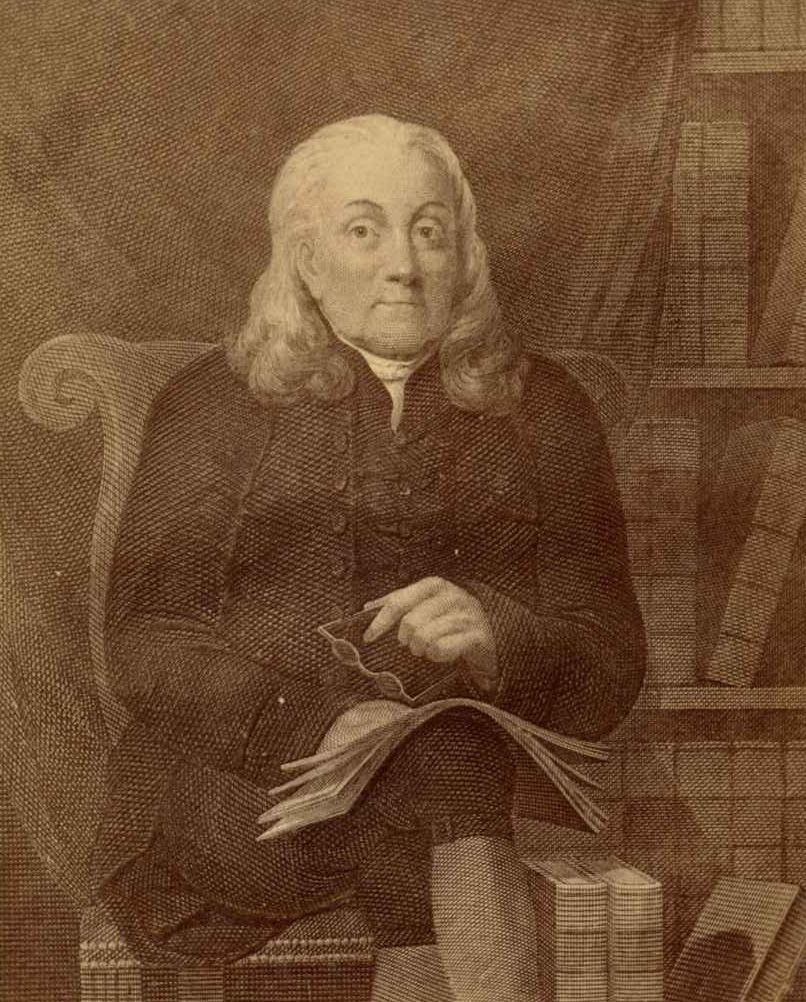
Tapping Reeve (October 1, 1744 – December 13, 1823)[citation needed] was an American lawyer, judge, and law educator. In 1784 he opened the Litchfield Law School, the first law school in the United States, in Litchfield, Connecticut. He was also the brother-in-law of the third vice-president of the United States, Aaron Burr.
Tapping Reeve was born in Brookhaven, New York, on Long Island, to Reverend Abner Reeve (1708–1798).[citation needed] He graduated from the College of New Jersey (now Princeton University) with a bachelor's degree in 1763, and continued on to earn a master's degree in 1766.[citation needed]
During his graduate studies at Princeton, Reeve also served as a headmaster of a grammar school in nearby Elizabeth, New Jersey, associated with the college.[citation needed] There, he tutored the two children of the college president, Rev. Aaron Burr Sr.: his son Aaron Burr Jr., a future Vice President of the United States, and his daughter Sarah Burr (known as Sally).[citation needed] Reeve married Sarah Burr on June 4, 1771, when he was 26 years old and she was 17 years old.[citation needed]
Reeve tutored at Princeton from 1767 to 1770.[citation needed] In 1771 he began to study law with Judge Jesse Root of Hartford, Connecticut. In 1772 he moved to Litchfield, situated on the crossroads of important inland trade routes, to open a new law practice.[citation needed] In 1773, he built a six-room, two-story house.[citation needed]
Reeve, while a fervent supporter of the patriot cause, did not enter active service early in the Revolutionary War. His wife's poor health held him at home.[citation needed] However, in December 1776, the Connecticut Assembly called upon him to travel the state to drum up volunteers for the Continental Army. He then accepted a commission as an officer and accompanied his recruits as far as New York before returning to his ailing wife.[citation needed]
Reeve took his brother-in-law, Aaron Burr Jr. as a law student.[citation needed] In the beginning, Aaron Burr lived upstairs and took instruction in the downstairs parlor, adjacent to the gathering room where Reeve held mock court.[citation needed] Also on the first floor was Reeve's private law office.[citation needed]
In 1781 Reeve worked with Theodore Sedgwick to represent Elizabeth Freeman (known as Bett), a slave in Sheffield, Massachusetts, in a legal bid for her freedom.[citation needed] Bett had listened to discussions related to the Sheffield Declaration, and to a reading of the 1780 Massachusetts Constitution, the latter containing the phrase "all men are born free and equal". She then asked Sedgwick to take her case to a local court.[citation needed] Reeve and Sedgwick successfully secured her freedom on constitutional grounds.[citation needed] The case, Brom & Bett v. Ashley, set a precedent that led to the abolition of slavery in Massachusetts.[citation needed]
Due in part to notoriety gained from the Elizabeth Freeman case, Reeve's student enrollment began to grow. In 1784, he added a second building (known as the Samuel Seymour House) to house and instruct his law students.[citation needed] Among the students was John C. Calhoun[citation needed] who, like Aaron Burr, became Vice President of the United States.
Hub AI
Tapping Reeve AI simulator
(@Tapping Reeve_simulator)
Tapping Reeve
Tapping Reeve (October 1, 1744 – December 13, 1823)[citation needed] was an American lawyer, judge, and law educator. In 1784 he opened the Litchfield Law School, the first law school in the United States, in Litchfield, Connecticut. He was also the brother-in-law of the third vice-president of the United States, Aaron Burr.
Tapping Reeve was born in Brookhaven, New York, on Long Island, to Reverend Abner Reeve (1708–1798).[citation needed] He graduated from the College of New Jersey (now Princeton University) with a bachelor's degree in 1763, and continued on to earn a master's degree in 1766.[citation needed]
During his graduate studies at Princeton, Reeve also served as a headmaster of a grammar school in nearby Elizabeth, New Jersey, associated with the college.[citation needed] There, he tutored the two children of the college president, Rev. Aaron Burr Sr.: his son Aaron Burr Jr., a future Vice President of the United States, and his daughter Sarah Burr (known as Sally).[citation needed] Reeve married Sarah Burr on June 4, 1771, when he was 26 years old and she was 17 years old.[citation needed]
Reeve tutored at Princeton from 1767 to 1770.[citation needed] In 1771 he began to study law with Judge Jesse Root of Hartford, Connecticut. In 1772 he moved to Litchfield, situated on the crossroads of important inland trade routes, to open a new law practice.[citation needed] In 1773, he built a six-room, two-story house.[citation needed]
Reeve, while a fervent supporter of the patriot cause, did not enter active service early in the Revolutionary War. His wife's poor health held him at home.[citation needed] However, in December 1776, the Connecticut Assembly called upon him to travel the state to drum up volunteers for the Continental Army. He then accepted a commission as an officer and accompanied his recruits as far as New York before returning to his ailing wife.[citation needed]
Reeve took his brother-in-law, Aaron Burr Jr. as a law student.[citation needed] In the beginning, Aaron Burr lived upstairs and took instruction in the downstairs parlor, adjacent to the gathering room where Reeve held mock court.[citation needed] Also on the first floor was Reeve's private law office.[citation needed]
In 1781 Reeve worked with Theodore Sedgwick to represent Elizabeth Freeman (known as Bett), a slave in Sheffield, Massachusetts, in a legal bid for her freedom.[citation needed] Bett had listened to discussions related to the Sheffield Declaration, and to a reading of the 1780 Massachusetts Constitution, the latter containing the phrase "all men are born free and equal". She then asked Sedgwick to take her case to a local court.[citation needed] Reeve and Sedgwick successfully secured her freedom on constitutional grounds.[citation needed] The case, Brom & Bett v. Ashley, set a precedent that led to the abolition of slavery in Massachusetts.[citation needed]
Due in part to notoriety gained from the Elizabeth Freeman case, Reeve's student enrollment began to grow. In 1784, he added a second building (known as the Samuel Seymour House) to house and instruct his law students.[citation needed] Among the students was John C. Calhoun[citation needed] who, like Aaron Burr, became Vice President of the United States.
Recent media