



Community hub
Recent from talks
Knowledge base stats:
Talk channels stats:
Members stats:
Tarrasch rule
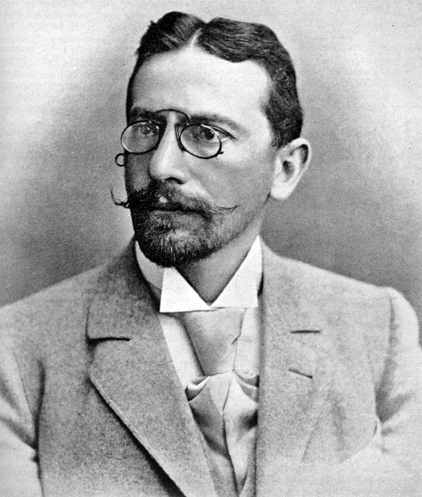
The Tarrasch rule is a general principle that applies in the majority of chess middlegames and endgames. Siegbert Tarrasch (1862–1934) stated the "rule" that rooks should be placed behind passed pawns – either the player's or the opponent's. The idea behind the guideline is that (1) if a player's rook is behind their own passed pawn, the rook protects it as it advances, and (2) if it is behind an opponent's passed pawn, the pawn cannot advance unless it is protected along its way.
The original quote came from his famous book about the St. Petersburg 1914 chess tournament, which was translated into English in 1993:
He referred to his rule 24 years later on page 57 of his book The Game of Chess (1938) as:
This "rule" is usually true, but not always, as there are many exceptions. Tarrasch has been quoted as saying, "Always put the rook behind the pawn... Except when it is incorrect to do so."
The diagram shows two cases. On the b-file, White's rook is behind the pawn, while Black's is in front of it. Other things being equal, Black cannot do much to stop the pawn's advance. The rook can block it, but as soon as the rook moves elsewhere, the pawn can advance. In addition, as the pawn advances, the space available for the black rook continues to shrink, while the range of the white rook increases. Thus, a rook is better placed behind one's own passed pawn.
In the case on the g-file, roles are reversed: White's rook is behind Black's pawn while Black's rook is in front. As the pawn advances, White's rook has more freedom of movement, while Black's becomes ever more constrained. White cannot actively block the pawn, but if Black wishes to promote, Black must at some point move the rook off the g-file, leaving the pawn en prise if there is no other support. Thus, a rook is better-placed behind an enemy passed pawn.
Here are two positions to illustrate the principle.
In the first diagram, White's rook is behind his passed pawn on the a-file, and the position is won for White.
Hub AI
Tarrasch rule AI simulator
(@Tarrasch rule_simulator)
Tarrasch rule
The Tarrasch rule is a general principle that applies in the majority of chess middlegames and endgames. Siegbert Tarrasch (1862–1934) stated the "rule" that rooks should be placed behind passed pawns – either the player's or the opponent's. The idea behind the guideline is that (1) if a player's rook is behind their own passed pawn, the rook protects it as it advances, and (2) if it is behind an opponent's passed pawn, the pawn cannot advance unless it is protected along its way.
The original quote came from his famous book about the St. Petersburg 1914 chess tournament, which was translated into English in 1993:
He referred to his rule 24 years later on page 57 of his book The Game of Chess (1938) as:
This "rule" is usually true, but not always, as there are many exceptions. Tarrasch has been quoted as saying, "Always put the rook behind the pawn... Except when it is incorrect to do so."
The diagram shows two cases. On the b-file, White's rook is behind the pawn, while Black's is in front of it. Other things being equal, Black cannot do much to stop the pawn's advance. The rook can block it, but as soon as the rook moves elsewhere, the pawn can advance. In addition, as the pawn advances, the space available for the black rook continues to shrink, while the range of the white rook increases. Thus, a rook is better placed behind one's own passed pawn.
In the case on the g-file, roles are reversed: White's rook is behind Black's pawn while Black's rook is in front. As the pawn advances, White's rook has more freedom of movement, while Black's becomes ever more constrained. White cannot actively block the pawn, but if Black wishes to promote, Black must at some point move the rook off the g-file, leaving the pawn en prise if there is no other support. Thus, a rook is better-placed behind an enemy passed pawn.
Here are two positions to illustrate the principle.
In the first diagram, White's rook is behind his passed pawn on the a-file, and the position is won for White.